Regions
Tibet
Lhasa, Shigatse and Nyingchi, with the two things that actually block the trip: the entry permit and the altitude. How it is organised and how many days.
At a glance
- Recommended days
- 9 days
- Cities to combine
- Lhasa · Xi'an · Yunnan
- How you travel
- Private · English-speaking guide · no shop stops
- Updated
- October 18, 2026
Tibet is the only region in China where the hard part of the trip happens before you leave. It is not the flight, nor the accommodation, nor the logistics: it is the paperwork. The Tibet visa and permit are two separate things, and confusing them is the most common reason for a trip cancelled at the boarding gate. The Chinese visa authorises entry into the country; the Tibet entry permit authorises movement inside the Autonomous Region, and it is a document apart, issued in the name of each traveller and fixed to a specific route.
Everything else — the Potala Palace, the Jokhang, the monasteries where philosophy is debated with clapped hands, the lakes at 4,500 metres — comes afterwards. And it comes well, because the plateau is one of the most extraordinary places you can visit without technical equipment.
The entry permit, without euphemisms
The Tibet Travel Permit is issued by the tourism authorities of Tibet at the request of an agency licensed to operate in the region. It has to be requested once the passport and visa details are settled, and it stays linked to a fixed itinerary: cities, dates and accommodation. That is why nothing is improvised in Tibet.
The point that surprises clients most: it is not a reusable personal document. It is valid for that trip, on those dates, over that route. Changing the order of the cities halfway means reformulating the request, which is why the route is fixed weeks in advance.
For areas off the Lhasa–Shigatse axis — Everest base camp, Mount Kailash, certain border zones — supplementary permits are added, requested locally through the agency and the guide. Issue times vary with the season and the authority; we confirm the timetable case by case and never promise dates closed to the day.
In practice, this is what gets done:
- Sort out the Chinese visa first, well in advance.
- Fix the Tibet route before issuing internal flights.
- Send legible copies of the passport and visa for the request.
- Expect checks on the road and at the monasteries: the document is verified several times.
- Keep a plan B for temporary closures at certain places on certain dates.
Lhasa, the first days
Lhasa sits at 3,650 metres and the rule is simple: the first two days are for acclimatising, not for seeing everything. You arrive, check in, walk slowly, sleep.
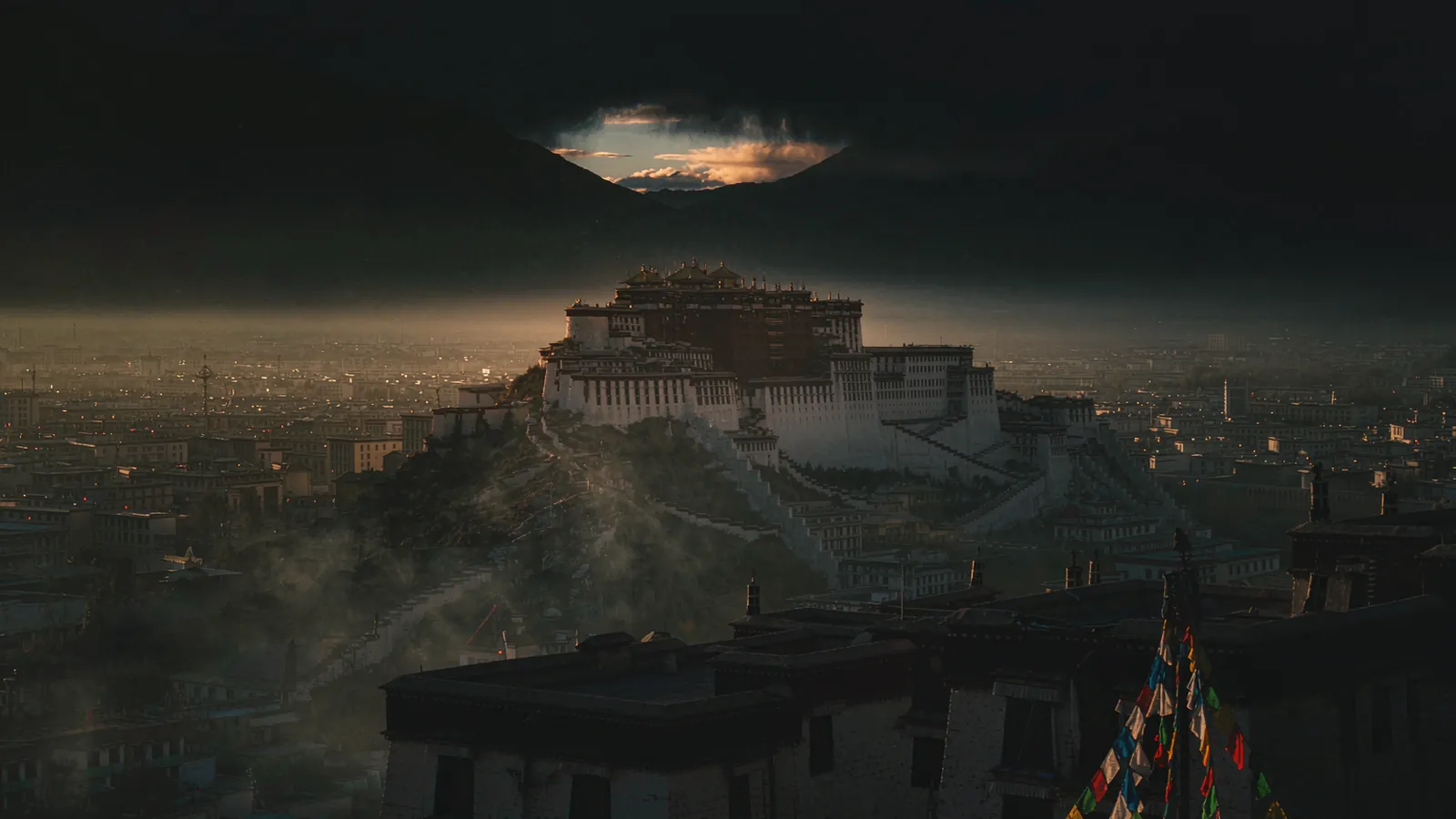
The Potala Palace, former winter residence of the Dalai Lamas and listed by UNESCO, is the building that defines the city: thirteen storeys, close to a thousand rooms, raised over the hill. Visits run to a fixed time slot with a limited number of entries per day; in high season they sell out. Jokhang, the holiest temple in Tibetan Buddhism, and the Barkhor circuit around it, with pilgrims doing the kora, are where you feel most strongly that this is a living religious centre rather than a museum.
Sera and Drepung were two of the greatest monastic universities of the Tibetan world. At Sera, the monk debates in the courtyard, with clapping and argumentation out loud, happen on weekdays — worth asking the guide that morning, because the calendar changes. Norbulingka, the summer palace, is the calmest visit.
Lhasa deserves three to four nights. Seeing everything in two days is possible; enjoying any of it is not. The city is also the best starting point for anyone arriving overland: the Grand Crossing along the Silk Road comes down from the plateau after crossing the southwest, which spreads the gain in altitude across stages.
Shigatse, Gyantse and the lakes
The southwest road is the classic axis. Gyantse keeps the Kumbum, a multi-storey stupa full of chapels with murals, and the memory of a city that was once a trade route to India. Shigatse, at 3,840 metres, is the second city of Tibet and the seat of Tashilhunpo monastery, traditionally linked to the Panchen Lamas.
Halfway lies Yamdrok Lake, at 4,400 metres, a patch of turquoise among mountains, seen from the viewpoint on the road. Namtso lies to the north and is higher still, close to 4,700 metres: we only recommend it to those already several days on the plateau and feeling well.
Going further — Everest base camp on the northern side, by Rongbuk monastery — means another three to four days and additional permits. It is one of the most striking experiences available in the region, and also the one demanding the best physical preparation.
Nyingchi, the low door
To the east, Nyingchi sits lower, around 3,000 metres, with forest, damp valleys and a much milder climate. This is where many people ought to enter: arriving here first and going up to Lhasa afterwards is the most comfortable way to acclimatise. In March and April the valleys fill with peach blossom.
Nyingchi is also the point of contact with Yunnan: the road and the logic of altitude are the same as Shangri-La, on the other side of the provincial border. Anyone who has already done the Tibetan plateau in the southwest recognises the landscape.
What to bring and how to dress
The plateau has wide temperature swings: 20 °C and sun at midday, close to zero before dawn. The rule is to dress in layers and always carry a windproof piece, even in July. Thermal coat, gloves, hat and high-factor sunblock: radiation at 3,600 metres burns far faster than at sea level, and it burns even in the cold. Sunglasses are not an accessory — the glare off snow and salt lakes tires the eyes within two hours.
In the daypack it is worth carrying a bottle of water and something sweet. You drink more than you feel like: altitude dehydrates without making you thirsty.
Etiquette inside the monasteries
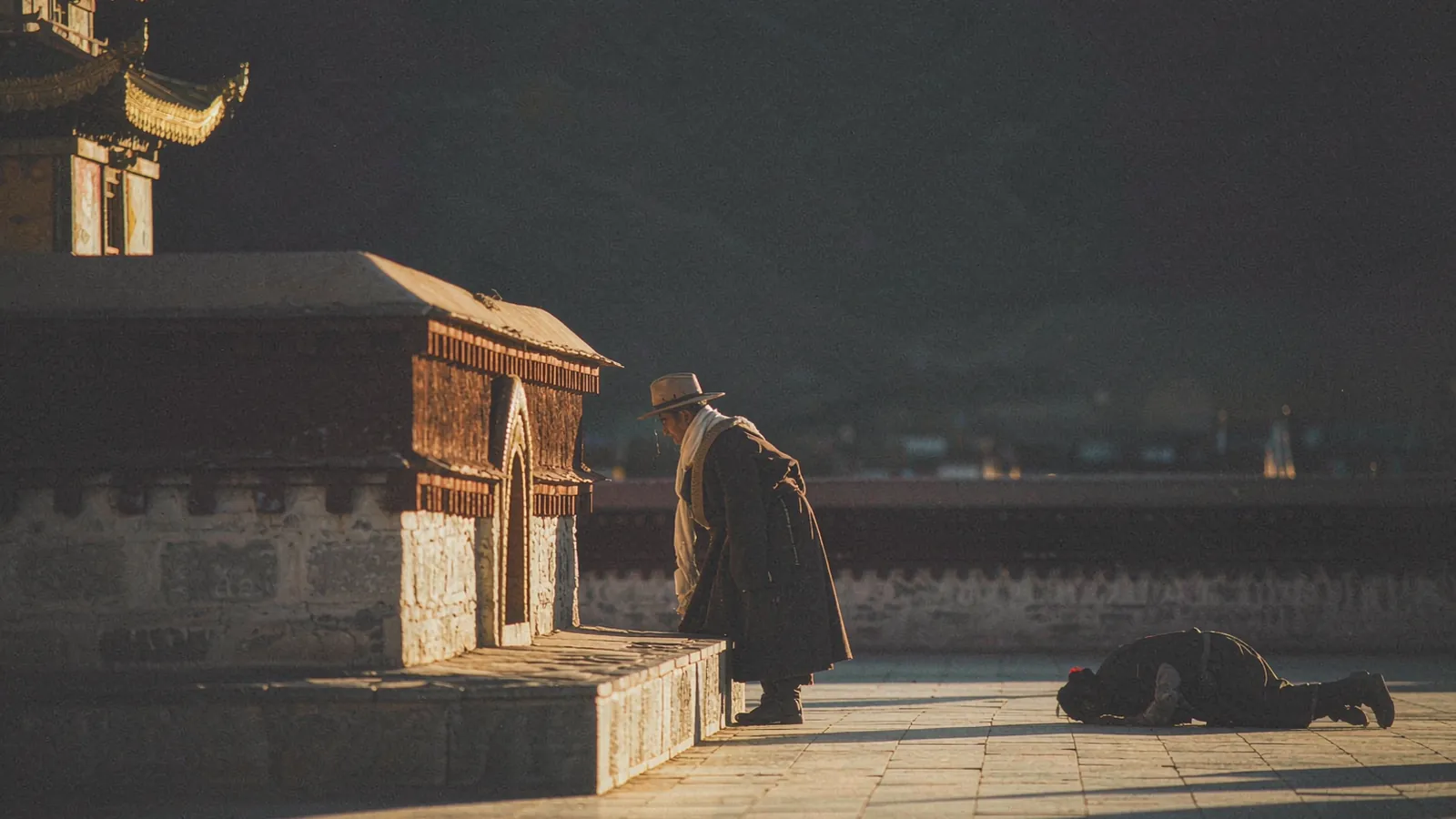
Tibet is a region where monasteries have an active religious life again, and they are visited as places of worship rather than as museums. Voices are kept low, fingers are not pointed at images, closed chapels are not entered, and interiors of dark halls are not photographed without permission. On pilgrimage circuits such as the Barkhor, you walk clockwise, like everyone else.
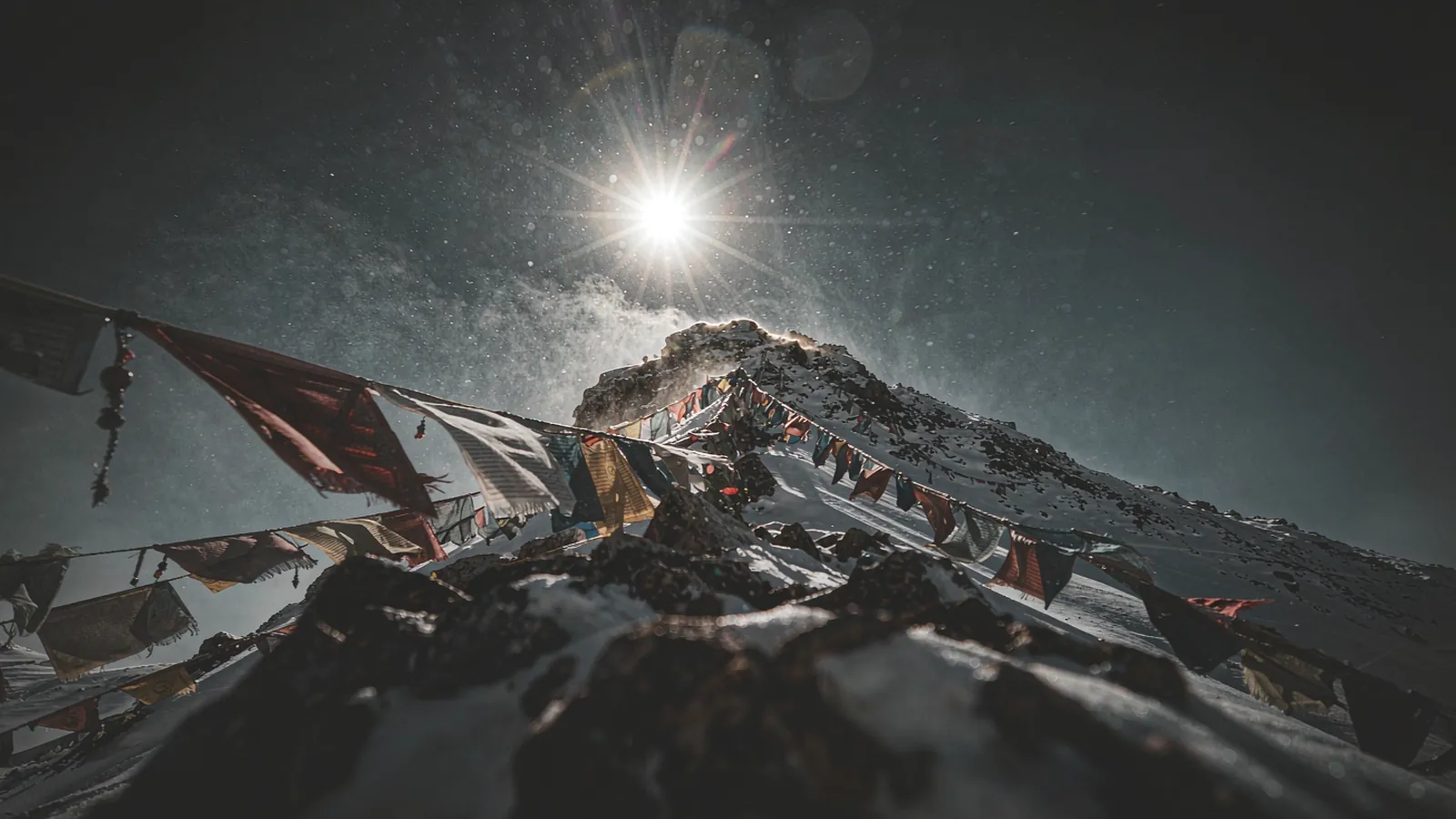
At stupas and mani walls, the stones and flags are not removed or rearranged for a photograph — it is the kind of carelessness that gets noticed and closes doors for whoever comes next.
How many days
Five days is the acceptable minimum: three nights in Lhasa, one in Shigatse, and the return. It can be done, but more time goes on acclimatising than on the road.
Seven to nine days is the recommended programme. It allows Lhasa at ease, Gyantse, Shigatse, Yamdrok Lake and one night outside the city, without counting the days by the minute.
Twelve to fourteen days add Nyingchi, Everest base camp, or the overland exit route across the plateau. From here you are talking about an entire trip devoted to the region.
When to go
May to June. Clear skies, mild temperatures, before the monsoon. The best time for most people.
July and August. Domestic high season and also the rainy season: roads become harder and the mountains stay hidden more often. In compensation, this is when the pastures are green.
September and October. Our preference. Dry air, clean light, long visibility.
November to April. Intense cold, especially at night, but excellent skies and far fewer people at the monasteries. It is the time when Tibet looks most like the Tibet people imagine.
How you travel today
You enter by air or by train. The Qinghai–Tibet railway is one of the highest lines in the world, with supplementary oxygen on board, and it takes about a day from Xining: the gradual climb is the best acclimatisation possible, and the landscape justifies the time. From Xi’an or Beijing the journey is considerably longer.
Within the region you always move with an accredited guide and a car with a driver booked by the agency, because that is what the permit requires and because checkpoints are frequent.
We book the Potala and the Jokhang in advance, because they have entry limits. We request the permit as soon as the visa is issued, and we give plenty of notice if the route has to be adjusted.
Two practical notes for photographers: drones are not permitted in the region, and there are places where photography inside temples is prohibited. Photographic China goes through these restrictions one by one before departure.
We organise Tibet privately at all times, two to six travellers, with a private guide, and we follow the permit application from start to finish.
Tours that pass through Tibet
Cities to combine
Frequently asked questions
Does the Chinese visa get you into Tibet?
No. The Chinese visa authorises entry into China, but entry to the Tibet Autonomous Region depends on a permit of its own, the Tibet Travel Permit, issued in the name of each traveller and tied to a fixed route. Without it you cannot board a flight or a train to Lhasa.
Who issues the Tibet entry permit?
It is requested by an agency licensed to operate in Tibet, from the passport and visa details, and it is linked to the approved itinerary: cities, dates and accommodation. It is not a document a traveller can apply for independently, nor a paper that can be used on any journey.
Can you travel independently in Tibet?
Not along the usual lines. The foreign traveller moves accompanied by an accredited guide and with transport booked by the agency that issued the permit. There are checkpoints on the roads and at the monasteries, and the document is checked at several points along the route.
How many days do you need in Tibet?
Seven to nine days handle Lhasa, Shigatse, Gyantse and Yamdrok Lake at ease. Fewer than five does not pay: two of them go on acclimatisation alone. Anyone wanting Nyingchi or Everest base camp adds another three to four days.
Is the altitude in Lhasa a problem?
Lhasa sits at 3,650 metres, and the first night is uncomfortable for almost everyone: headache, broken sleep, breathlessness climbing stairs. You arrive by train or in stages, no effort is made on the first day, and you drink a lot of water. Anyone with heart or lung conditions should speak to a doctor first.
Talk to the people who run it
Want Tibet in 9 days, or a different way round?
Tell us how many you are, when you want to go, and what cannot be left out. We shape the itinerary from there.
Chat on WhatsAppReplies in English · no obligation