Destinations
Harbin
An entire city built of ice, lit from within. Nothing in Western Europe prepares a traveller for -30 °C.
At a glance
- Best time to visit
- Dec–Feb
- Suggested nights
- 2 to 3 nights
- Region
- Nordeste
- Booking required
- Harbin International Ice and Snow Festival
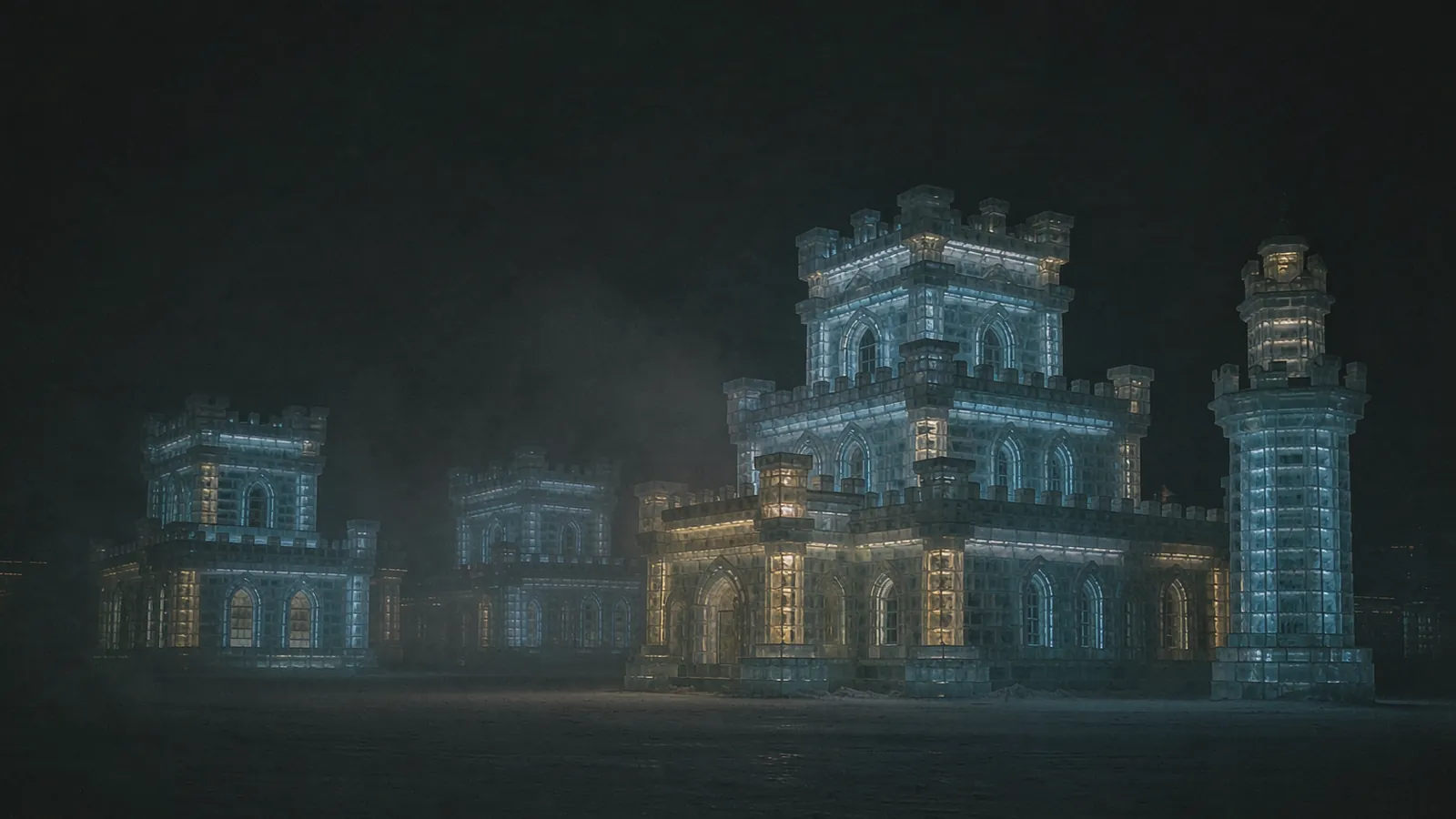
Harbin is the capital of the northernmost province in China and has a reputation as an ugly industrial city. For three months of the year that judgement reverses entirely: a second city rises, made entirely of ice and compacted snow, with palaces, slides and towers lit from inside by coloured neon tubes set into the ice. There is nothing else like it in the world at this scale.
Why go
Because it is the extreme. It is the coldest city a Western European will ever visit, and that physical experience — air that hurts inside your nose, the sound of snow crunching, steam coming off your clothes when you walk into a café — is repeated nowhere else in China.
And because Harbin is not only ice: it was built by Russian engineers in 1898 as a junction on the Trans-Siberian railway, and it keeps the best collection of Russian architecture outside Russia. For anyone wanting to understand the real diversity of travel in China, the northeast as a whole is a different country from the south. The city also works as the winter base for our cold-season tour, and it always slots in after Beijing.
What to see and do
The International Ice and Snow Festival. The main site sits on the island in the Songhua river and covers the equivalent of dozens of football pitches, with full-size replicas of temples and palaces built from blocks cut out of the river itself. Go after 4:30pm, when the lights come on and the ice turns translucent. The ticket is expensive by Chinese standards, around 330 yuan.
Ice and Snow World is not the only one. There is also the snow sculpture festival on Sun Island, and along the Songhua river there are ice slides, sleds pulled by huskies, and pools cut into the ice for winter swimming.
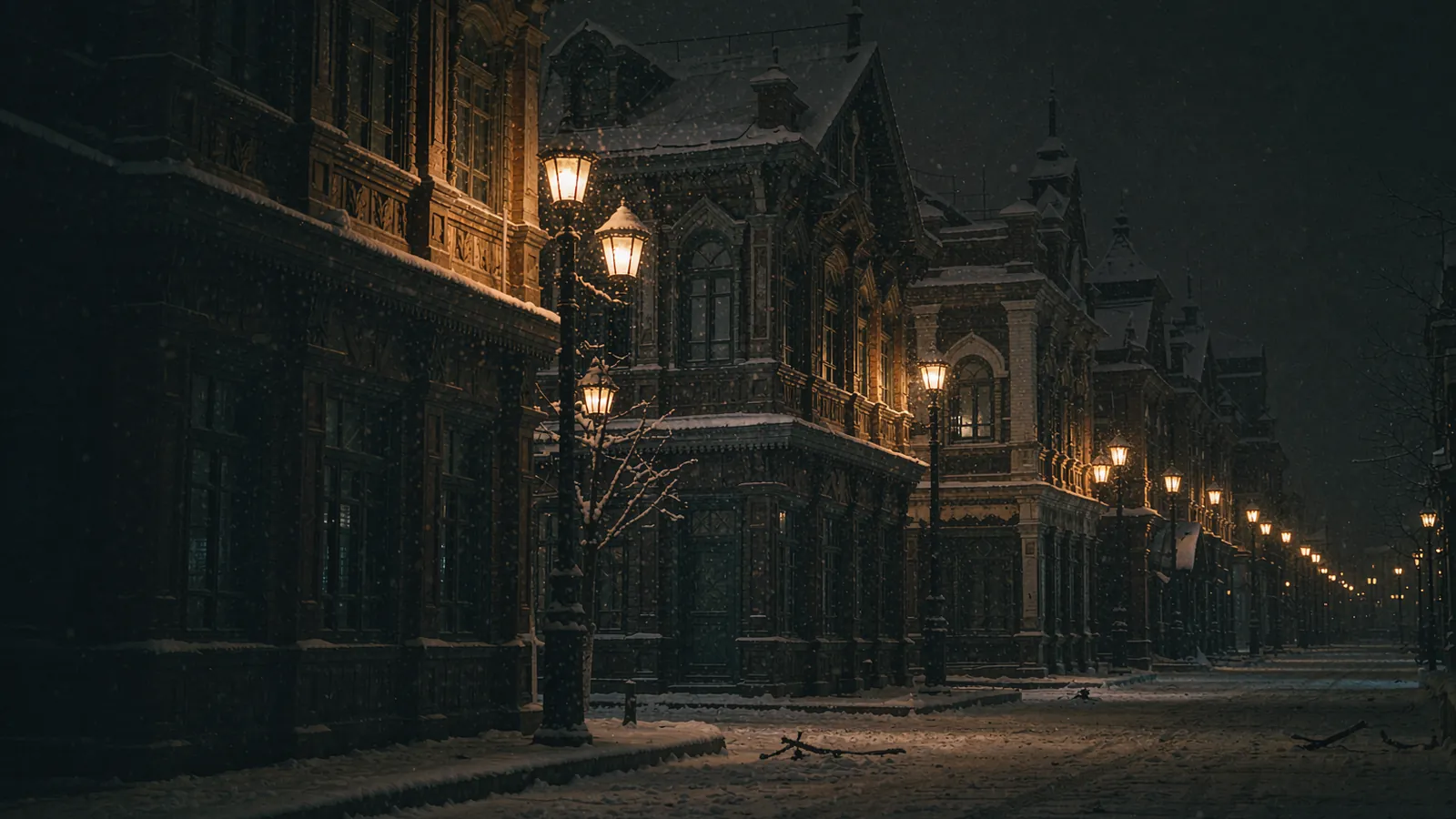
Central Street (Zhongyang Dajie). Cobblestones laid in 1898, lined with Russian buildings: banks, hotels, bread and ice cream shops — ice cream is sold on the street at -25 °C, and it sells well. In the late afternoon it is the most pleasant walk in the city.
St Sophia Cathedral. Brick with a green dome, built in 1907 for the Russian railway workers and since restored. It stands in the middle of a concrete block, which is part of its charm. At night there is decorative lighting and music in the square, which turns a ten-minute visit into an evening.
The museum and Stalin Park. Little visited, they cover the Japanese occupation and the heavy industry that built the region. Half an hour. Xuexiang, the deep-snow village, is five hours away by road and is added for anyone with more days — wooden houses with a metre of snow on the roofs.
How we run it
We do not sell Harbin without preparation. We send a kit list three weeks ahead — coat rated to -30, thermal trousers, thick-soled boots, two-layer gloves, a hat that covers the ears — and we arrange local hire for anyone who would rather not buy.
We split the festival over two nights rather than one, because the first serves to see and photograph and the second to go back over what you liked best without hurrying. Between visits we always schedule a meal in a heated restaurant.
We provide disposable hand warmers, change gloves at regular intervals, and keep the car and the guide at the gate of the site rather than leaving the group waiting outside. That is a matter of safety, not comfort.
How long to stay
Two nights allow two visits to the festival site, one to see everything and one to go back at leisure, plus a morning for the Russian city. It is the minimum: a single night gives only one entry and means running from lit-up sculpture to lit-up sculpture.
Three nights is what we recommend whenever possible. It allows Sun Island and the snow sculptures, which are a different site from the ice sculptures, and a long, unhurried meal of northeastern cooking.
Four to five nights suit anyone adding Xuexiang, the deep-snow village five hours away by road, with wooden houses and roofs under a metre of snow. It is the addition that turns the trip into a proper winter journey.
Bear in mind that the season is short — late December to late February — and that in January the cold is extreme. Anyone with lung or heart issues should talk to us before booking; we adapt the programme and we do not sell exertion to people who cannot take it.
When to go
December. The festival opens, but before Christmas most of it is still unfinished. Real cold from the second half of the month: -10 to -25 °C.
January. The peak of the cold and the best quality of ice: -20 to -30 °C, with extreme lows of -35 on clear nights. This is when the sculptures are at their best and when there are most Chinese visitors.
February. Everything still open, slightly less cold (-15 to -22 °C), and Lunar New Year falling somewhere in this month — book hotels two months ahead in that case.
March to November. Not recommended. The ice melts at the start of March and the city loses what makes it unique.
Where to stay
By Central Street (Daoli). The only choice that makes sense. You are in the historic centre, within walking distance of the cathedral and the shops, with restaurants in the next block, which matters when you are stepping in and out of heated places every two hours.
In Songbei, by the festival site. New hotels on the other side of the river, closer to the sculptures but with nothing around them once you are indoors.
We avoid the industrial suburbs to the south and anything requiring more than twenty minutes in a taxi through frozen traffic. Another rule of ours: the hotel must have a revolving door, or a double door with a vestibule, because that is the difference between coming and going without a gust of -25 in the face.
What to eat
At this temperature the food has to carry fat. The dish of the city is pork dumplings in cabbage broth, eaten with garlic sauce and cornbread, and guo bao rou, fried slices of pork in a sweet and sour sauce, a recipe of Russian origin adapted locally.
There is a night market by Central Street with grilled skewers, roast sweet potato and frozen fruit sold by weight — frozen pears and persimmons are a local speciality, eaten hard, as they are.
Then there is Russian bread, sold at the century-old bakeries on Central Street, and fried sweet bean pastries. To warm you from the inside, black tea with sugar, and — for those who take it — local sorghum liquor at 50 degrees.
Getting there
Harbin Taiping international airport is 33 km southwest, with direct flights from Beijing (2 hours), Shanghai and Guangzhou.
By high-speed rail: Beijing–Harbin in 4h30 to 7h, from Harbin West station; there is also a night train with sleepers, which some people prefer for not losing a day of travel — we do not recommend it, you sleep badly and the carriages are noisy.
Every transfer here is made in a car with the heating switched on fifteen minutes before pickup. It is a detail that stops being a detail in Harbin. The same principle applies to restaurants: we phone ahead to confirm the room is heated, because in January some places only heat at dinner time.
Where most agencies get it wrong here
Going to the site in daylight. Without light inside the ice, the festival loses half of what it is. We enter after 4:30pm, once they switch on, and stay two to three hours at most.
Booking a single entry. The first pass is for locating things; it is the second that you enjoy. We always split it over two nights, with a hot dinner in between.
Hiding the cold until arrival. Some agencies sell Harbin as “a bit of fun” and hand the client over at -28 without a proper coat. We send the kit list three weeks ahead and arrange local hire for anyone who would rather not buy.
Leaving the group waiting outside the site. At one in the morning, at -30, ten minutes waiting for a coach is a health problem. Our car and guide stay at the gate the whole time.
Ending the trip in Harbin. After the northeast, the return to the mainland means a flight or seven hours on the train to Beijing. We always chain Harbin into two or three final nights in Beijing, where you recover the warmth and do the last shopping.
We work the northeast with groups of two to six travellers and a private guide, with no commercial stops of any kind on the programme.
Keep reading
How we organize it
01
We arrive early
We get into the monuments before the tour buses. The Wall at 7am, the Forbidden City at 8:30am.
02
A Portuguese-speaking guide
One guide from the first day to the last, in Portuguese. No handing you over to someone new in each city.
03
We handle the bookings
We take care of the named reservations that need a passport, including the ones that sell out in high season.
Frequently asked questions
When does the Harbin Ice Festival happen?
It usually opens in late December and closes at the end of February. There is a preview opening in mid-December with part of it still unfinished; the largest sculptures are only ready after Christmas. We confirm the exact dates every year before selling the tour.
What temperature is it in Harbin in winter?
Between -15 and -30 °C, feeling colder because of the wind. With the right clothing it is manageable. We supply a kit list and help arrange local hire of a thermal coat, gloves and boots.
How long can you stay outdoors?
Two to three hours at a time with full kit. Then you get into a café or a heated room. The festival itself is done in two-hour blocks, with breaks in between.
Do phones and cameras work in this cold?
They do, but batteries drain in minutes. You carry spares kept close to the body and disposable hand warmers in your pockets. It is one of the things we warn about before departure.
Is it worth going outside the festival season?
For the snow landscape and the Russian heritage of the city, yes. For the ice sculptures, no — without them Harbin is a large industrial city, and we recommend a different destination.
Tours that include Harbin
Talk to the people who run it
Want Harbin in 2 to 3 nights, or a different way round?
Tell us how many you are, when you want to go, and what cannot be left out. We shape the itinerary from there.
Chat on WhatsAppReplies in English · no obligation