Tours
From the Tagus to the Pearl River Delta
Nine days on the Portuguese trail in China: Macau, Guangzhou, Shanghai and the court of Beijing.
At a glance
- Days
- 9
- Nights
- 8
- Who it suits
- Portuguese and Brazilian travellers · anyone interested in history
- Price per person
- US$ 3.400 a 4.400
Day by day
Nine days following the trail Portugal left in China, from Macau to the imperial court of Beijing. It begins in the Pearl River delta, where we arrived in 1557, and ends where two Portuguese — the Jesuits Tomás Pereira and Adam Schall — served the Kangxi emperor in the seventeenth century.
The trip is organised in two halves. The first is the delta: Macau, Taipa, Coloane and Guangzhou, where the Portuguese were the first European power installed in China and where for two centuries a creole was spoken that still survives in some families. The second climbs to the court: Shanghai, where Macau had trading houses, and Beijing, where two Portuguese Jesuits ended up serving the emperor.
This is not a nostalgic tour. In Macau, what remains matters as much as what has gone: the Portuguese pavement, the Leal Senado, Macanese cooking — but also the fortresses that lost their military use, the houses at the Border Gate replaced by towers, and Portuguese now the daily language of only a small part of the population. Seeing both is what makes this China itinerary something other than a classic circuit.
Finishing in Beijing is a deliberate decision. Anyone who only visits Macau is left with the idea of a pleasant, peripheral presence; anyone who reaches the Jesuit cemetery, beside the former imperial observatory, understands that two Portuguese ran the Chinese calendar and taught mathematics and astronomy to the Kangxi emperor. That is where the history changes scale.
How we organise it
The logistics of this route have one detail that quickly convinces anyone travelling without support: the tour crosses the border twice and mixes territories with different rules. Portuguese and Brazilian citizens enter Hong Kong and Macau without a visa; the mainland requires a Chinese visa for everyone. We handle the mainland visa, confirm each traveller’s nationality before booking, and accompany the crossings, which are made by ferry, over the bridge or overland depending on traffic.
As a travel agency for China working in Portuguese, we also secure the part you never see on a programme: the meeting with the Macanese community, arranged weeks in advance, and access to the Jesuit cemetery enclosure, whose visit depends on authorisation and on a time slot.
What the price includes
- Portuguese-speaking guide throughout, including the border crossings
- Private driver and vehicle; Macau–Hong Kong ferry and high-speed trains Guangzhou–Shanghai and Shanghai–Beijing
- Eight nights in four-star hotels, two of them on the Macau peninsula
- Entrance to every monument listed and border fees
- Six meals besides breakfast, including two Macanese dinners
- Arranged meeting with the Macanese community and visit to the Jesuit cemetery in Beijing
- Local data SIM card and permanent phone support in Portuguese
- Mainland China visa handled by us, with prior verification of each traveller’s nationality
- Crossing times chosen according to traffic and day of the week, to avoid the border’s rush hours
What the price does not include
- International flights to and from China
- Mainland China visa and consular fees
- Meals not listed and alcoholic drinks
- Tips for guide and driver (at your discretion; we suggest US$ 8 to US$ 12 per person per day)
- Travel insurance and personal expenses
01Day 1
Arrival in Macau
Afternoon and evening. Pick-up at the airport or at the Hong Kong ferry terminal and crossing by ferry. Check in on the peninsula and a first short walk through Senate Square with the lights already on.
Macau has no intercontinental flights to Europe, so arrival is normally through Hong Kong: direct ferry from the airport or over the Bay bridge. In either case allow two to three hours between landing and the hotel — which is why the first day has no programme.
Meal. Welcome dinner of minchi and African chicken.
Meals: dinner.
02Day 2
Macau, the Portuguese city
Morning. Ruins of St Paul’s at 8:30, before the queues. Senate Square, the Leal Senado and Rua da Felicidade, the old district of green-doored houses.
The Portuguese pavement of Senate Square is one of the few things still exactly as it was sixty years ago, and it is where we start: a black and white wave pattern laid by Macau paviors; it survives the tropics better than one would expect and is still repaired with stone brought from Portugal.
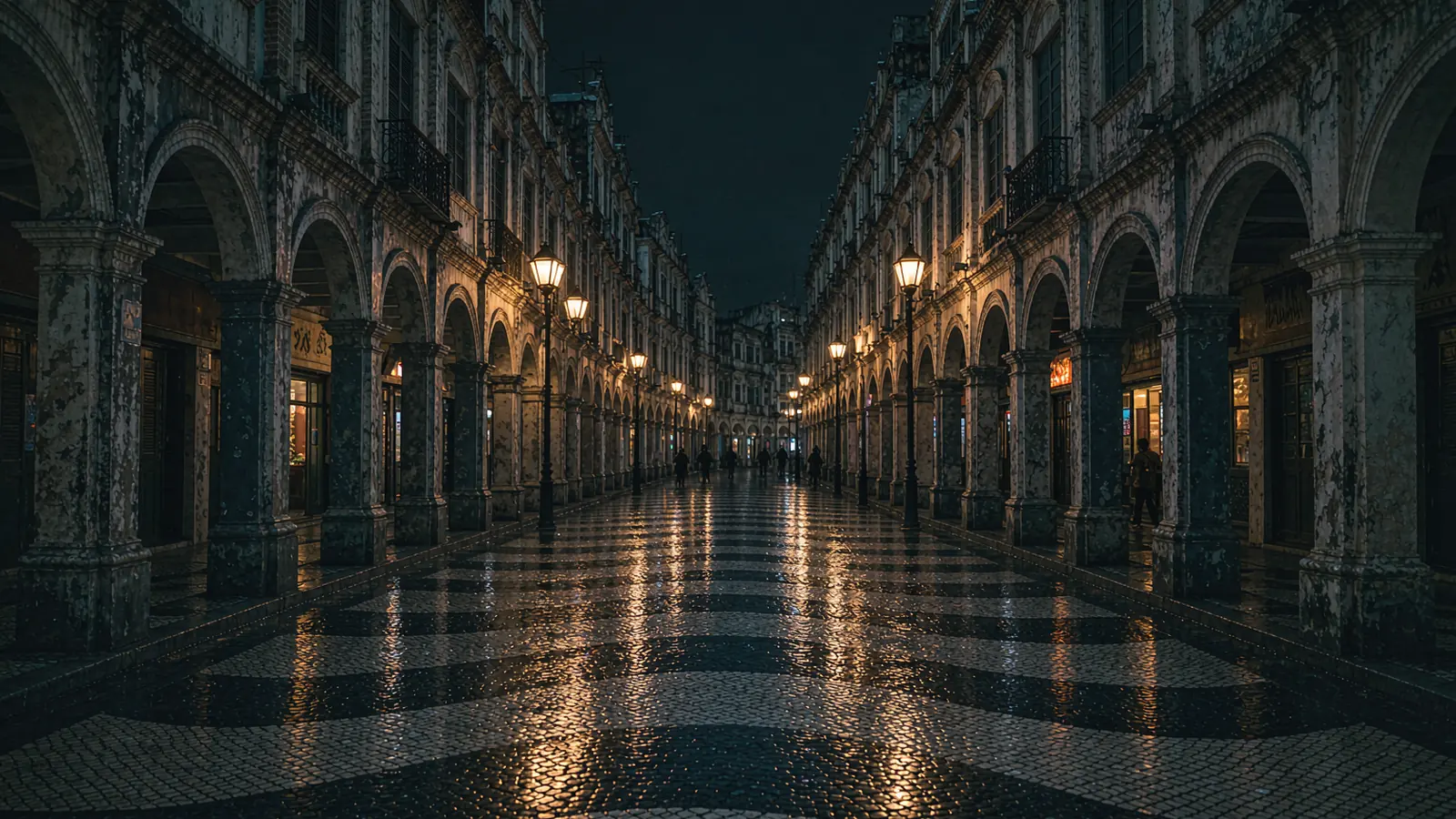
Portuguese pavement in a street of Macau's historic centre: the wave pattern in basalt and limestone, with the narrow-doored façades and signs in both languages. Afternoon. Mount Fortress and lighthouse, with the view over the peninsula. Lunch at a historic Macanese restaurant. Evening. Arranged conversation with members of the Macanese community and a light dinner on Taipa.
Meals: breakfast and dinner.
03Day 3
Taipa, Coloane and crossing to Guangzhou
Morning. Taipa village and its twentieth-century houses; cinnamon egg tarts straight from the oven. Afternoon. Coloane and the fishing village facing the Zhuhai channel. Crossing to the mainland over the bridge or through the Border Gate, depending on traffic. Evening. Check-in in Guangzhou and dinner of Cantonese food in the old district.
Meals: breakfast and dinner.
04Day 4
Guangzhou: the Thirteen Factories
Morning. The Shamian district, the island of the foreign concessions, with the consular houses where the Portuguese had a factory. Walk on to the Qingping market. Afternoon. Guangzhou’s oldest food street and then morning tea — the Cantonese yum cha, with steamer baskets. It is the same ritual the Portuguese encountered and adapted.
It was in Guangzhou, not Macau, that Europeans were allowed to trade for more than two centuries: first in the Thirteen Factories district, on a strip of riverbank a few hundred metres long, and later on Shamian island, where the concessions built consular houses, churches and clubs. The two places are twenty minutes apart and read as two consecutive pages of the same process. It is also here that you understand Cantonese morning tea has little to do with afternoon tea: it is steamer baskets, large tables and long conversation.
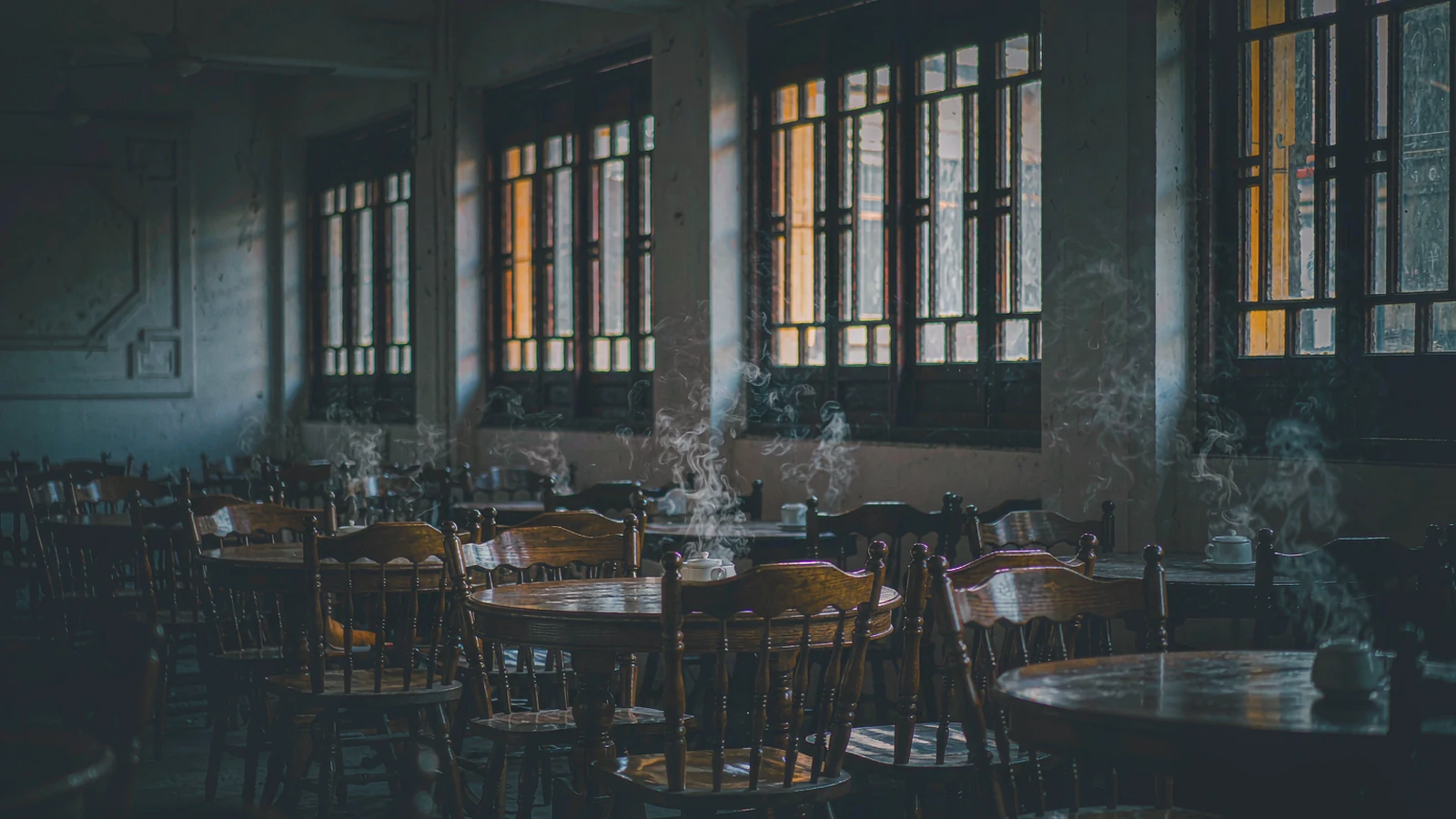
A Guangzhou teahouse late in the morning: light comes in through the carved wooden windows and outlines the profile of whoever is drinking tea at the round table. Evening. Seafood dinner, chosen live at the door.
Meals: breakfast and lunch.
05Day 5
Guangzhou to Shanghai
Morning. Chan Clan Temple and the Temple of the Six Banyan Trees, with its eleventh-century pagoda. Last tea purchases on the spice street. Afternoon. High-speed train to Shanghai, about seven hours in first class, with lunch served on board.
On this crossing the country changes latitude and language: Cantonese is left behind for the Mandarin of the Yangtze, and the delta stops being periphery and becomes the economic engine of China. The train journey is long but comfortable, and it serves as a rest. Evening. Arrival and a first walk along the lit-up Bund, reading the colonial buildings one by one.
The Bund walk reads better by day and is repeated at night: for centuries this is where the banks, the shipping companies and the foreign trading houses operated, including Macau firms with offices in the city. The names erased from the façades can still be made out in the stone.
Meals: breakfast and lunch.
06Day 6
Shanghai of the concessions
Morning. The Bund at 6:30, with the tai chi practitioners. Then Yu Garden at 8:30. Afternoon. French Concession on foot: Wukang Road, the Wukang Building and the former French club headquarters. Late afternoon free for Xintiandi. Evening. Dinner of Shanghai cooking and up the Shanghai Tower, if visibility allows.
Meals: breakfast and dinner.
07Day 7
Suzhou: gardens and canals
Morning. Thirty-minute train to Suzhou and the Humble Administrator’s Garden. The Suzhou Museum, by I.M. Pei. Afternoon. Canals of the Pingjiang district and a boat ride. Back to Shanghai at the end of the day.
Suzhou is on the programme not because it is picturesque: it is there because it is the city Shanghai replaced. For centuries it was the centre of silk and of the scholar’s garden, and it is where urban China before the nineteenth century survives whole — which is why the gardens of Suzhou are on the world heritage list. Evening. Dinner at leisure and last night in the city.
Meals: breakfast and lunch.
08Day 8
Shanghai to Beijing
Morning. Shanghai Museum, at People’s Square, with the reservation made by us. The focus is the ritual bronze, which is where China becomes legible. Afternoon. High-speed train Shanghai–Beijing, 4h18 to 6h. Evening. Arrival in Beijing and Peking duck dinner in Dongcheng.
Meals: breakfast and dinner.
09Day 9
Beijing, the imperial court, and departure
Morning. Forbidden City at 8:30, and the Portuguese trail in northern China: the former Jesuit observatory, where Adam Schall worked, and the cathedral Tomás Pereira helped raise.
In the Jesuit cemetery are the graves of Matteo Ricci, Adam Schall and Ferdinand Verbiest, next to a row of Portuguese priests: it is one of the few places in China where the European presence at the court can be seen in stone. The visit is made with prior authorisation and within a short time slot, which means arriving in Beijing the day before, with time to arrange it.
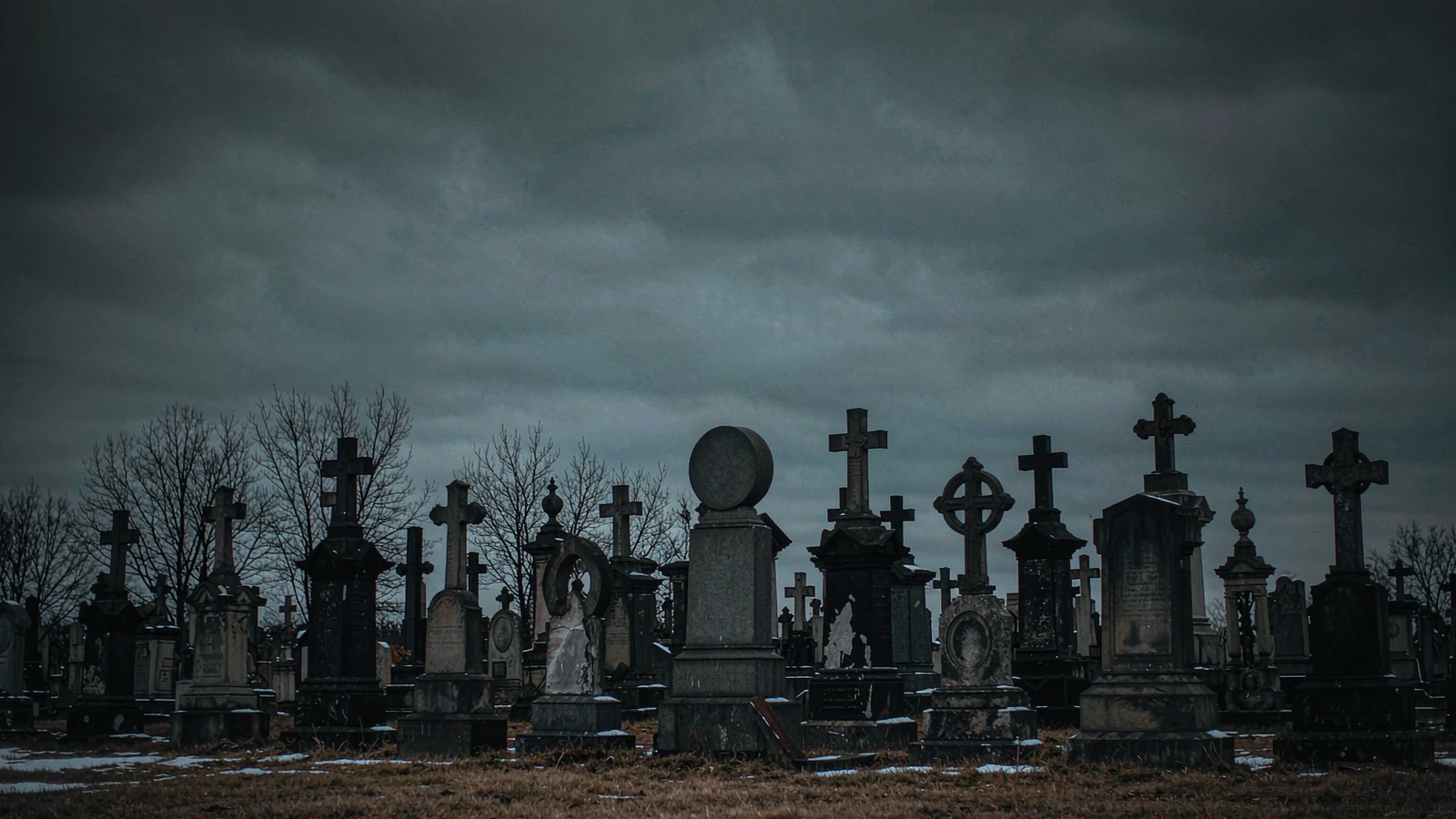
The Jesuit enclosure in Beijing: stone stelae with inscriptions in Latin and in Chinese, set against the wall, where the priests who served the imperial court in the seventeenth and eighteenth centuries rest. Afternoon. Depending on the flight time, lunch and transfer to Beijing airport, or an extension to the Wall.
Meals: breakfast.
Three things you will not repeat
01
Macau on foot, with a Macanese dinner and a conversation with the local community
02
Morning tea in Guangzhou and the historic Thirteen Factories district
03
The Portuguese presence at the court of Beijing: the Jesuit cemetery and the Catholic cathedral
Price
US$ 3.400 a 4.400
Per person · 9 days · 8 nights
Land portion in China, double room, excluding international flights. From 2 travellers.
What's included
- Land transport in China: high-speed rail and domestic flights as listed
- Portuguese-speaking guide from the first day to the last
- 4-star hotels, double room
- Entry tickets to the monuments listed in the itinerary
- Daily breakfast
What's not included
- International flights to and from China
- Visa and consular fees
- Meals not listed in the itinerary
- Tips and personal expenses
Frequently asked questions
Do I need a visa for Hong Kong and Macau?
Portuguese citizens enter Hong Kong without a visa for 90 days and Macau for 30 days, and the same applies to Brazilians. The mainland part of the itinerary requires a Chinese visa for everyone. Because the tour crosses the border twice, we handle the mainland visa and confirm each traveller's nationality before booking.
How physically demanding is it?
Low to moderate. This is an urban tour, with two to four hours of walking a day, almost always on flat city streets. It includes staircases on short climbs such as the Mount Fortress. There is no trekking and no altitude.
Is there a single room supplement?
Yes, between US$ 480 and US$ 720, because it includes two nights in Hong Kong, where hotels are the most expensive in China. Anyone travelling alone receives a closed quote before booking.
Can the dates be changed or postponed?
Yes. No cost up to 30 days before departure; between 30 and 15 days we retain non-refundable hotel rates and tickets already issued; under 15 days each supplier's own conditions apply. Postponing to the following year is always possible, subject to the difference in season.
Is Portuguese spoken in Macau?
It is, less than people expect. It is an official language alongside Chinese and around 2% of the population speak it at home. We always arrange at least one conversation with members of the Macanese community, which is the part of the itinerary our clients remember most.
Is this tour run in Brazil as well?
It is open to any Portuguese-speaking traveller. The point of view is Portuguese, because of the historical link with Macau, and that is what distinguishes it from a standard tour of China.
Cities on this tour
This tour is a starting point
It is not a fixed package.
We can add days, swap cities or drop stages. Tell us what you want and what cannot be left out.
Chat on WhatsAppReplies in English · no obligation