Destinations
Lhasa
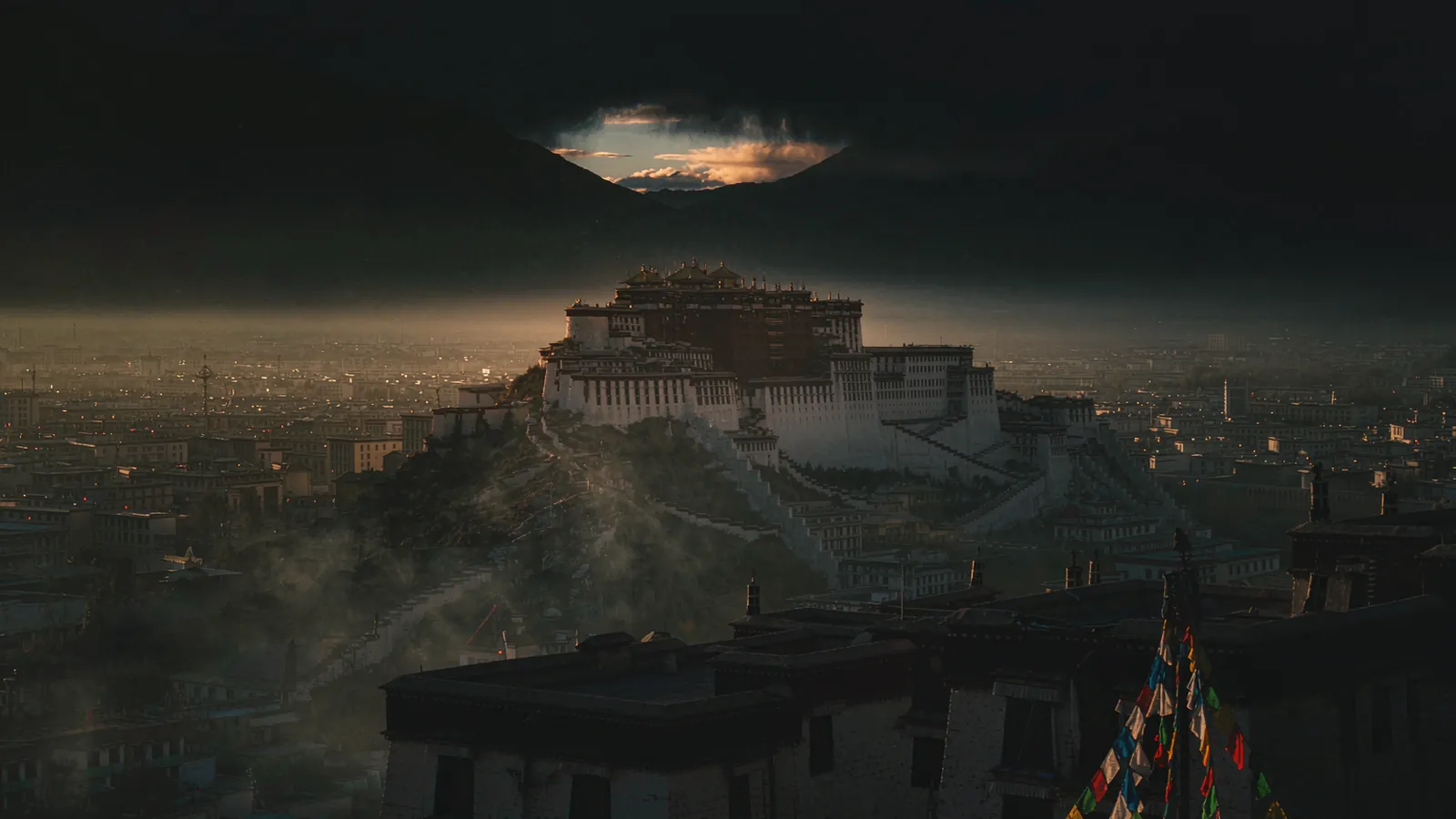
The Potala above, and the silence between 3,650 metres and the sky. A city that is visited slowly.
At a glance
- Best time to visit
- May–Sep
- Suggested nights
- 3 nights
- Region
- Tibete
- Booking required
- Potala Palace · Jokhang Monastery
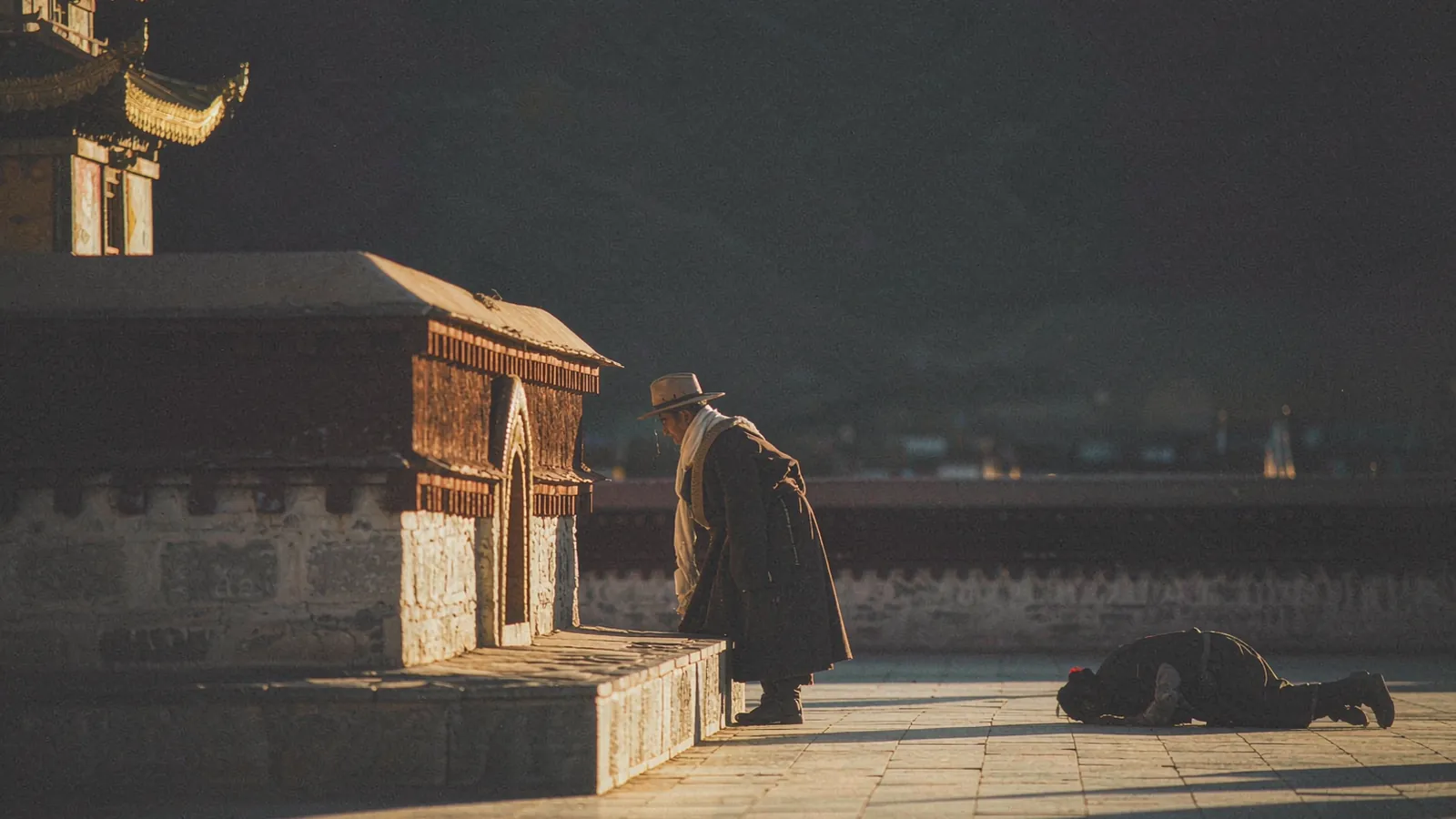
Lhasa sits in a valley at 3,650 metres, ringed by mountains above 5,000. The city has two poles: the Potala Palace, the largest palace-fortress complex in the world, and the Jokhang, the holiest temple in Tibetan Buddhism, with pilgrims prostrating themselves at the door from first light.
Why go
Because it is the closest a traveller gets to a civilisation running on different rules. Pilgrims have walked clockwise around the Barkhor for centuries; monks debate philosophy in courtyards, clapping their hands as they argue; and the air is so thin that on the first night you hear your own heart beating as you lie down.
Also because it is the only part of China where the state has not built a modern version of the landscape. The whole region is plateau, monastery and sky — none of it can be confused with the rest of the country. For anyone coming back to China, it is the next step. And it involves paperwork: without a permit and a guide you do not get in, whatever some travel agencies in China imply to the contrary.
What to see and do
The Potala Palace. Thirteen storeys, more than a thousand rooms, and 117 metres up from the hill. Visits use real-name tickets at a fixed time slot — we book days ahead because places per day are limited. Inside, steep stairways are climbed at altitude: it is done slowly, with stops. It is worth it above all for the funerary chapels of the Dalai Lamas and for the view of the city from the terrace.
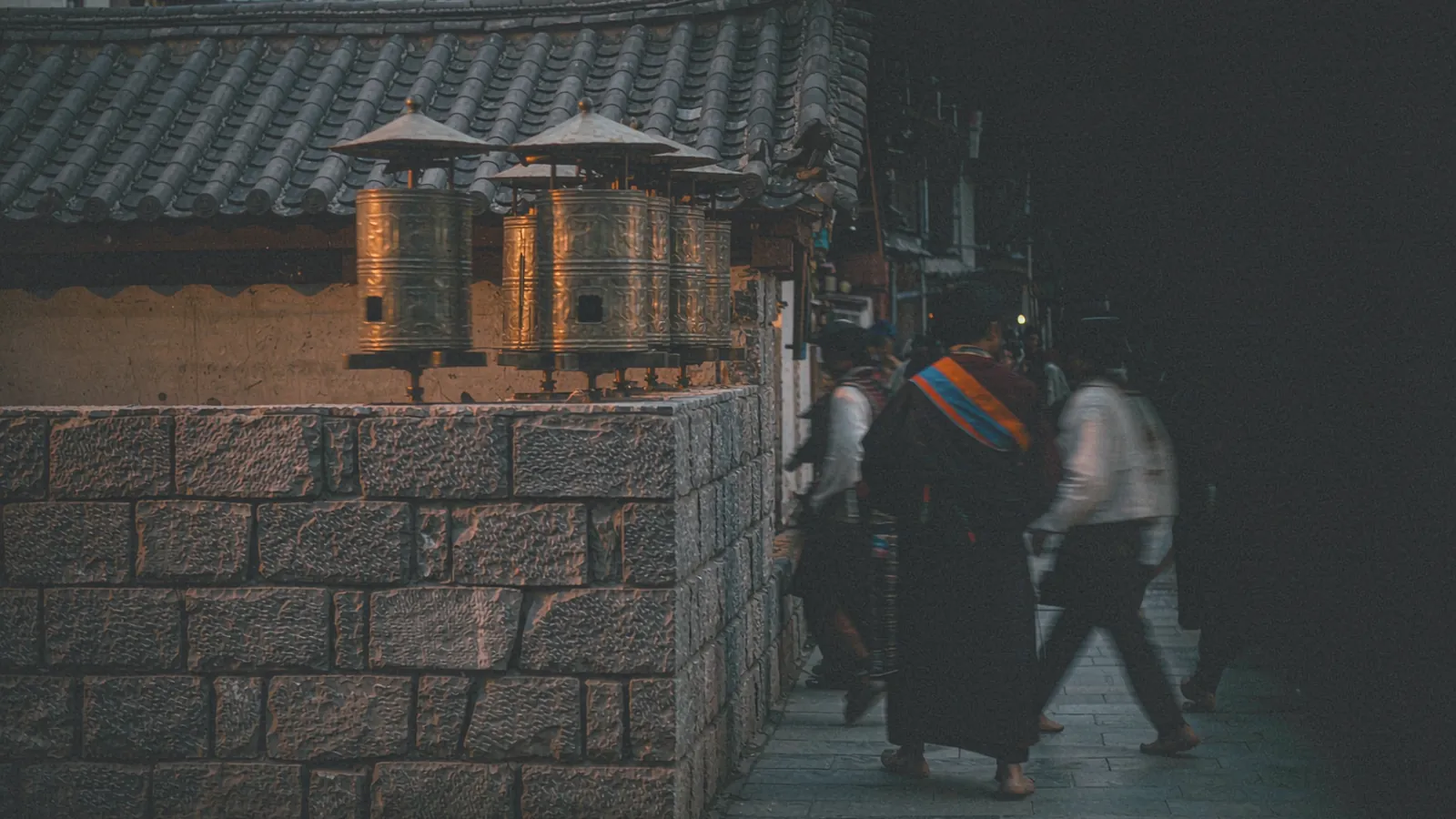
The Jokhang and the Barkhor. The temple, founded in the seventh century, holds the most venerated statue in Tibetan Buddhism. Around it, the street of the Barkhor is the pilgrimage circuit walked with everyone else: at 6am, when pilgrims arrive from the villages, it is a spectacle; after 10am it is a shopping street.
The monasteries of Drepung and Sera. Drepung was once the largest monastery in the world, with seven thousand monks, and still has white houses stacked up the slope. Sera is known for its open-air debating sessions in the afternoon, when monks argue while clapping their hands — you can watch from outside the courtyard, in silence.
Norbulingka. The summer palace of the Dalai Lamas, with gardens and trees planted two hundred years ago. It is the gentlest outing for the second day of acclimatisation.
The hot springs and the lakes to the south. With extra days we continue to Gyantse, Shigatse and on to Everest base camp, two nights away by road. Each of these extensions requires another permit.
How we run it
We do not accept bookings for Tibet with less than twenty days’ notice: the permit is issued against a fixed itinerary, and any change after it has been issued means starting again.
We always build the programme with a full arrival day and nothing scheduled beyond a short walk. It is not a lost day: it is the difference between three days of headache and none. We carry an oximeter in the car and portable oxygen, and the guide knows how to recognise the signs of altitude sickness.
We always bring in a local Tibetan guide alongside our own guide, not because the law requires it, but because without one you will not get into conversation with the monks or understand what you are looking at.
We keep strictly to local rules: pilgrims are not photographed without asking permission, temples are always circled clockwise, and politics is not debated with the monks.
How long to stay
Three nights is the reasonable minimum: a day to land without doing anything, one for the Potala and the Jokhang, one for Drepung and Sera. It is also the administrative minimum: the permit covers a fixed itinerary, and there is no sense spending twenty days on paperwork for two days of visiting.
Four nights allow Norbulingka plus a short run out to Yamdrok Lake, two and a half hours by road, without undermining the acclimatisation. It is our best-selling programme.
Six to seven nights suit anyone continuing through Gyantse and Shigatse as far as Everest base camp. Each extension needs an additional permit, so the request has to be made in one go, at the start of the process.
The three-day rule is not negotiable, and for physical reasons: anyone arriving at 3,650 metres and climbing the Potala the same day almost always has a bad first night.
When to go
May and June. 8 to 22 °C by day, clear skies, dry air, little rain. The best time to arrive and to photograph.
July and August. 12 to 24 °C, with rain in the afternoons — the plateau monsoon. The scenery turns green and there are domestic crowds: hotels and Potala tickets sell out weeks ahead.
September and October. 5 to 20 °C, the cleanest skies of the year and the sharpest light. Our absolute preference. The nights are already cold.
November to April. -8 to 10 °C by day with night lows of -15, dry skies and almost no tourists. A good time for anyone who tolerates cold; the monasteries stay open throughout.
We avoid Tibetan New Year (Losar), between January and March, because several areas close to visitors for weeks.
Where to stay
Near the Barkhor and the Jokhang. The heart of the old city and the best choice for three nights: you step out of the door and you are inside the pilgrimage circuit.
On Beijing East Road and around it. A modern district with higher-category hotels and better facilities, ten minutes by taxi from the historic centre. Our recommendation for anyone wanting heating and supplementary oxygen in the room.
We avoid the large hotels in the development zone to the west, built for groups, thirty minutes from everything.
For acclimatisation we recommend sleeping the first night in Xining, at 2,200 metres, before entering Tibet. It makes all the difference on the second day. In Lhasa, rooms with supplementary oxygen cost more, but they settle the first night for almost everyone.
What to eat
Tibetan cooking is built for the climate. The staple is tsampa, roasted barley flour kneaded by hand with yak butter tea, and momos, dumplings filled with yak meat or vegetables, steamed.
Here the everyday drink is yak butter tea, salty, with the texture of a thick soup, and it is what has kept Tibetans warm for a thousand years — you should try it at least once, and you are not obliged to like it. Wheat noodles with plateau vegetables and yak stew round out the typical meal.
Lhasa also has Nepalese restaurants and Sichuan cooking, which is what Tibetans themselves choose for dinner. Our advice to travellers: eat light and drink plenty of water for the first two days, and avoid alcohol until the body adjusts.
Getting there
Gonggar airport is 60 km south, an hour by road along the Yarlung Tsangpo valley motorway.
By train, the Qinghai–Tibet line runs Xining to Lhasa in about 21 hours, crossing the plateau above 5,000 metres with supplementary oxygen in the carriages. We recommend doing it once in a lifetime, on the way down rather than on the way up.
There are direct flights from Beijing, Shanghai, Chengdu and Xi’an. Our practice is to chain Xining–Lhasa by air with an intermediate night, to acclimatise before landing at 3,650 metres. Every transfer includes pickup with the Tibetan guide, and the car stays with the group for the whole stay — not optional, it is a condition of the permit.
Where most agencies get it wrong here
Booking the Potala for the arrival day. Real-name ticket, fixed time slot, and 117 metres of stairs at altitude. Climbing the palace on the day you land at 3,650 metres is the sure recipe for a bad night. We schedule the Potala for the second day, with places confirmed before the client even boards the plane.
Closing the permit application late. We issue the itinerary at least twenty days in advance; any change after issue means starting again. Agencies leave this to the last week and lose trips over it.
Dropping the Tibetan guide. Without one there is no conversation with the monks, no knowing which hall is closed that day, and no understanding of the Barkhor. We pair a local guide with our own guide on every programme.
Promising total flexibility. In Tibet the itinerary is fixed from the start and the guide is compulsory throughout. We say that before booking, rather than discovering it at the border.
Underestimating the cold and the sun. At 3,650 metres the sun burns and the shade freezes, often on the same walk. We always ask for good sunglasses, sunblock, and a layer you can take off and put back on five times a day.
It is the most demanding destination we sell, and the most rewarding. That is why we never propose it as a last-minute extension to a trip to China: it is planned months ahead.
Keep reading
How we organize it
01
We arrive early
We get into the monuments before the tour buses. The Wall at 7am, the Forbidden City at 8:30am.
02
A Portuguese-speaking guide
One guide from the first day to the last, in Portuguese. No handing you over to someone new in each city.
03
We handle the bookings
We take care of the named reservations that need a passport, including the ones that sell out in high season.
Frequently asked questions
Do you need a special permit for Tibet?
Yes. Every foreign traveller needs a Tibet travel permit, issued through an agency established in the region, against a fixed itinerary, with a compulsory guide for the entire stay. We handle the process at least twenty days in advance, and independent travel is not possible.
How do you cope with the altitude of 3,650 metres?
Slowly. Fly in, rest the first day doing nothing of consequence, drink two litres of water, avoid alcohol and do not exert yourself for the first 48 hours. That resolves most cases of headache and breathlessness. In our groups we carry an oximeter and emergency oxygen.
How many days in Lhasa?
Three nights is the reasonable minimum: a day to acclimatise, one for the Potala and Jokhang, and one for the monasteries of Drepung and Sera. Anyone wanting Gyantse and Shigatse needs another three nights.
Train or plane to Lhasa?
Plane, because it lets you sleep the first night at low altitude in Xining and acclimatise better. The train from Xining to Lhasa takes over twenty hours, crosses the plateau at 5,000 metres and is magnificent, but you arrive tired and already at altitude.
How much language gets you by in Tibet?
Very little — almost no English outside the hotels of Lhasa. It is one of the regions where a private guide makes all the difference in understanding what you are looking at.
Tours that include Lhasa
Talk to the people who run it
Want Lhasa in 3 nights, or a different way round?
Tell us how many you are, when you want to go, and what cannot be left out. We shape the itinerary from there.
Chat on WhatsAppReplies in English · no obligation