Regions
Deep Yunnan
Kunming, Yuanyang, Dali, Lijiang and Shangri-La on one route: terraces, minorities and altitude. How many days, when to go, and how to link it together.
At a glance
- Recommended days
- 11 days
- Cities to combine
- Yunnan · Lhasa · Chengdu
- How you travel
- Private · English-speaking guide · no shop stops
- Updated
- October 18, 2026
Yunnan usually enters itineraries as a two- or three-day appendix: you arrive in Kunming, go up to Dali, sleep in Lijiang and come back. It is the most common way to ruin the most diverse province in China. How many days in Yunnan is the right question to ask before buying the flight, because the answer changes everything: below five days you see an abridged version, above nine you see a region that resembles no other in the country.
Twenty-five recognised ethnic minorities, altitudes running from 80 metres in Xishuangbanna to more than 6,000 metres at the northern glaciers, and a border touching Laos, Myanmar and Vietnam. Over short distances you move from subtropical valleys with rice paddies to yak pastures where people eat tsampa and drink butter tea.
What “depth” means here
A superficial route through Yunnan is a line: Kunming, Dali, Lijiang. A deep route is a mesh, and it adds three things the line does not have.
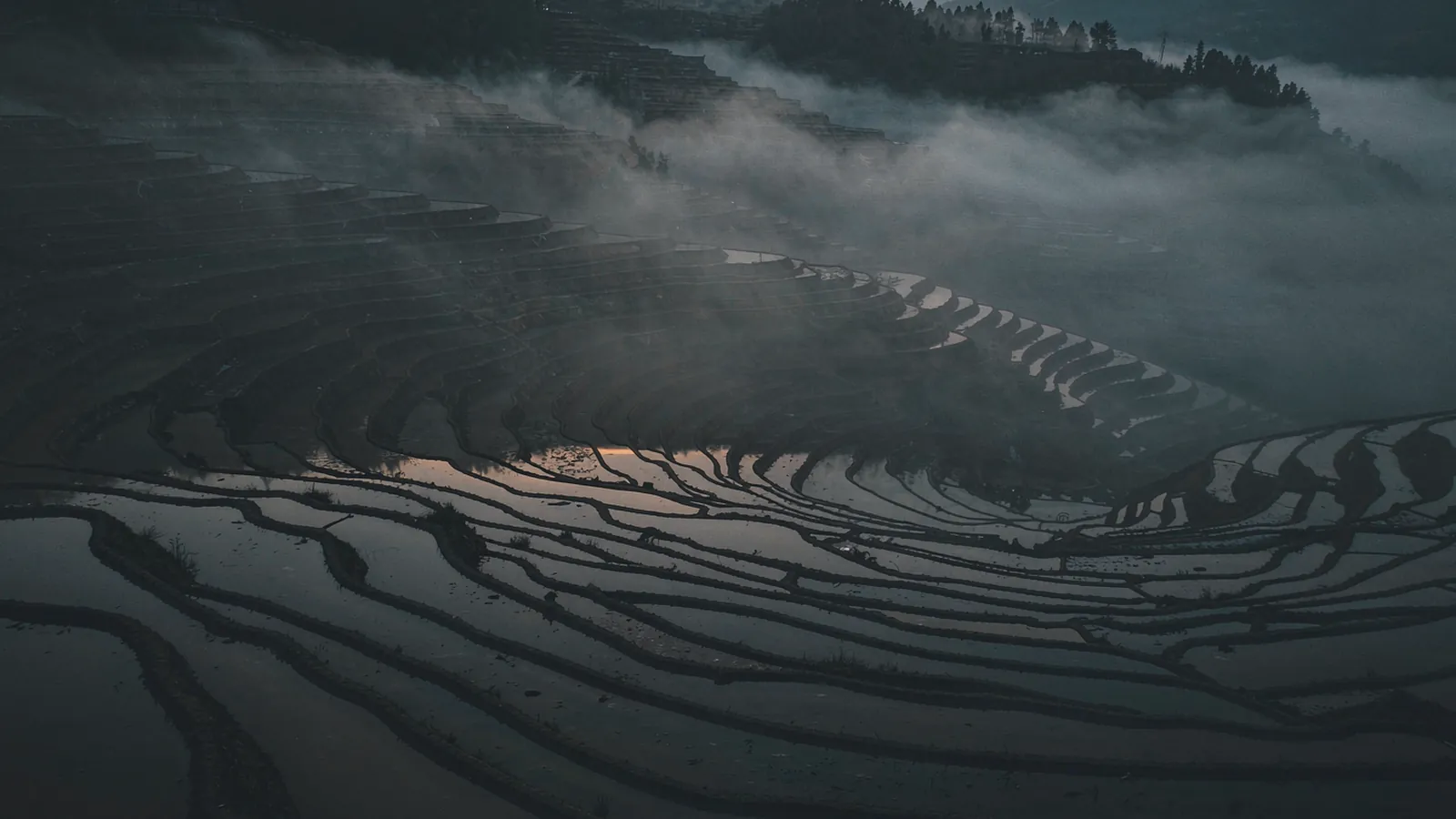
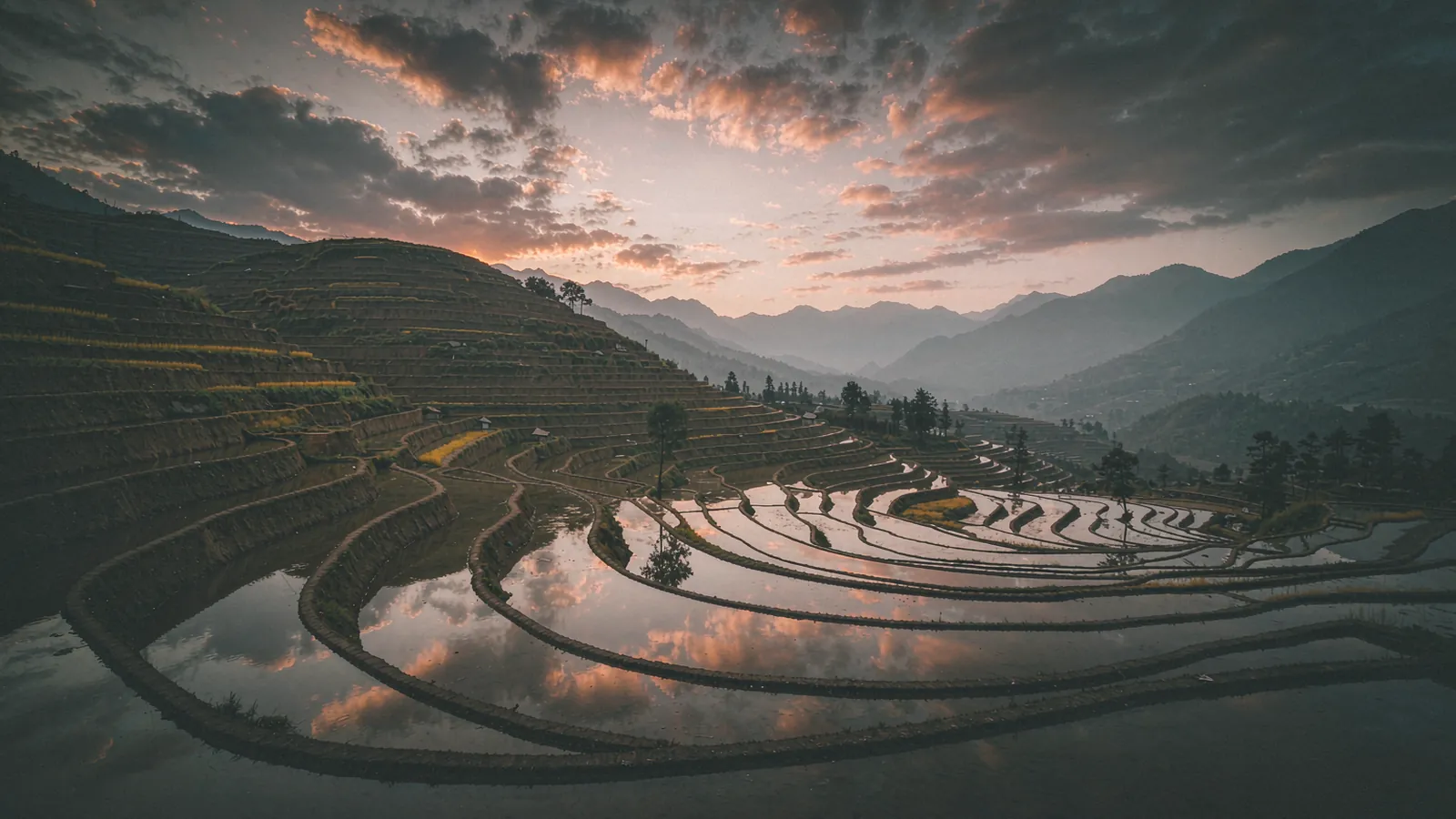
The Yuanyang terraces. Rice fields built in steps by the Hani over more than a thousand years, listed by UNESCO. Between December and April they are flooded and act as mirrors reflecting the sky; at dawn, with mist in the valley, it is the most photographed agricultural landscape in China. They lie in the south, far from the main line, which is why almost nobody includes them.
The climb to the plateau. Shangri-La, at 3,200 metres, with Tibetan villages, monasteries and pastures. It is the part of Yunnan that prepares anyone going on to Tibet, and there is no point doing it in a single day of transit.
The tropical south. Xishuangbanna, on the Laos border, with rainforest, the night market at Jinghong and Dai villages. It is the Yunnan that has nothing to do with the rest of Yunnan.
The spine: Kunming, Dali, Lijiang
Kunming is the almost unavoidable entry point. It is called the “city of eternal spring” with reason: the annual average sits around 15 °C and no month is genuinely uncomfortable. It serves as a base for the Stone Forest, a field of limestone towers 270 million years old two hours away by road, where a local guide is booked so you do not follow the electric buggy circuit. At night, the mushroom market is an institution.
Dali was the capital of the kingdom of Nanzhao and is still the most pleasant city in the province. Walls, water channels running alongside the streets, Erhai Lake with a 4,000-metre range on the far shore. The loop around the lake can be cycled in a day, stopping at the fishing villages and at the Shazhou market. It is the stop where people stay longer than they had planned.
Lijiang is Naxi, listed by UNESCO, and known for the channels that once served as a fire-warning system. The Jade Dragon Snow Mountain rises above 5,500 metres; the cable car drops you at 4,500 and you walk down on foot through Blue Moon Valley. Cable car tickets sell out regularly in high season and are booked in advance. At night the old town has loud music on the central streets: anyone wanting silence sleeps in Shuhe, the village alongside.
Shangri-La and the plateau
North of Lijiang the landscape changes in kind: the rice paddies disappear and pastures appear, along with prayer flags and yaks. Shangri-La — the former Zhongdian, renamed after the novel by James Hilton — sits at 3,200 metres and marks the limit of what can be done without careful acclimatisation.
It is worth it for Songzanlin, the largest monastery in Yunnan, for the Napahai pastures, and for the villages where you go into stone houses to drink butter tea. For anyone with legs for it, Tiger Leaping Gorge lies halfway: the Yangtze squeezed between two walls of 3,000 metres, with a high trail done over two days sleeping in a village, or in one full day just as far as the viewpoints.
It is also here that Yunnan links into the rest of the trip. Anyone going on to Tibet gains from doing Shangri-La first: the body reaches the plateau already carrying two days of altitude. It is the logic of the Grand Crossing along the Silk Road, which comes down from Xi’an to the southwest and only then climbs to Lhasa.
The detours worth two days
Yuanyang, in the south. Two days, one night, one dawn. It cannot be seen in passing.
Lugu Lake and the matriarchal Mosuo society, six hours by road from Lijiang. Worth it for anyone interested in social structures who accepts the drive.
Xishuangbanna, at the southern extreme. Worth it for anyone wanting rainforest and heat in January, and it fits a winter trip well.
Pu’er and the tea mountains, for anyone wanting to understand where the dark tea drunk all over China comes from. Done over two days, staying in a tea-producing village.
Where to sleep
In the old town of Dali, inside the walls or in the guesthouses on the shore of Erhai Lake, preferably facing east so the sun rises over the water.
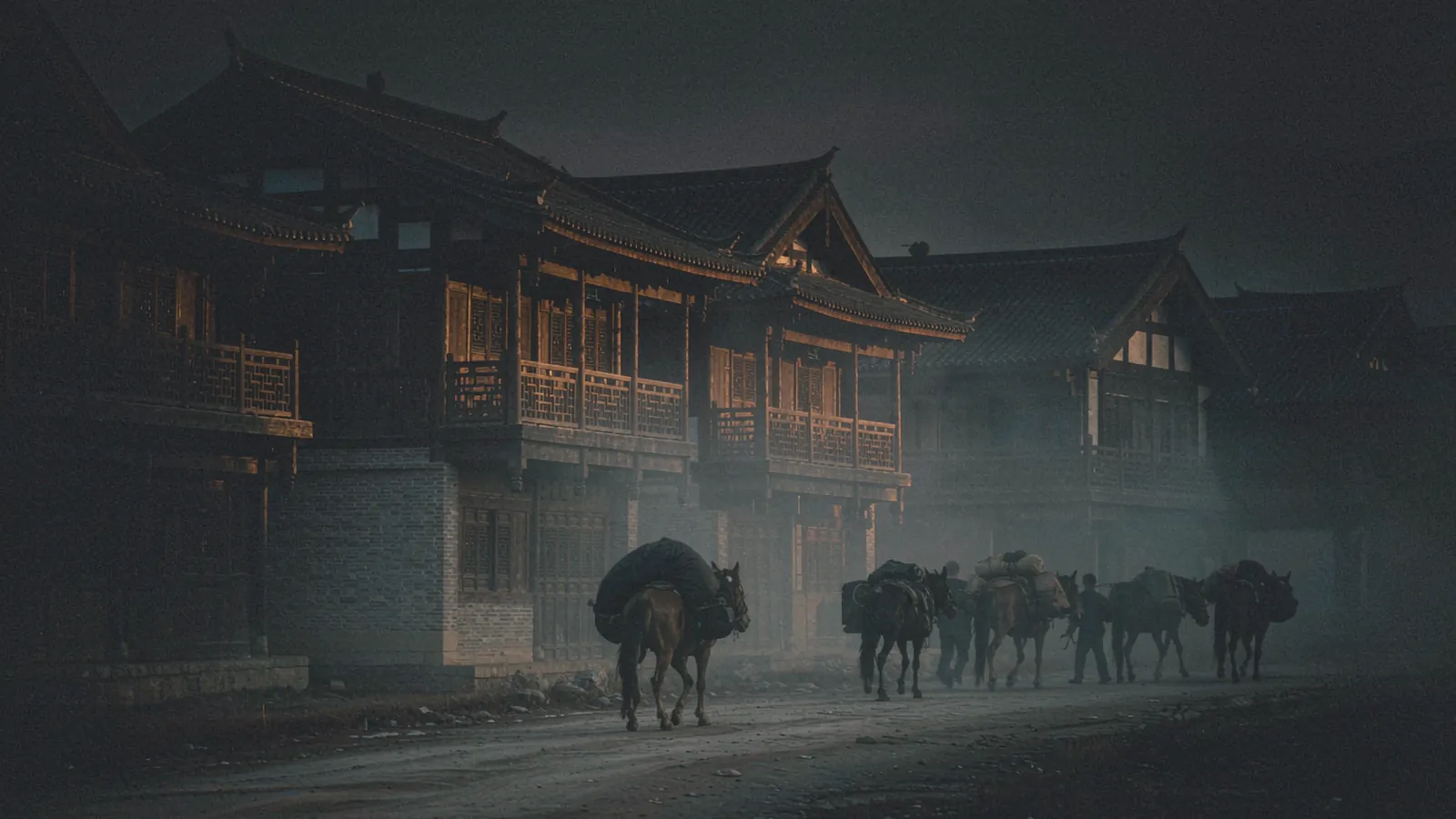
In Lijiang, in the old town, in converted Naxi courtyards, taking care to choose houses away from the main streets, because the central area has loud music until late. For silence, Shuhe is preferable, the small quieter village alongside.
In Shangri-La, hotels with heating and ideally supplementary oxygen: a night at 3,200 metres is always harder than expected, and this is not where to economise.
In Yuanyang, simple accommodation in the villages above the terraces. There is no luxury and none is needed: the reason for being there is leaving before dawn for the viewpoint, and sleeping in the valley would mean an hour on the road before sunrise.
What to eat
Yunnan cooking starts with guoqiao mixian, the noodles crossed over the bridge: boiling broth in a stone bowl into which you drop the raw ingredients one after another, to cook at the table, served in Kunming since the nineteenth century. Then comes Dali goat’s cheese (rubing), fried or grilled with sugar, sold from stalls in the old town; Xuanwei ham, cured at altitude; and wild mushrooms sautéed with garlic, which appear in dozens of species in the markets between June and September.
In Shangri-La everything changes: tsampa, yak butter tea and stewed dried meat. In the south, in Xishuangbanna, the cooking comes close to Southeast Asia: grilled fish with herbs, rice steamed in bamboo, and pineapple curry. For dessert, and everywhere, the rose cake of Kunming, puff pastry made with petals.
Because the food here is a reason to travel rather than a detail, the province features in Gastronomic China whenever the client accepts spice and early-morning markets.
How many days, in the end
Five days meet the minimum: one night in Kunming or none at all, two in Dali, two in Lijiang. It is honest, and it leaves out everything that makes the province different.
Seven to eight days already allow Kunming, the Stone Forest, Dali with the loop round the lake, Lijiang with the Snow Mountain, and two nights in Shangri-La. It is the programme recommended to anyone with a week of holiday.
Ten to eleven days is the complete answer to the question in the title. They add Yuanyang with its dawn, Tiger Leaping Gorge over two days of walking, and an extra night on the plateau. It is the route we run most often and the one that spreads the effort best.
Fourteen days bring in the tropical south and Lugu Lake. From here you are talking about an entire region rather than a trip extension, and it is the point at which the province chains into Chengdu to the north by high-speed rail, in about seven hours.
When to go
March to May. Dry, 8 to 24 °C depending on altitude, green fields. The best time for walking.
June to September. The southwest monsoon: rain almost daily in the afternoon, slippery roads, fog that hides the Snow Mountain. In compensation it is wild mushroom season, with dozens of species in the markets, and Kunming has entire restaurants devoted to them.
October and November. Dry air, clear skies, golden light on the terraces after the harvest. The preference for photography, and the reason Photographic China passes through the province at this time.
December to February. Cold in Shangri-La, mild in Kunming and Dali, and the season of the black-necked cranes on the plateau lakes. Yuanyang enters its best phase.
How you travel today
The Kunming–Dali–Lijiang–Shangri-La spine is covered by high-speed rail, with less than two hours on each leg. Everything else — Yuanyang, Lugu, Xishuangbanna, Tiger Leaping Gorge — is done by private car with a local driver, on mountain roads that are good but demand practice, and where July fog arrives without warning.
We book the Snow Mountain cable car and entry to the caverns that require real-name reservations as soon as the route is agreed. They are never left until the day before.
We organise Yunnan privately at all times: two to six travellers, a private guide, a car with a driver, and no stops at tea or silver shops. For families, the province chains well with the Panda Route, which enters through Chengdu.
Tours that pass through Deep Yunnan
Cities to combine
Frequently asked questions
How many days do you need in Yunnan?
Five cover the essentials between Dali and Lijiang. Eight to ten allow Kunming, the Yuanyang terraces and a calm ascent to Shangri-La. Fewer than five does not pay: you spend more time on transfers than in places.
Does Shangri-La cause altitude sickness?
At 3,200 metres the first night is almost always bad: headache and broken sleep. The climb is done in stages, with two nights in Lijiang at 2,400 metres beforehand and no exertion on the day you reach the plateau. That is how every route of ours works.
Is it worth including Yuanyang?
It is, but only between December and April, when the terraces are flooded and act as mirrors. Outside that window they are green or stubbled rice fields, beautiful but without the effect they are known for. It adds two days to the route.
Can Yunnan be done by train?
Yes, along the spine: Kunming to Dali, Dali to Lijiang and Lijiang to Shangri-La are connected by high-speed rail. For Yuanyang, Xishuangbanna and Lugu Lake we use a car with a driver, because they are detours of several hours on mountain roads.
What is the best time of year for Yunnan?
March to May and October to November, for most of the province. June to September is the monsoon, with rain almost daily in the afternoon; in compensation it is wild mushroom season, which for many people is reason enough to go.
Talk to the people who run it
Want Deep Yunnan in 11 days, or a different way round?
Tell us how many you are, when you want to go, and what cannot be left out. We shape the itinerary from there.
Chat on WhatsAppReplies in English · no obligation