Destinations
Zhangjiajie
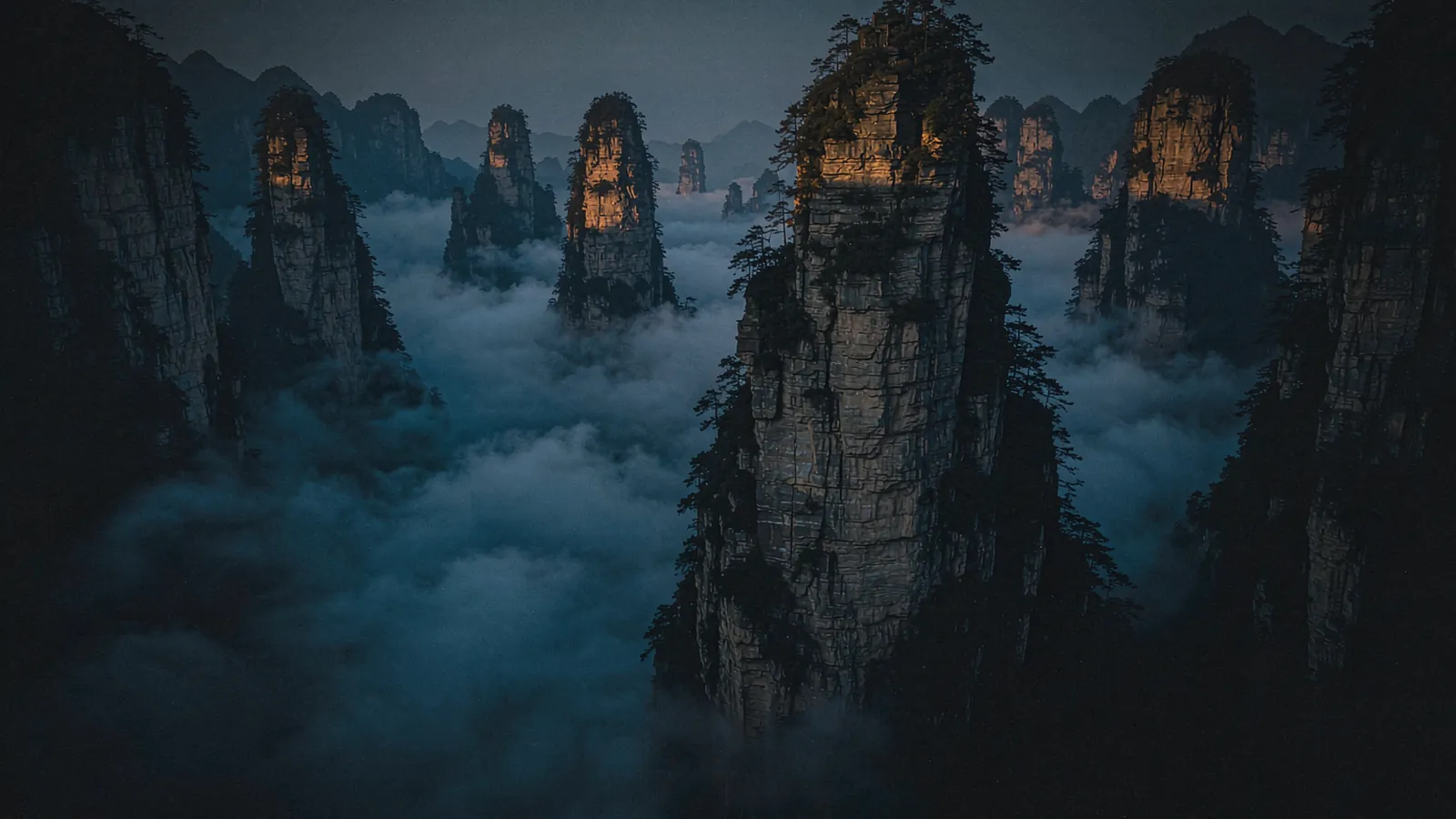
The sandstone pillars that inspired Avatar. More than three thousand of them, and they are real.
At a glance
- Best time to visit
- Apr–Jun · Sep–Nov
- Suggested nights
- 2 to 3 nights
- Region
- Centro-sul
- Booking required
- Wulingyuan National Park
Zhangjiajie is a forest of quartz sandstone pillars carved by erosion over millions of years: more than three thousand vertical columns, some over 300 metres tall, rising from the floor of a valley covered in subtropical vegetation. It was the landscape that inspired the floating mountains in the film Avatar.
Why go
Because along with the Li river at Yangshuo, it is the only landscape in the country with no equivalent anywhere else. Everything else in China was made by people — palaces, walls, temples, cities. The pillars of Zhangjiajie are pure geology, and they appear without warning.
It is also a region where you can genuinely walk. There are boardways hanging against the rock, valley floors along streams that nobody enters, and a system of cable cars and lifts that lets you do the routes without being a climber. For photographers it is one of the best places in Asia; for families it works better than expected. That said, it is worth stating the obvious: Zhangjiajie is nature, not city. There is nothing to do in the village at night, and it is better that way.
What to see and do
Yuanjiajie and the Avatar pillars. The plateau holding the best-known columns, including the one that took the name of the film. You reach it by the Bailong elevator, 326 metres set into the rock, or by the Tianzi Shan cable car. Go at 7am, ahead of the groups: after 10am the boardwalk turns into a queue.
Tianzi Mountain. A ridge of pillars seen from above, with viewpoints at 1,200 metres. It is the best place to grasp the scale of the whole thing, and it often has mist between the peaks early in the morning. The cable car takes you up.
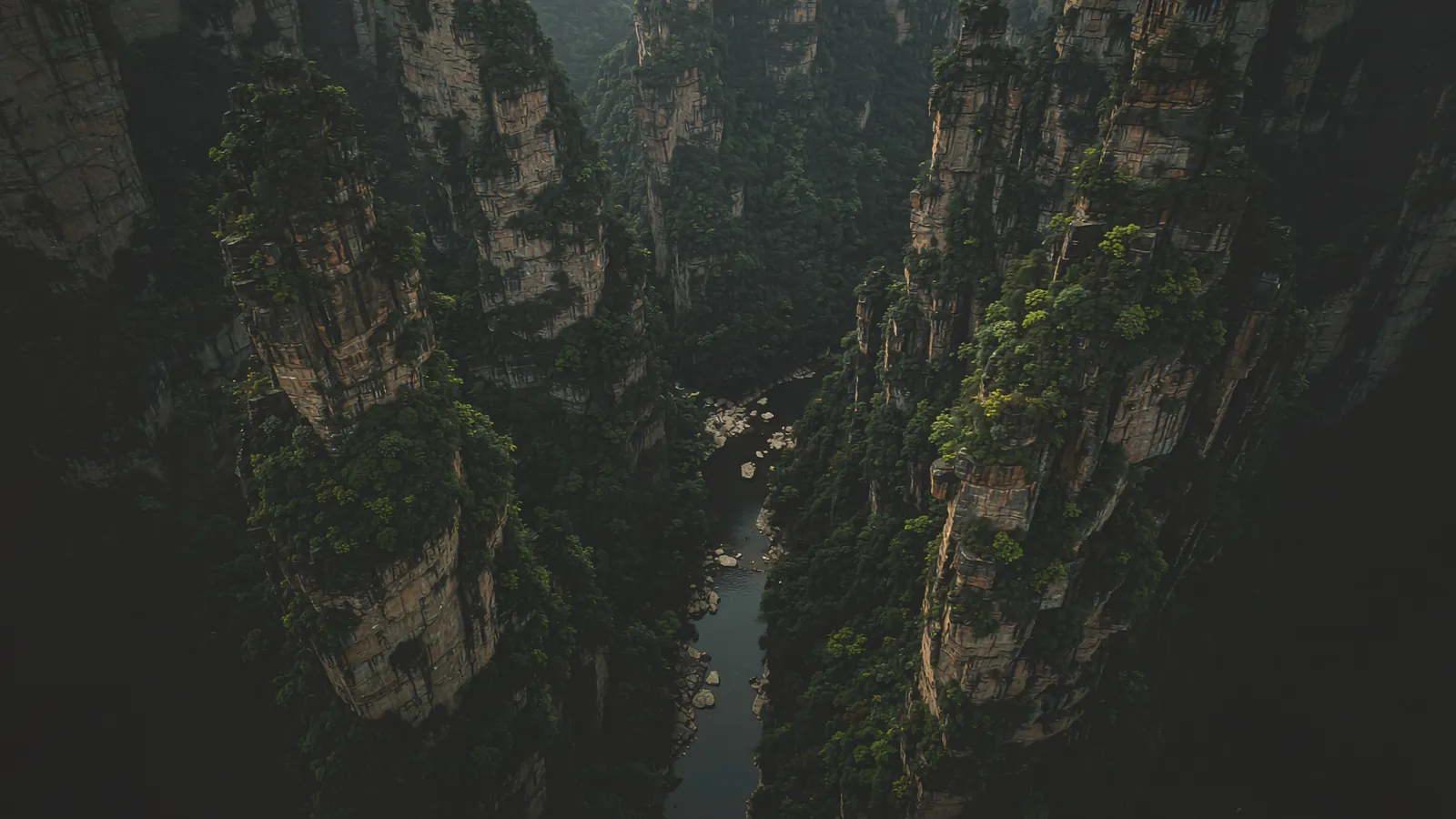
Golden Whip Stream valley (Jinbian Xi). The valley floor, at water level, seven flat kilometres between pillars overhead. It is the most pleasant walk in the park, and also the dampest and coolest on hot days. Monkeys in the final stretch — put your food away. It takes two hours out and two hours back, gaining no altitude.
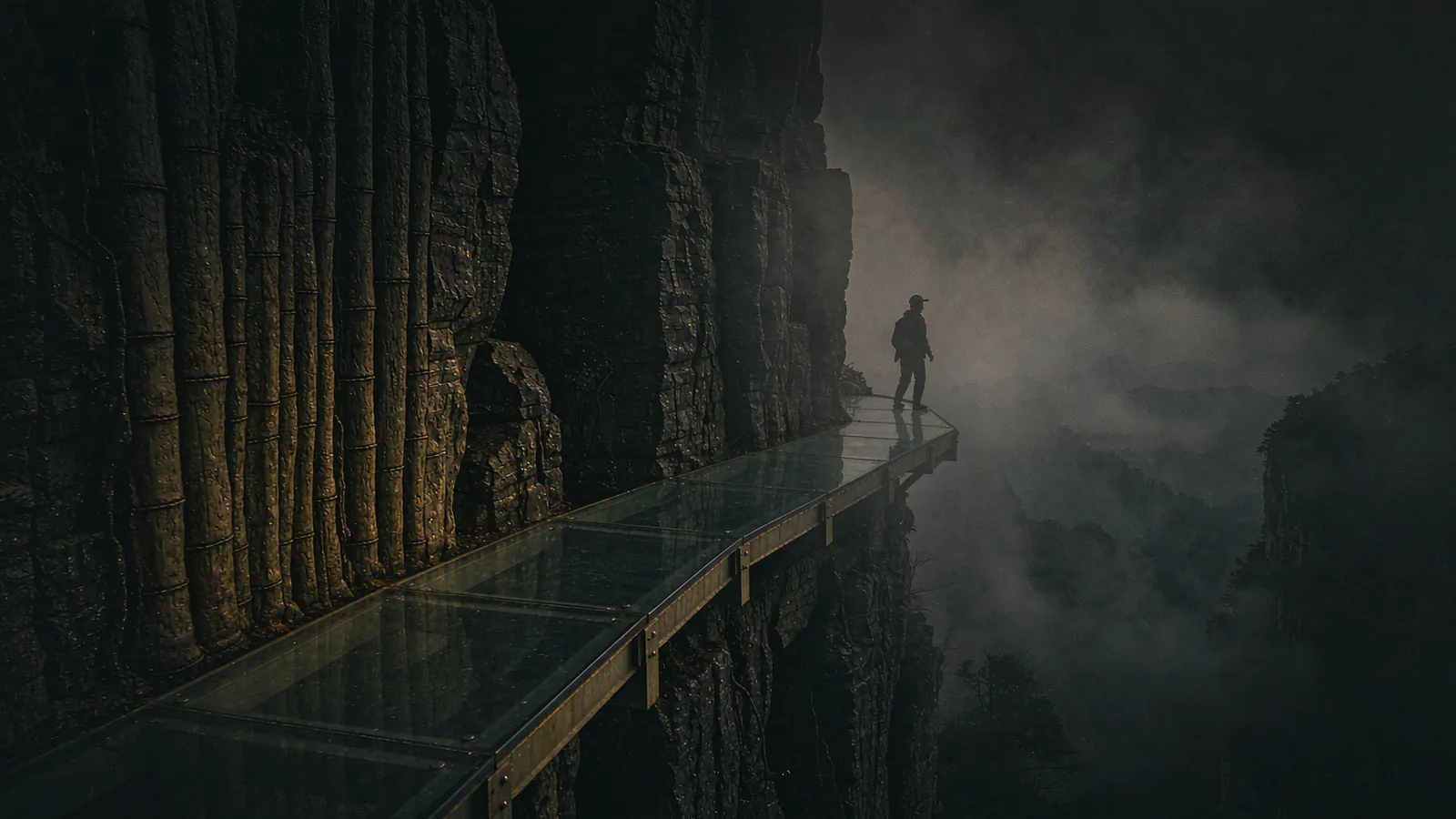
Heaven’s Gate (Tianmen Shan). A separate park, 40 minutes from town: a natural arch 130 metres high cut through the mountain, with 999 steps up to it and a road with 99 bends. It has the longest cable car in the world without intermediate stops, seven and a half kilometres.
The Glass Bridge and the canyon. A transparent footbridge 300 metres above the ground, with a separate ticket and timed access slots. It is worth it mostly for the geology of the canyon around it rather than for the bridge itself.
The Yellow Dragon King Cave. A set of caverns with an underground river and interior waterfalls, done in two hours. A good alternative on days of heavy rain.
How we run it
We enter the park through the Wujiatai gate, the least used of the entrances, because it is close to the Bailong elevator and gets us up to Yuanjiajie ahead of most groups. It is the difference between photographing the pillars alone and photographing them with sixty people in front of you.
We sleep inside the park area on the first night, in the fishing village converted into lodgings near Yuanjiajie, and in the town on the second. Sleeping nearby saves losing an hour on the road in the morning and puts you at the viewpoint by 7am.
We avoid weekends and public holidays. In July and August, and over the October Golden Week, cable cars have two-hour waits — on those days we spread the group over alternative routes with less demand.
We always bring a guide who knows the mist timetable. There is no point being at Tianzi at 8am in thick fog: there is no view at all, and you need to know where to go instead.
How long to stay
Three nights is our minimum and amounts to two full days inside the park: one day for Yuanjiajie and Tianzi, another for Jinbian Xi and the rest. The Wulingyuan entry ticket is valid for several consecutive working days, so there is no reason to shrink the programme.
Four nights allow Tianmen Shan without overlaps, plus a spare morning in case dawn comes up closed in mist. It is what we recommend to anyone photographing.
Two nights force a choice between the Yuanjiajie plateau and the valley floor, which is a shame: they are two completely different landscapes on the same mountain, and each needs a day.
It should be said that Zhangjiajie is not worth coming to for one night. Between Changsha or Furong and the park there are at least two and a half hours of road or rail, and that eats the only usable day of the visit.
When to go
April to June. 12 to 28 °C, intense green, full waterfalls, frequent mist between the pillars. It is the season for the best photographs and also the rainiest.
July and August. 24 to 35 °C, humid, very busy. The valley floor stays cool, but the queues at the cable cars are long. Only for unavoidable school holidays.
September to November. 10 to 26 °C, our recommendation. Clearer skies, good visibility, and red leaves on the slopes at the end of October.
December to March. 0 to 12 °C, with the possibility of snow and ice on the high boardwalks. This is when pillars capped with snow produce the rarest images. Some cable cars run reduced hours.
We always avoid the first seven days of October.
Where to stay
Inside the park, near Yuanjiajie. Simple guesthouses, no luxury, but fifteen minutes on foot from the Bailong elevator. This is what puts you at the viewpoint at dawn. We always book this first night.
In Zhangjiajie town (Wulingyuan). Higher-category hotels, restaurants and better bathrooms, 40 minutes from the park. It happens on the second night, once the tiredness sets in.
Near Heaven’s Gate. For anyone doing only Tianmen Shan and moving on, though we rarely recommend it: it means one extra change of accommodation.
What to eat
Hunan cooking is one of the eight great cuisines of China, and here it is hot and salty. The local dish is fish with pork belly braised with pickles, served in clay pots, and fried bean curd with Xiangxi chilli.
At the park guesthouses you eat dishes of mushrooms and bamboo shoots picked off the slope — unexpectedly good and very cheap. Anyone wanting to get to know the region: lamb skewers with cumin appear in the streets of Wulingyuan towards evening.
In town we recommend restaurants serving Tujia cooking, the local minority: cured meat, smoked bacon (the larou) and glutinous rice steamed in leaves. It is heavy mountain food, made for people working out in the cold.
Getting there
Zhangjiajie Hehua international airport is 5 km from town, with direct flights from Beijing, Shanghai, Guangzhou and Chengdu.
By high-speed rail: Changsha–Zhangjiajie in 2h30, Chengdu–Zhangjiajie in about 5h on a recently opened line that cut this connection drastically, Shanghai in 9h. The new station is 30 minutes from the park.
Every tour of ours here includes pickup on arrival and private transfers to the park gates. Local buses force changes that cost an hour a day, and they leave when full, not when your group is ready.
Where most agencies get it wrong here
Entering by the main Zhangjiajie gate. It is the one closest to town and the one with a queue at the counter. We enter at Wujiatai, next to the Bailong elevator, which puts us on the Yuanjiajie boardwalk before 8am.
Going to Yuanjiajie mid-morning. After 10am the boardwalk is a queue, and you cannot raise a camera to your face without catching thirty heads. We build the day around being there when the cable cars open.
Promising the glass walkway to everyone. It costs a separate ticket, has a fixed time slot, and the queue is long. We recommend it only to those who really want the experience; for the rest, the same canyon can be seen from the viewpoint next to it, free and without queuing.
Leaving the cable cars too late. In July and August, and on public holidays, waits reach two hours and the last descents close early. We spread the group over alternative routes and never leave a descent to the end of the day.
Sleeping in Wulingyuan every night. It is 40 minutes to the gate in each direction, meaning more than an hour a day on the road. We book the first night inside the park, at the guesthouses by Yuanjiajie, and move into town afterwards.
We work Zhangjiajie with a private guide and car, in closed groups of two to six travellers; no day includes stops at shops.
Keep reading
How we organize it
01
We arrive early
We get into the monuments before the tour buses. The Wall at 7am, the Forbidden City at 8:30am.
02
A Portuguese-speaking guide
One guide from the first day to the last, in Portuguese. No handing you over to someone new in each city.
03
We handle the bookings
We take care of the named reservations that need a passport, including the ones that sell out in high season.
Frequently asked questions
How many days are needed in Zhangjiajie?
Two full days inside the park, which means three nights in the region. The park is enormous, the cable cars close early, and with a single day you are forced to run and to choose between two areas instead of seeing all three.
Is the glass bridge worth it?
It depends. It runs 430 metres over a 300-metre drop, and it means an expensive separate ticket and a long queue. For photographs without crowds, the Yuanjiajie viewpoint at dawn pays better. We recommend it only to those who genuinely want the experience.
Where is Zhangjiajie and how do you get there?
In the northwest of Hunan province, central China. You fly from Beijing, Shanghai and Guangzhou, or take the high-speed train from Changsha. The town is 40 minutes from the park by road.
Is it a good destination for children or travellers with reduced mobility?
Cable cars and elevators take out most of the climbs, including the Bailong elevator, the tallest outdoor lift in the world at 326 metres. But there are stone stairways inside the park. We always adapt the routes to the group.
Does it rain a lot in Zhangjiajie?
Yes, especially from April to June. That rain is what creates the mist among the pillars you see in the photographs — but it can also hide everything for hours. We always keep a spare morning to do a viewpoint twice.
Tours that include Zhangjiajie
Talk to the people who run it
Want Zhangjiajie in 2 to 3 nights, or a different way round?
Tell us how many you are, when you want to go, and what cannot be left out. We shape the itinerary from there.
Chat on WhatsAppReplies in English · no obligation