Tours
Culinary China
Eleven days of Sichuan, Canton and Shanghai, from market stall to wok, with the people who cook.
At a glance
- Days
- 11
- Nights
- 10
- Who it suits
- People interested in cooking · repeat visitors
- Price per person
- US$ 3.600 a 4.800
Day by day
Eleven days between Chengdu, Macau, Guangzhou and Shanghai, following the three great schools of Chinese cooking — Sichuan, Cantonese and the Yangtze kitchen — from the market stall to the starred dining room.
The trip starts where food starts: at the market. In Chengdu you walk into a neighbourhood market at 7am, with the guide translating what the sellers say, and only then do you go to the wok. This is not a tour of restaurants strung one after another; it is a reading of the country through the table, in three regions that think about food in opposite ways.
In Sichuan, flavour is built on the contrast between chilli and Sichuan pepper — one numbs, the other burns. In Cantonese cooking the ideal is the reverse: disguise nothing, cook it fast, and let it taste of when it was alive. In Shanghai, sugar and dark sauce rule, with long braises. Moving from one to the other across eleven days is what gives this culinary trip to China its point; taken in isolation, none of the three is properly understood.
The rest comes down to details that can only be secured with people on the ground: the real opening hours of the dim sum halls, reservations that cannot be made by phone from abroad, intolerances and allergies communicated in writing in Chinese before every meal. It is a private trip, from two people, which lets us bring a lunch forward when a kitchen closes at that hour, or swap a visit for a better market on that particular day.
How we organise it
As a travel agency for China, we handle what cannot be settled at the table: named reservations, border crossings between Macau, Guangzhou and the mainland, and menus adapted to dietary restrictions. We send every restaurant in advance a card in Chinese with allergies and intolerances, and the guide confirms the menu before anything is ordered.
At every meal we serve at least one mild dish and explain what is on the table before you begin: a Sichuan table with hotpot always has two pots, one of them without chilli. For vegetarians and for anyone avoiding gluten there is a solution in all three cities, but it needs to be said at the time of booking.
What the price includes
- English-speaking guide with real knowledge of regional cooking, from market to table
- Private driver and vehicle on all transfers, including the Macau–Guangzhou border
- Ten nights in four-star hotels, breakfast included
- Domestic flight Chengdu–Macau and high-speed train Guangzhou–Shanghai
- Every meal marked in the programme, including two dinners at chef-led restaurants with guaranteed reservations
- Cooking classes, market visits and guided tastings
- Local data SIM card and permanent phone support in English
- Allergies and dietary restrictions card translated into Chinese and handed to each restaurant
- A mild dish chosen at every meal, with the guide reviewing the menu before ordering
What the price does not include
- International flights to and from China
- Mainland China visa and consular fees
- Alcoholic drinks with meals and optional spirit tastings
- Tips for guide and driver (at your discretion; we suggest US$ 10 to US$ 14 per person per day)
- Travel insurance and personal expenses
01Day 1
Arrival in Chengdu
Afternoon and evening. Pick-up at the airport and transfer to the hotel beside Taikoo Li. A first short outing to a teahouse in the People’s Park, to see Chengdu in the afternoon without a programme. Meal. Welcome dinner of mapo tofu and twice-cooked pork, in a house founded in 1862.
Meals: dinner.
02Day 2
Market and Sichuan cooking class
Morning. Neighbourhood market at 7am: live fish, chillies drying at the door, tofu made that morning. Shopping with the guide, who translates what the sellers explain.
The morning is when the market tells you what the city eats: piles of drying chillies, fermented black beans in earthenware jars, live fish in shallow tanks and tofu made before dawn. The shopping for the afternoon’s class comes from here.
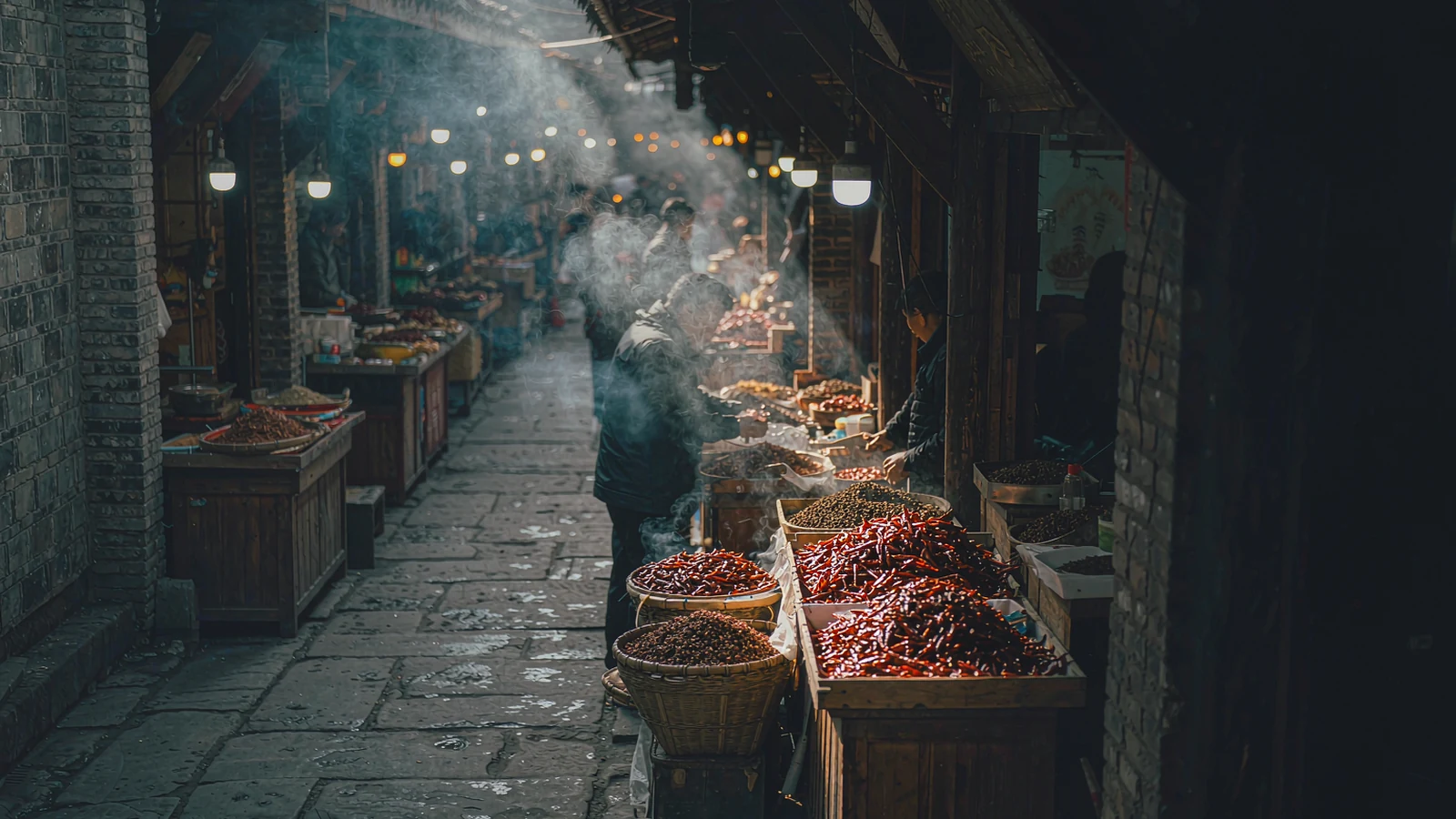
A spice stall in a Chengdu neighbourhood market: dried chillies, fermented bean paste and Sichuan pepper, the base of almost everything eaten in this city. Afternoon. Cooking class: each participant makes two dishes in the wok — one spicy, one mild — and learns to season with bean paste and Sichuan pepper. Evening. Dinner on what you cooked, with a tasting of Sichuan green tea to clear the palate.
Meals: breakfast and dinner.
03Day 3
Hotpot and Sanxingdui
Morning. Sanxingdui Museum, at Guanghan, twenty minutes by train: bronze masks 3,000 years old, from a civilisation with no written records. Afternoon. Back to the city, a rest, then the Wide and Narrow Alleys for street snacks: starch noodles, rabbit ears with chilli and glutinous rice cakes. Evening. Sichuan hotpot dinner, with two separate broths on the table, thin slices of beef, tripe and mushrooms. This is the central meal of the tour.
There is one rule about Sichuan hotpot worth knowing before you sit down: you do not drink the soup from the spicy pot, because the broth concentrates the oil and the chilli over the course of the evening. You serve yourself from the mild one. The dipping sauce is mixed at the table, from garlic, sesame and chilli oil; in Sichuan it is customary to add vinegar, which cuts the fat.
Meals: breakfast and dinner.
04Day 4
Chengdu to Macau
Morning. Heming teahouse in the People’s Park, for the ritual of the pot and the wicker chairs. Lunch of dandan mian. Afternoon. Flight to Macau, about two and a half hours. Check in on the peninsula. Evening. First Macanese dinner: minchi, the minced meat with potato and fried egg that is the home dish of the community.
Meals: breakfast and dinner.
05Day 5
Macau, the cooking of the encounter
Morning. Ruins of St Paul’s and the Senate Square at 8:30. Tasting of egg tarts straight out of the oven in the bakeries of Taipa. Afternoon. On Taipa, lunch of African chicken and salt cod, two dishes that came from Mozambique and from Portugal and have been cooked here for two centuries. Evening. Dinner in Coloane Village, facing the channel, with roast pork dishes and Macanese curry. A conversation with members of the local community whenever it can be arranged.
Macanese cooking is not Portuguese cooking left behind: it is a cooking of encounter, made with ingredients that came from Africa, India and Malacca and acquired their own names here. Minchi and African chicken are the two home dishes, and they make more sense when someone from the community explains them at the table.
Meals: breakfast and lunch.
06Day 6
Guangzhou, real dim sum
Morning. Crossing to Guangzhou (via Zhuhai or by ferry, depending on traffic on the bridge). Check-in in the city. Afternoon. First circuit of the Thirteen Factories district and the city’s oldest food street: roast pork braids hanging at the door, taro pastries and bird’s nest soup. Evening. Seafood dinner at the market, chosen live at the counter and cooked on the spot, which is how Cantonese people judge freshness — or fail to.
Meals: breakfast and dinner.
07Day 7
Dim sum at 8am and a cha chaan teng
Morning. Dim sum in a hall that opens at 8am, one of the ones that still pushes trolleys between the tables: siu mai, prawn dumplings, rice rolls and chicken feet in black bean sauce.
The traditional halls open early and are in full swing by eight: by midday they are serving office set menus and on Sundays there is a queue at the door. It is a meal to be had in the morning, at the pace of the trolleys moving between the tables, not at lunchtime.
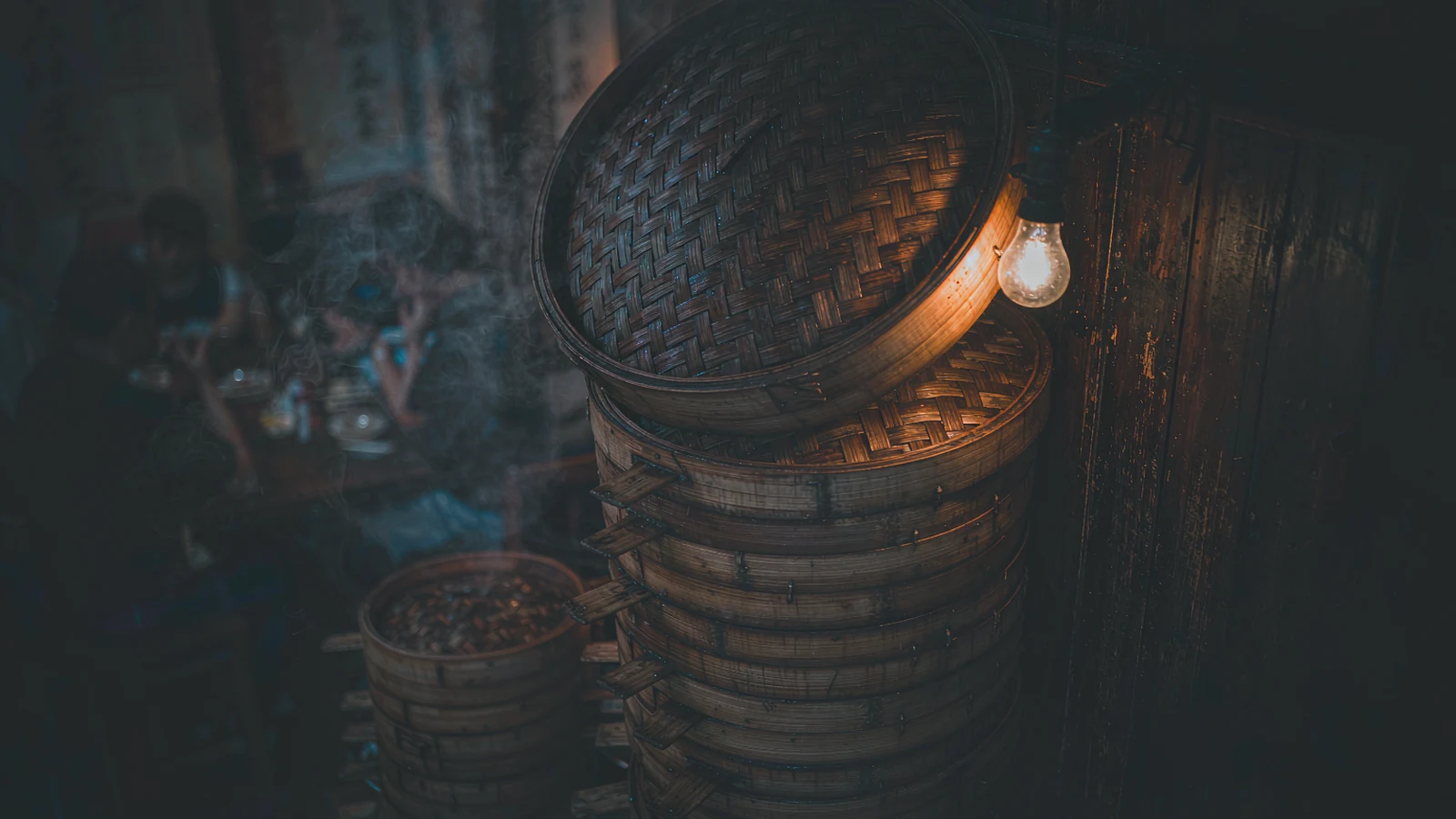
Bamboo baskets stacked at the mouth of the steamers, in the kitchen of a Guangzhou dim sum hall. Each basket carries a table number and comes out when it is ready. Afternoon. Visit to the Qingping market — herbs, roots, dried insects — and a Pu’er tea tasting in a shop that has been there thirty years. Evening. Classic Cantonese dinner: sweet and sour pork done properly, roast duck and vegetables stir-fried with the “breath of the wok” that only a fierce flame gives you.
Meals: breakfast and lunch.
08Day 8
Guangzhou to Shanghai
Morning. Free time for markets or for recorded Cantonese opera. Transfer to the station. Afternoon. High-speed train to Shanghai, about seven hours in first class, with lunch served on board by our guide. Evening. Arrival and a first walk along the lit-up Bund, with coffee or a digestif on a terrace.
Meals: breakfast and lunch.
09Day 9
Shanghai of the buns and the sugar
Morning. Street breakfast: shengjianbao, the buns fried on the bottom with broth inside, and barley tea. Afternoon. Shanghai cooking properly: pork belly braised in dark sauce, or hongshao rou, in a neighbourhood restaurant in Jing’an.
This is where you notice that commercial China was decided in this city: Shanghai cooking is sweet and dark, with caramelised soy sauce and rice wine, and it sits side by side with the food of the regions its inhabitants came from. Dinner is in a neighbourhood house, in small rooms, with a handwritten menu.
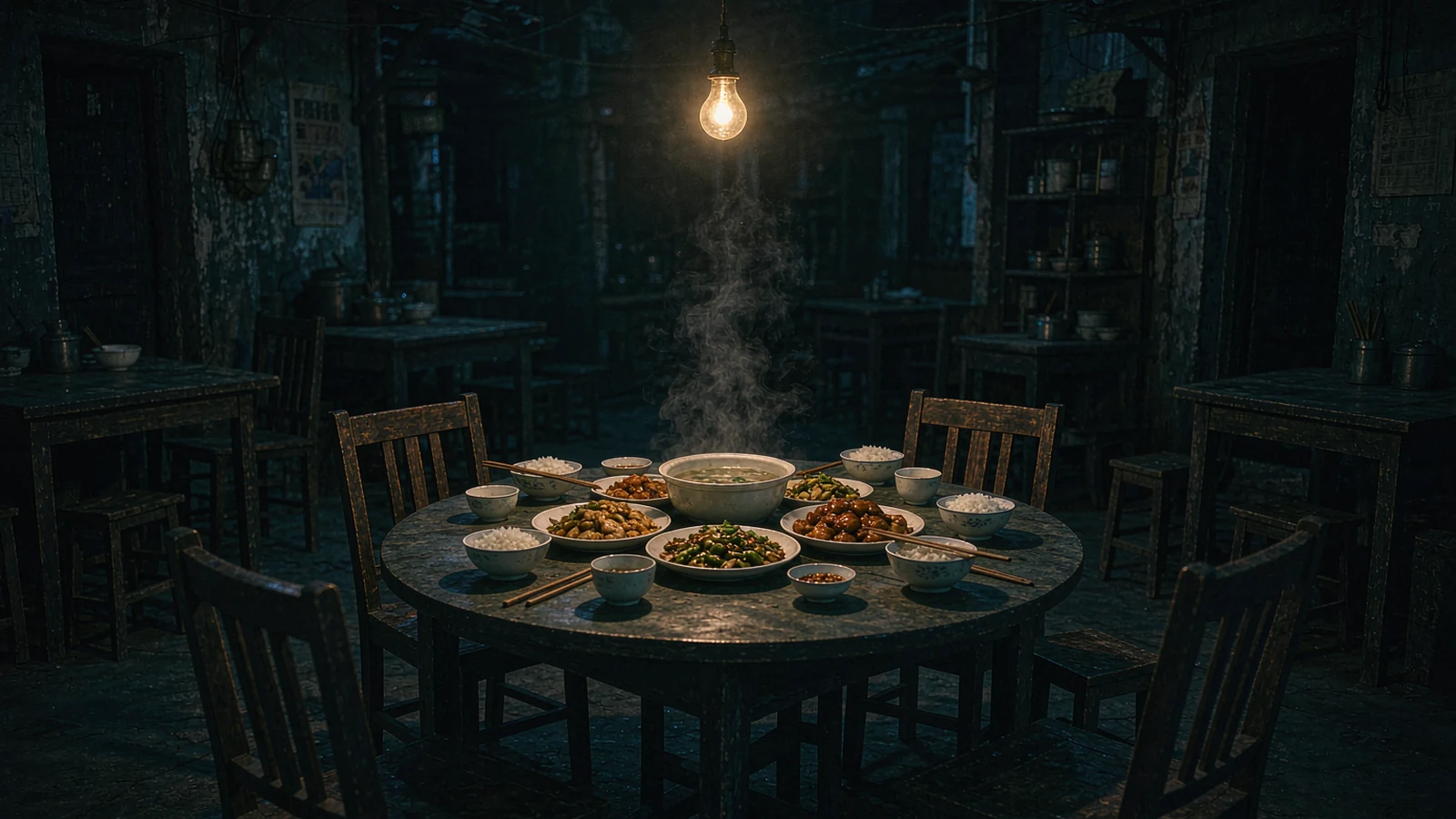
A neighbourhood dinner in Shanghai: round table, shared dishes in the middle and a short menu of the house's own cooking. This is the kind of place that has no foreign-language version of the menu. A short steamed dumpling (xiaolongbao) class for anyone who wants it. Evening. Hairy crab dinner, between September and November, served with warm rice wine.
Meals: breakfast and dinner.
10Day 10
Suzhou and the last dinner
Morning. Thirty-minute train to Suzhou and the old town market. Lunch of Tai lake fish and freshwater shrimps. Afternoon. Back to Shanghai, and on to Yu Garden and the old city to try the sweets and the black sesame paste. Evening. Farewell dinner, chosen with the group the day before: it can be a chef’s restaurant of contemporary Chinese cooking or a twenty-year-old neighbourhood courtyard.
Meals: breakfast and lunch.
11Day 11
Departure from Shanghai
Morning. One last visit to the spice market for things to take home: chillies, bean paste, tea leaves and clay pots. Transfer to the airport three hours before the flight.
Meals: breakfast.
Three things you will not repeat
01
Chengdu market in the morning, cooking class in the afternoon
02
Dim sum in Guangzhou, in a traditional hall that opens at 8am
03
A neighbourhood dinner in Shanghai, with dishes of regional origin
Price
US$ 3.600 a 4.800
Per person · 11 days · 10 nights
Land portion in China, double room, excluding international flights. From 2 travellers.
What's included
- Land transport in China: high-speed rail and domestic flights as listed
- Portuguese-speaking guide from the first day to the last
- 4-star hotels, double room
- Entry tickets to the monuments listed in the itinerary
- Daily breakfast
What's not included
- International flights to and from China
- Visa and consular fees
- Meals not listed in the itinerary
- Tips and personal expenses
Frequently asked questions
Do I need a visa for mainland China?
Yes, for the mainland part of the trip. Macau and Hong Kong require no visa of Portuguese passport holders for stays of up to 30 and 90 days. Because this itinerary crosses a border three times, we handle everything: we confirm nationality and passport validity and prepare the Chinese visa paperwork at least a month in advance.
How physically demanding is it?
Low. Two to four hours of walking a day, almost all of it on flat city ground. Between meals there are car transfers and the itinerary includes no trekking. Arrive with an appetite and with room in your suitcase for spices.
Is it too spicy?
Only if you want it to be. At every meal we serve at least one mild dish and the guide explains what is on the table before anyone starts eating. In Sichuan we always put a non-spicy broth on the hotpot. Vegetarian requirements, gluten intolerance and allergies are passed to the restaurants in writing, in Chinese.
Is there a single room supplement?
Yes. The price shown is per person in a shared double room. The single room supplement on this route runs between US$ 590 and US$ 880, because it includes two nights in Hong Kong, where hotels are expensive. Anyone travelling alone receives a closed personal quote before booking.
Can the dates be changed or postponed?
Yes. No cost up to 30 days before; between 30 and 15 days we retain deposits for restaurants with guaranteed reservations and for hotels; under 15 days each supplier's own fees apply. Postponing the tour, keeping the same programme, is always possible subject to the price difference of the new season.
Cities on this tour
This tour is a starting point
It is not a fixed package.
We can add days, swap cities or drop stages. Tell us what you want and what cannot be left out.
Chat on WhatsAppReplies in English · no obligation