Tours
The Grand Crossing — the Silk Road
Twenty days from Xi'an to Kashgar and Tibet, along the corridor that joined China to the Mediterranean.
At a glance
- Days
- 20
- Nights
- 19
- Who it suits
- Travellers who go deep · retirees · second and third trips
- Price per person
- US$ 6.500 a 8.900
Day by day
Twenty days crossing China from east to west along the Gansu corridor, the strip of oases between the Gobi desert and the Qilian mountains that for fifteen hundred years joined Xi’an to Samarkand and from there to the Mediterranean. It ends on the Tibetan plateau.
The Silk Road was never a road: it was a network of stretches chosen according to the water, the warfare and the taxes of each period. That is the geography travelled here, from the point where the caravans set out to the last city before the Pamirs, with a final climb into Tibet that none of the classic itineraries makes.
Twenty days is the minimum for this crossing without rushing and, for most of those who make it, the trip of a lifetime. The long stages are done in the corridor, where the road is flat and the landscape repays the effort; domestic flights are kept for the unavoidable jumps between Xinjiang and Qinghai, and the two nights at altitude always come after days of acclimatisation. The first days in Xiahe serve as acclimatisation before Lhasa, which avoids most altitude problems.
For anyone who comes to us as a travel agency for China after a first trip to the eastern cities, this is the obvious next tour: it is the country of the minorities, of Tibetan Buddhism, of Uyghur Islam and of the oasis cities that lived for centuries on the trade in silk, paper, tea and horses.
What the price includes
- English-speaking guide throughout, plus local guides specialising in Buddhism and rock-cut art
- Private driver and vehicle on every overland stage, including the long roads of the corridor
- Nineteen nights of accommodation: four-star hotels where they exist, best available elsewhere
- Domestic flights Xi’an–Dunhuang, Dunhuang–Urumqi and Kashgar–Xining, and the Xining–Lhasa train
- Entrance to every monument, including special caves at Mogao, subject to reservation
- Tibet travel permit and its processing
- Fifteen meals besides breakfast and permanent phone support in English
- Local guides specialising in rock-cut art at Mogao and in Tibetan Buddhism on the plateau stages
- Tibet travel permit process handled at least 20 days in advance
What the price does not include
- International flights to and from China
- Chinese visa and Tibet permit, billed separately in terms of consular fees
- Meals not listed and alcoholic drinks
- Tips for guides and drivers (at your discretion; we suggest US$ 10 to US$ 14 per person per day)
- Travel insurance, personal expenses and optional activities
01Day 1
Arrival in Xi’an
Afternoon and evening. Pick-up at the airport and transfer to the hotel inside the city walls. Handover of documentation, SIM card and presentation of the route. Meal. Dinner of yangrou paomo in the Muslim quarter.
Meals: dinner.
02Day 2
Xi’an, the starting point
Morning. Terracotta Army at 8:30, at opening, with the archaeological site’s own guide. Afternoon. Giant Wild Goose Pagoda and Shaanxi History Museum, where you see the capital the caravans left from. Evening. Up onto the Xi’an city wall at sunset, by bicycle.
Meals: breakfast and dinner.
03Day 3
Xi’an to Lanzhou
Morning. Great Mosque and the morning markets of the Muslim quarter, still today the heart of the Hui community. Afternoon. High-speed train to Lanzhou, about three hours. First sight of the Yellow River. Evening. Dinner of Lanzhou noodles: lamian stretched by hand, with beef broth and coriander.
Meals: breakfast and dinner.
04Day 4
Lanzhou to Xiahe, on the Tibetan plateau
Morning. Gansu Provincial Museum and the reclining buddha in a hillside monastery. Afternoon. The road to Xiahe, five hours climbing to 2,900 metres, with the landscape changing from yellow earth to pasture. Evening. Arrival in Xiahe, check-in and rest: the altitude starts here.
Meals: breakfast and lunch.
05Day 5
Labrang and the monasteries of Gansu
Morning. Labrang Monastery at 7am, when the monks come out of their cells for prayer. It is one of the six great monasteries of Tibetan Buddhism. Afternoon. Pilgrimage circuit around the monastery, three kilometres with prayer wheels, walked with the pilgrims. Evening. Dinner of momos and yak butter tea.
Meals: breakfast and dinner.
06Day 6
Back to Lanzhou and night train to Dunhuang
Morning. One last circuit of Labrang and the road back, five hours. Afternoon. Lanzhou: the bank of the Yellow River and free time before the train. Evening. Sleeper train to Dunhuang, with a reserved four-berth compartment. Flight alternative the following day, depending on season.
Meals: breakfast and lunch.
07Day 7
Dunhuang and the singing dunes
Morning. Arrival and check-in at the oasis. Free morning to recover from the train. Afternoon. At 17:30, when the heat gives way, climb the dunes of Mingsha Shan and a camel ride to Crescent Lake.
The singing dunes take their name from the sound the sand makes sliding down the slope. The climb is made at the end of the afternoon, when the temperature drops and the low light draws the edge of the dunes, and you sleep at the oasis a few minutes away.
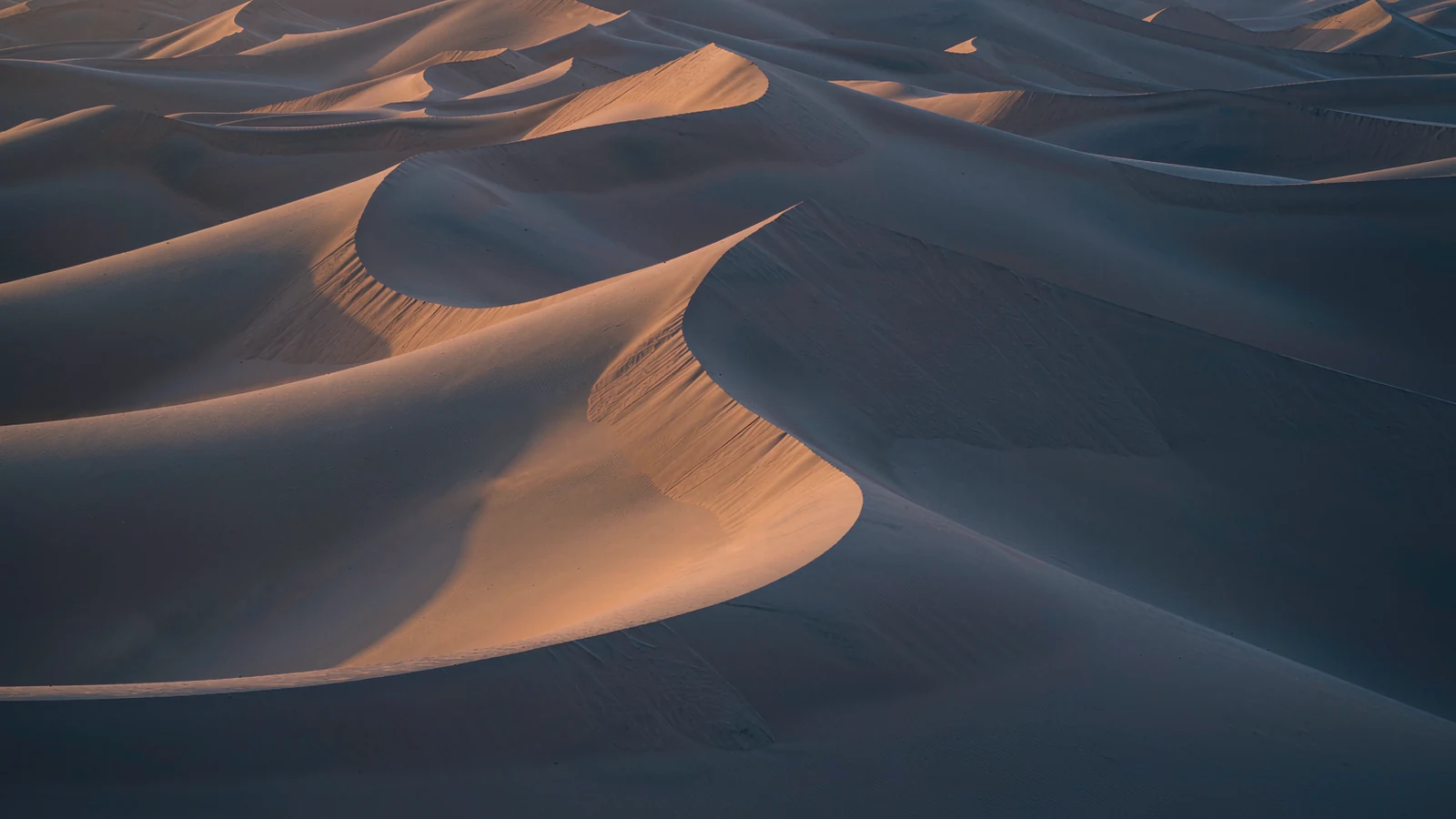
A ridge of sand on the Mingsha Shan dunes, late in the afternoon. The wind redraws the crest every day, and the Dunhuang oasis sits just past the first dunes. Evening. Dinner at the Dunhuang night market, the most genuine food market of the whole trip.
Meals: breakfast and dinner.
08Day 8
The Mogao Caves
Morning. The Mogao Caves, open to the public since AD 366: forty-five painted caves across a thousand years. We reserve two special caves separately, visited with a conservator. Afternoon. Digital conservation centre and site museum, to understand how the rock-cut art is being preserved. Evening. The “Meeting Again in Dunhuang” show, optional, or dinner and rest.
Meals: breakfast and lunch.
09Day 9
The Jade Gate and flight to Urumqi
Morning. Yumen Pass, the Jade Gate, the last point of the corridor before the Taklamakan desert, and the Han fortress in adobe.
The Jade Gate was the last customs post before the desert: from here the caravans split along the northern or southern rim of the Taklamakan and met again at Samarkand. The adobe signal towers seen out on the plain were used to pass messages by fire and smoke between posts within sight of one another.
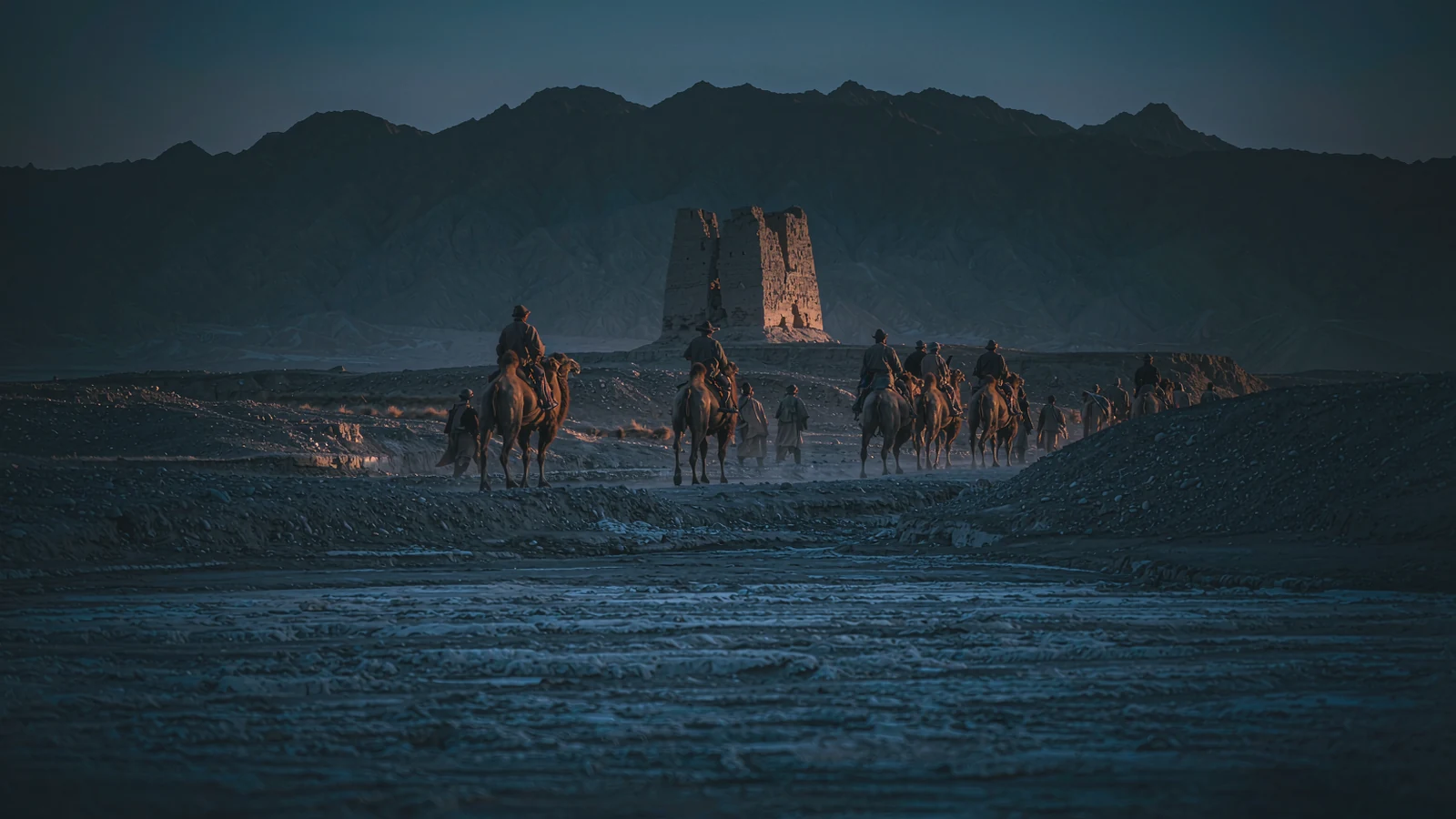
A caravan beside an adobe signal tower at the exit of the Gansu corridor. These towers passed smoke warnings from one post to the next along the route. Afternoon. Flight to Urumqi, capital of Xinjiang, about two hours. Evening. Dinner of Uyghur kebab and naan bread at the international market.
Meals: breakfast and dinner.
10Day 10
Turpan: the underground channels
Morning. Road to Turpan, three hours, crossing desert with wind turbines as far as the eye can see. Afternoon. The karez underground channel system, irrigation technology two thousand years old, and the ruined city of Jiaohe. Evening. Dinner at a Uyghur house with live music, in the grape valley.
Meals: breakfast and lunch.
11Day 11
Back to Urumqi and Heavenly Lake
Morning. Bezeklik Caves, with murals stained and cut by nineteenth-century looters. Afternoon. Road to Urumqi. Stop at the spice market if there is time. Evening. Dinner and rest. Preparation of the flight to Kashgar.
Meals: breakfast and dinner.
12Day 12
Kashgar, the city of the Southern Route
Morning. Flight to Kashgar, at the far west of China, two hours. Afternoon. Id Kah Mosque and the adobe historic centre, with alleys where handmade knives are still sold. Evening. Dinner of roast lamb and naan at the livestock market — the animals are sold at the neighbouring market in the morning.
Meals: breakfast and dinner.
13Day 13
The Karakoram highway
Morning. Karakoram highway to Karakul lake, at 3,600 metres, with the peaks of Muztagh Ata and Kongur ahead. Afternoon. Kyrgyz villages with felt tents, where families invite you in for tea with yak milk. Back to Kashgar at the end of the day. Evening. Dinner at leisure and rest after six hours on the road.
Meals: breakfast and lunch.
14Day 14
Flight to Xining
Morning. Kashgar livestock market — Sundays only, which is why our scheduling changes according to the day of the week. Afternoon. Flight to Xining, via Urumqi. Evening. Arrival in Xining, 2,200 metres, first acclimatisation night before Tibet.
Meals: breakfast and lunch.
15Day 15
Xining and train to Lhasa
Morning. Ta’er Monastery, with its coloured butter sculpture and pilgrims prostrate in the courtyard. Afternoon. Boarding the Qinghai–Tibet train for the crossing of about twenty hours to Lhasa. Dinner on board. Evening. Night on the train, with supplementary oxygen on board from 3,000 metres.
Meals: breakfast and dinner.
16Day 16
Arrival in Lhasa and the Potala
Morning. Arrival in Lhasa mid-morning, 3,650 metres. Rest is compulsory. Only in the afternoon, if the body allows it. Afternoon. First short walk on the Barkhor, slowly, without hurrying.
The Barkhor is the pilgrimage circuit around the Jokhang temple, and it is walked clockwise, as tradition requires. This is where you see Tibet walking: monks, herders come in from the country, and pilgrims prostrating themselves over kilometres.
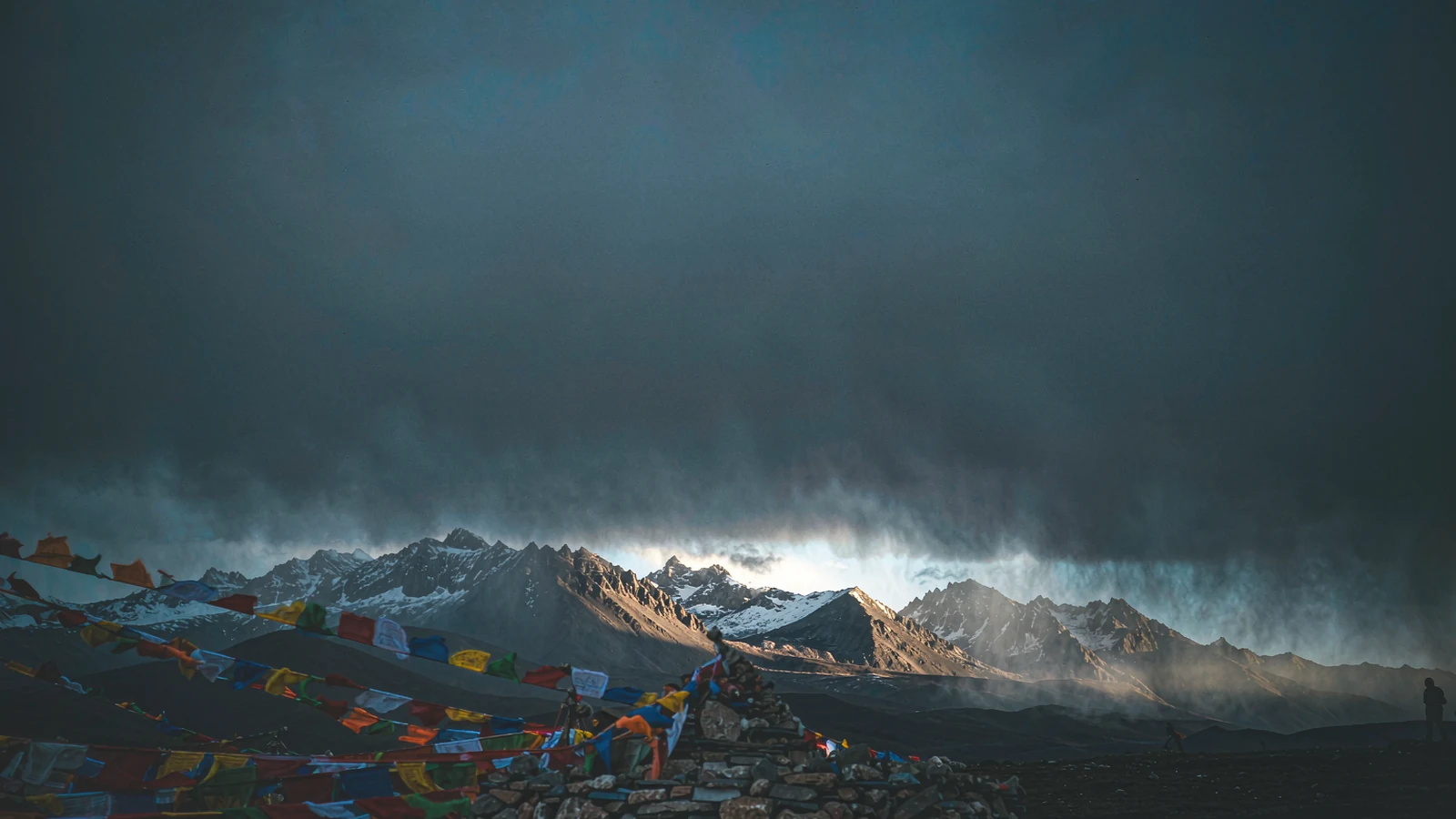
Prayer flags and a mani stone mound on the Tibetan plateau. Each stone carries a carved mantra, each cloth a supplication the wind takes away. Evening. Light dinner at the hotel and an early night.
Meals: breakfast.
17Day 17
Potala and Jokhang
Morning. Potala Palace at a booked time: thirteen storeys, a thousand rooms, 117 metres above the hill. Done with stops. Afternoon. Jokhang Temple, the holiest in Tibetan Buddhism, and the Barkhor circuit. Evening. Dinner of momos and tsampa, with the lit-up Potala in view.
Meals: breakfast and dinner.
18Day 18
Drepung and Sera
Morning. Drepung Monastery, which once held seven thousand monks, stacked up the hillside. Afternoon. Debate session in the courtyard of Sera Monastery in the afternoon, with the monks arguing and clapping their hands. Evening. Farewell dinner with the Tibetan guides.
Meals: breakfast and dinner.
19Day 19
Gyantse and Shigatse
Morning. The southern road to Gyantse: Palkor Monastery and its stupa of a hundred thousand buddhas. Afternoon. On to Shigatse, 3,840 metres, seat of the Panchen Lama. Evening. Dinner at the monastery or in the Tibetan quarter of Shigatse.
Meals: breakfast and lunch.
20Day 20
Back to Lhasa and departure
Morning. Return to Lhasa along the Yarlung Tsangpo road, with a stop at Tashilhunpo Monastery if time allows. Afternoon. Free time and transfer to Gonggar airport.
Meals: breakfast.
Three things you will not repeat
01
The Mogao Caves with special cave visits, subject to reservation
02
The Dunhuang desert at sunset, climbing the dunes and dining at the oasis
03
From the Tibetan plateau to the Yangtze: Shangri-La, the tea road and Lhasa
Price
US$ 6.500 a 8.900
Per person · 20 days · 19 nights
Land portion in China, double room, excluding international flights. From 2 travellers.
What's included
- Land transport in China: high-speed rail and domestic flights as listed
- Portuguese-speaking guide from the first day to the last
- 4-star hotels, double room
- Entry tickets to the monuments listed in the itinerary
- Daily breakfast
What's not included
- International flights to and from China
- Visa and consular fees
- Meals not listed in the itinerary
- Tips and personal expenses
Frequently asked questions
Are twenty days a long time?
It is the minimum for making the crossing without rushing and, for most people, the trip of a lifetime. Anyone with less time can do only the Gansu corridor, Xi'an to Dunhuang, in nine days. We split the route into two trips with no additional planning cost.
How physically demanding is it?
Moderate to demanding. There are days with dune climbs, cave staircases and six to eight hours on the road. There is altitude: 3,200 metres at Shangri-La and 3,650 at Lhasa, which requires acclimatisation days and no exertion on arrival. We ask for a medical certificate from the age of 70.
Is a special permit needed for Tibet?
Yes. All foreign nationals need a travel permit for the Tibet Autonomous Region, issued against a closed itinerary and with a compulsory guide for the whole stay. We handle the process at least 20 days in advance; entering Lhasa independently is not possible.
Is there a single room supplement?
Yes, between US$ 980 and US$ 1,450 for the twenty days, because several nights are in small towns where hotel supply is limited. In Dunhuang and Kashgar supply is good and the supplement is smaller. Anyone travelling alone receives a closed quote.
Can the dates be changed or postponed?
Yes, but with more notice than on the short tours. No cost up to 45 days before; between 45 and 30 days we retain domestic tickets already issued, and the Tibet permit is not transferable. Postponing to the following year is possible, and common on this trip.
Are the conditions comfortable?
They are. Four-star hotels where the category exists and the best available on the small stages. Two stages have long roads and domestic flights; on both, the vehicles are private, with stops every two hours. There is no night in a tent at any point on the route.
Cities on this tour
This tour is a starting point
It is not a fixed package.
We can add days, swap cities or drop stages. Tell us what you want and what cannot be left out.
Chat on WhatsAppReplies in English · no obligation