Best time to visit · Zhangjiajie
best time to visit Zhangjiajie
Month by month: when the sandstone pillars read out of the mist, when the Bailong lift queues grow long, what ice does to the cable cars and why October is the right month.
At a glance
- Best time to visit
- Apr–Jun · Sep–Nov
- Suggested nights
- 2 to 3 nights
- Region
- Centro-sul
- Booking required
- Wulingyuan National Park
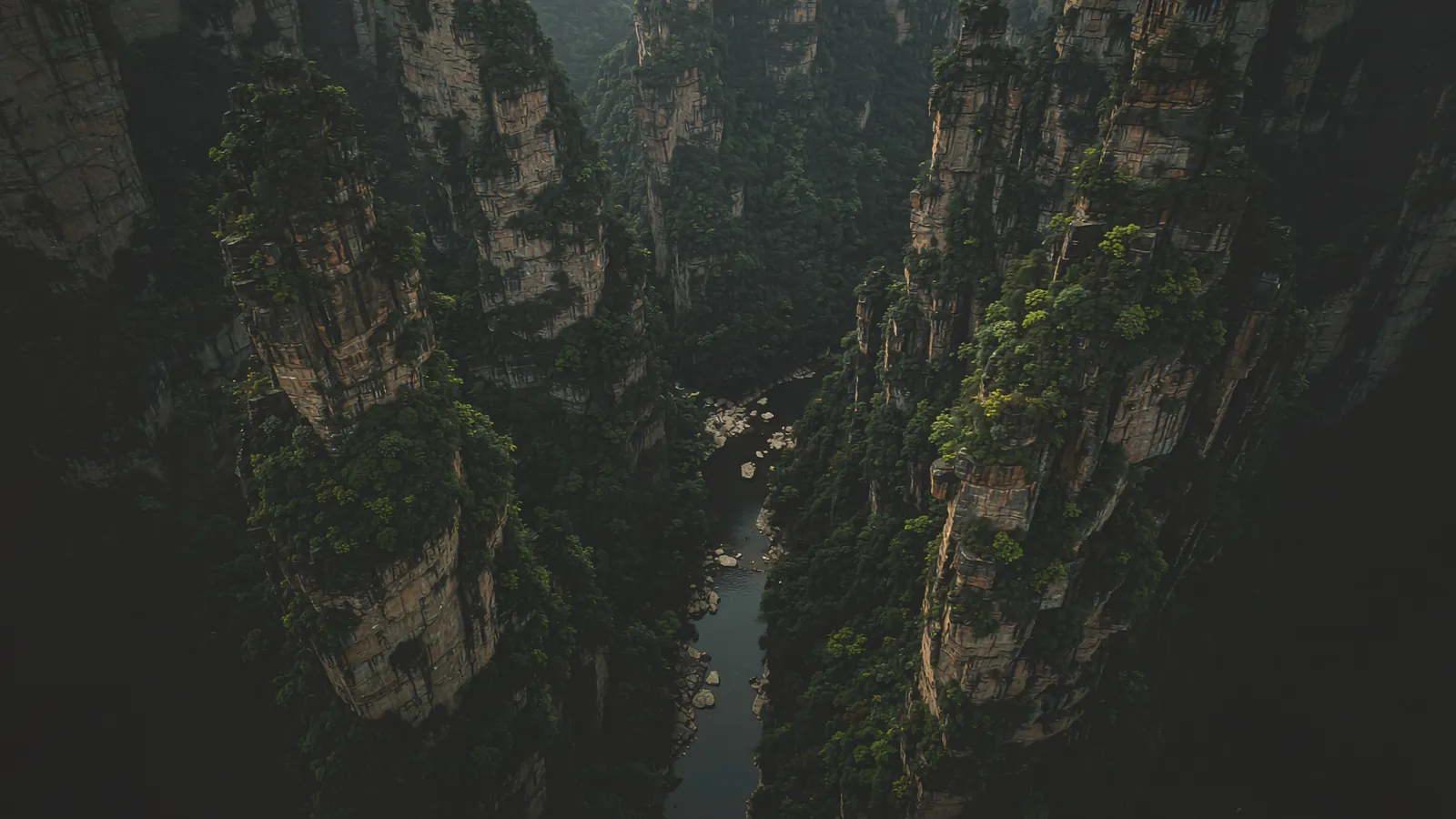
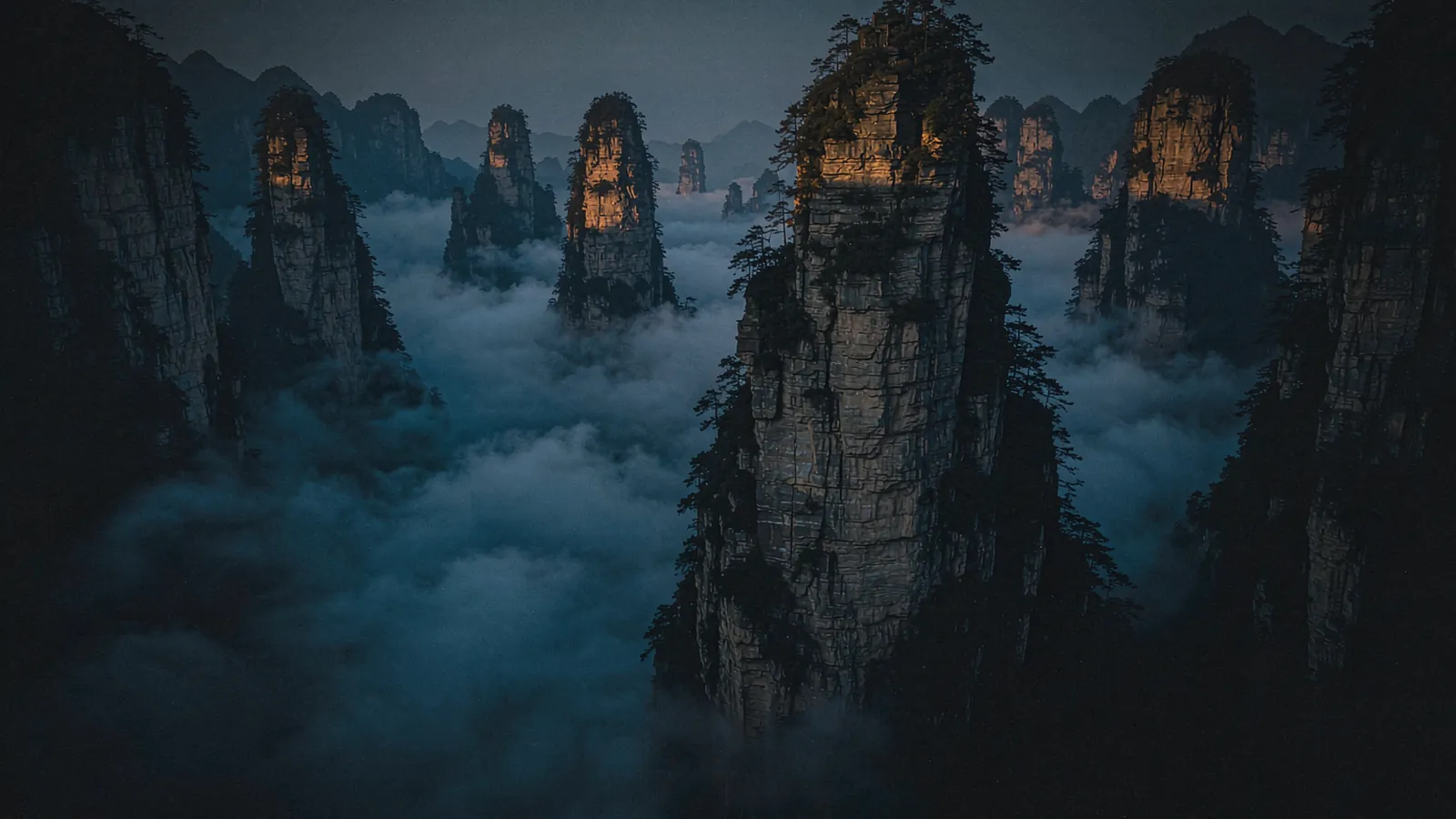
The best time to visit Zhangjiajie is a compromise between two wishes that are not satisfied on the same day. On one hand, the image that made the park famous — the sandstone pillars rising out of the mist — needs humidity and a clear dawn. On the other, a visit to Wulingyuan and Tianmen depends on cable cars, lifts and walkways that close with rain in the mountains or with ice. Choosing the month is choosing the balance between the two. This page answers “when to go to Zhangjiajie” and complements the Zhangjiajie page.
Zhangjiajie’s climate, month by month
Winter, December to February. Cold at the high points, damp in the valleys and unstable. The mountain freezes often, and that is where the closures are: with ice, the cable cars, the Bailong lift and the glass walkways suspend operation for safety, which can undo a whole day of programme. When it snows on the pillars, the landscape changes completely and the parks are practically empty. It is the season with the fewest visitors and the cheapest hotels.
Spring, March to May. The green season and the most unstable. March is still cold; April, May and June bring mild temperatures, the valleys in flower and the misty mornings that produce the classic image. The trade-off is rain, which comes on consecutive days and closes the visibility or leaves the rocks slippery. This is the season when it makes most sense to stay two nights instead of one, in order to have two mornings of attempts.
Summer, June to August. Hot, humid and the peak of the year. The school holidays fill the parks, the queues for the Bailong lift and the cable cars grow long and the humidity does not lift. There is also rain and afternoon thunderstorms. The park does not close, but the experience changes a great deal: in August the difference between entering at 07:00 and entering at 10:00 is the difference between walking and queueing.
Autumn, September to November. The best window. Humidity drops, the heat ends, the leaves begin to change colour in the valleys and the morning mist keeps appearing, which joins the two things together: clean visibility and mist in the valleys at dawn. September and October are the months we recommend, with November right after, colder and emptier. The caveat is the calendar: the week that starts on 1 October is the busiest of the year.
The best moment for each experience
The Yuanjiajie viewpoints and Tianzi mountain gain from visibility, and it is autumn that guarantees it most often. The valley mist, the park’s signature image, depends on rain the day before and on a clear dawn, which is why two mornings inside the park are held, never one. The Bailong lift and the cable cars work better outside high season: in October and November the queues shorten visibly. The Jinbian Xi route, with the monkeys and the stream, works well with heat and with water, and is a good summer choice. The caves and the wooded areas are the reserve plan for any rainy day.
Holidays and peak periods
Zhangjiajie is one of the most visited parks in China and the peak of the year is short and violent. The national holiday week from 1 October joins the best month of the year: the accesses to the viewpoints have queues, the lift has long waits and the hotels in the town sell out. Then come Lunar New Year and the first week of May. Outside these windows, July and August fill because of the school holidays. The practical answer is to enter at opening, do the viewpoints in the morning and keep the afternoons for the valleys, which are always emptier than the lookouts.
When not to go to Zhangjiajie
The national holiday week is the only one we advise against without reservation, and for a specific reason: it is the moment when you pay full price for a visit done in a queue. Then come the July and August weekends. Winter is not a prohibition, but it is a gamble: for anyone coming from far away who wants to see everything open, December to February is the season with the highest risk of ice closures. And there is one caveat that applies to any month: with rain in the mountains, the cable cars can stop for safety reasons, so it is always worth having a valley plan for the afternoon.
What to pack, season by season
In spring and autumn, light layered clothing, a thin coat and a folding rain shell, because rain appears without warning and the temperature changes with altitude inside the park itself. In summer, cool clothing, a hat and a bottle of water; the humidity of the valleys is high and the climb up the steps weighs on you. In winter, a warm coat, hat, gloves and above all shoes with a gripping sole: the wet, icy stone walkways are slippery. In any season, walking shoes and a closed bag for food, because the monkeys on the Jinbian Xi already know how to open bags. And sunscreen, because exposure at the viewpoints is long.
How the season changes the daily plan
In autumn, the best season, the whole day is available and is organised by altitude: the higher viewpoints in the morning, while the mist is still in the valleys, the valley-floor routes in the middle of the day, and the low light at the end of the afternoon. In spring and summer the day depends on water: with rain the day before and a clear dawn, you go straight to the viewpoint; with closed sky, you do the valleys and the wooded areas, which look good even with little visibility. In winter, with the risk of ice, the rule is to confirm that the cable cars and walkways are running before leaving the hotel and to keep the valley-floor plan as the alternative. In any month, the ascent of Tianmen is done in the morning: the cable car closes its last descent in mid-afternoon, and it is the afternoon ascent that tends to run out of tickets in high season.
What to do when the mist does not appear
The mist is the signature image of the park, but it is not guaranteed, and it is worth knowing what to do when it is missing. The park is still worth the visit without mist: the sandstone pillars seen from above, in clean air, reveal the extent of the massif and not just the islands of rock, and the photography changes register. What you do on those days is go higher, to the high viewpoints of Tianzi and Yuanjiajie, instead of looking for the valley floors. Another answer is to look for water: after heavy rain, the waterfalls and streams of the Jinbian Xi gain volume and become the spectacle of the day. And there is always the third answer, which is coming back the next morning: that is why we hold two mornings inside the park and not one.
The calendar in four lines
The best moment is September and October, up to the start of the holiday, and then November: heat over, short queues, morning mist in the valleys and clean visibility. The second choice is April, May and June, with the valleys green and the misty mornings, at the cost of frequent rain and of two mornings of attempts. The weeks that ask for thought are those of July and August, with heat, humidity and queues, and those of December to February, with cold and the risk of ice closures. The dates to avoid are the national holiday week, for the crowds, and days of rain in the mountains, for the cable cars.
Fitting the right season into a trip
Zhangjiajie comes into our routes through the centre-south and is the destination where the date changes the experience most, because everything depends on visibility and on waiting. On Photographic China it is one of the central stops, and September and October are the months when the mist is found without rain spoiling the day. On the Panda Route it appears at the eastern end of the itinerary, and there autumn fits the whole better, with less humidity than the Sichuan summer. For the full destination listing, go back to the Zhangjiajie page.
Frequently asked questions
What is the best time to visit Zhangjiajie?
September and October, up to the start of the national holiday, and then November. The summer heat ends, the queues for the Bailong lift shorten and the valley mist still appears in the morning, which is the image people come for. With dry air, the pillars stand out against the sky and there are whole days of clean visibility.
Is the mist guaranteed?
No, in any season. The mist that wraps the pillars depends on rain the day before and on a clear dawn, and the two conditions do not always coincide. That is why we always hold two mornings inside the park, never one: the first can come out clear and the second clouded, or the other way round.
Is it worth going in July and August?
Only with adjusted hours and patience. It is the school holiday season, with long queues for the lift and the cable cars, humid heat in the valleys and the highest probability of the year of rain and closed-in mist. Anyone coming in these months enters the parks at opening and keeps the afternoons for the caves and the wooded areas.
What happens in winter?
It is cold at the high points and there can be ice. With ice, the cable cars and the glass walkways close for safety, and there is not much advance warning. On the other hand, when it snows on the pillars, the landscape is the most unusual of the year and the parks are empty. It is a gamble: for anyone who wants everything open, winter is not the season.
How do you avoid losing the afternoon ascent at Tianmen?
You do not lose it if you go up in the morning. The Tianmen cable car closes its last descent in mid-afternoon, and it is the afternoon ascent that tends to run out of tickets in high season. The order we use is: cable car right after opening, Heaven's Gate mid-morning, and the descent before the afternoon peak.