Journal
Photography in China: the best places
Organised by light rather than by places: where to be at six in the morning, in which months the mist appears, and where drones do not go.
October 18, 2026 · ChinaTravel.pt Team · photography · itineraries · tips
The best photography in China is not made at the places everybody photographs: it is made at the hour when almost nobody is there. This guide is organised by light and by months, not by a list of the ten most beautiful places, because in China the difference between a good photograph and a great one is almost always a matter of being there at six in the morning rather than ten.
Start at the beginning: the three places that reward anyone who gets up early are Zhangjiajie, the rice terraces of Yuanyang and the Li river at Xingping. And all three have a short window.
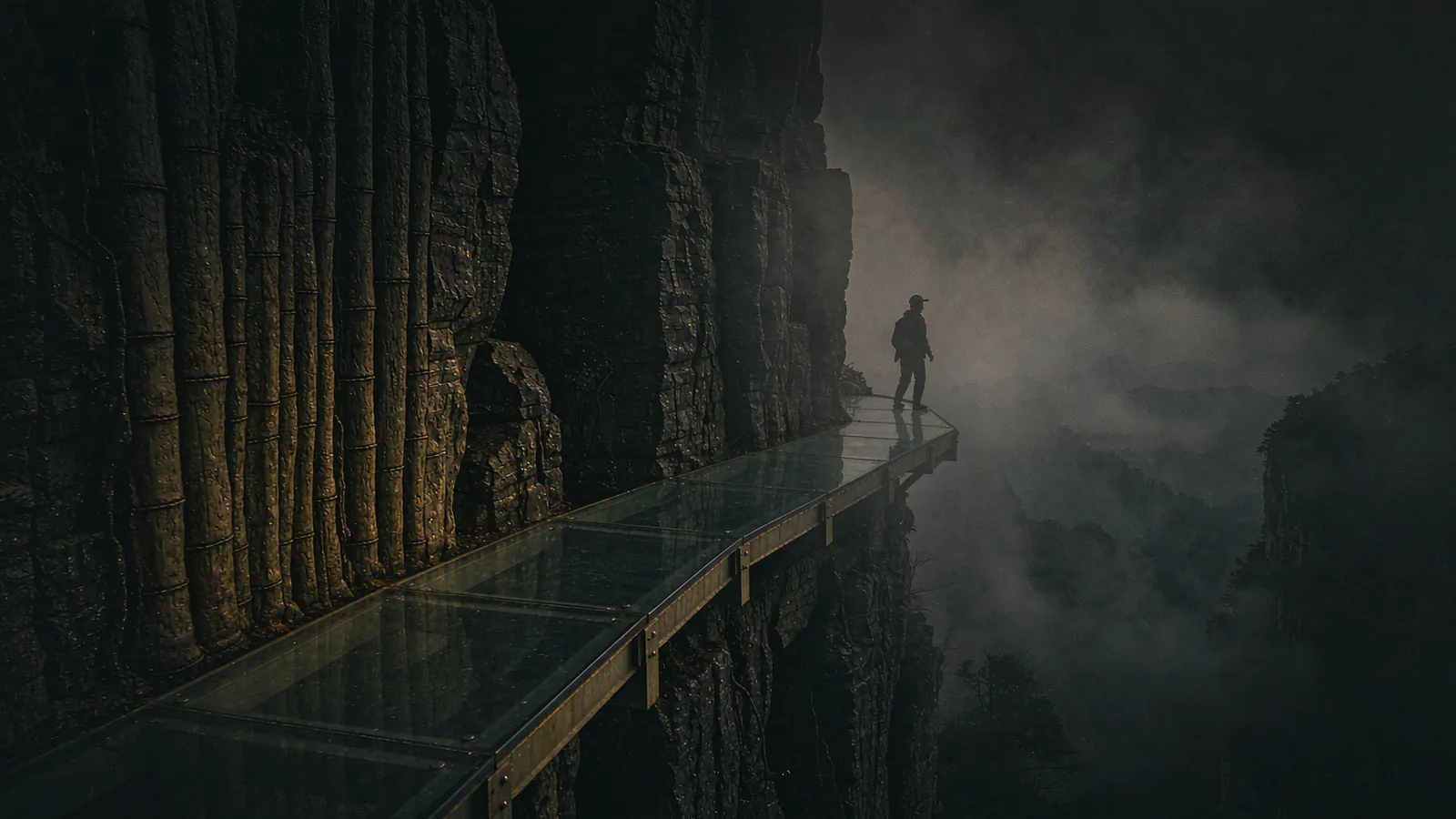
Zhangjiajie: the sea of clouds
The sandstone pillars of Zhangjiajie are the most recognisable image of China after the Wall, and they are frequently photographed badly, because people go on the wrong day.
The rule is this: the sea of clouds forms after a night of rain, with humid air and little wind. It appears at dawn and lasts between thirty and sixty minutes. In July and August it is more frequent; in winter it appears with less intensity.
What that means in practice: stay three nights. Two give you a single opportunity; three give you two or three, and the odds of catching good cloud become reasonable. And sleep inside the park or at the entrance, because the internal buses take 30 to 40 minutes between zones.
The viewpoints worth walking to in the dark: Yuanjiajie for the classic pillars, Tianzi Shan for the wide view, and Xianren Qiao for the natural bridge.
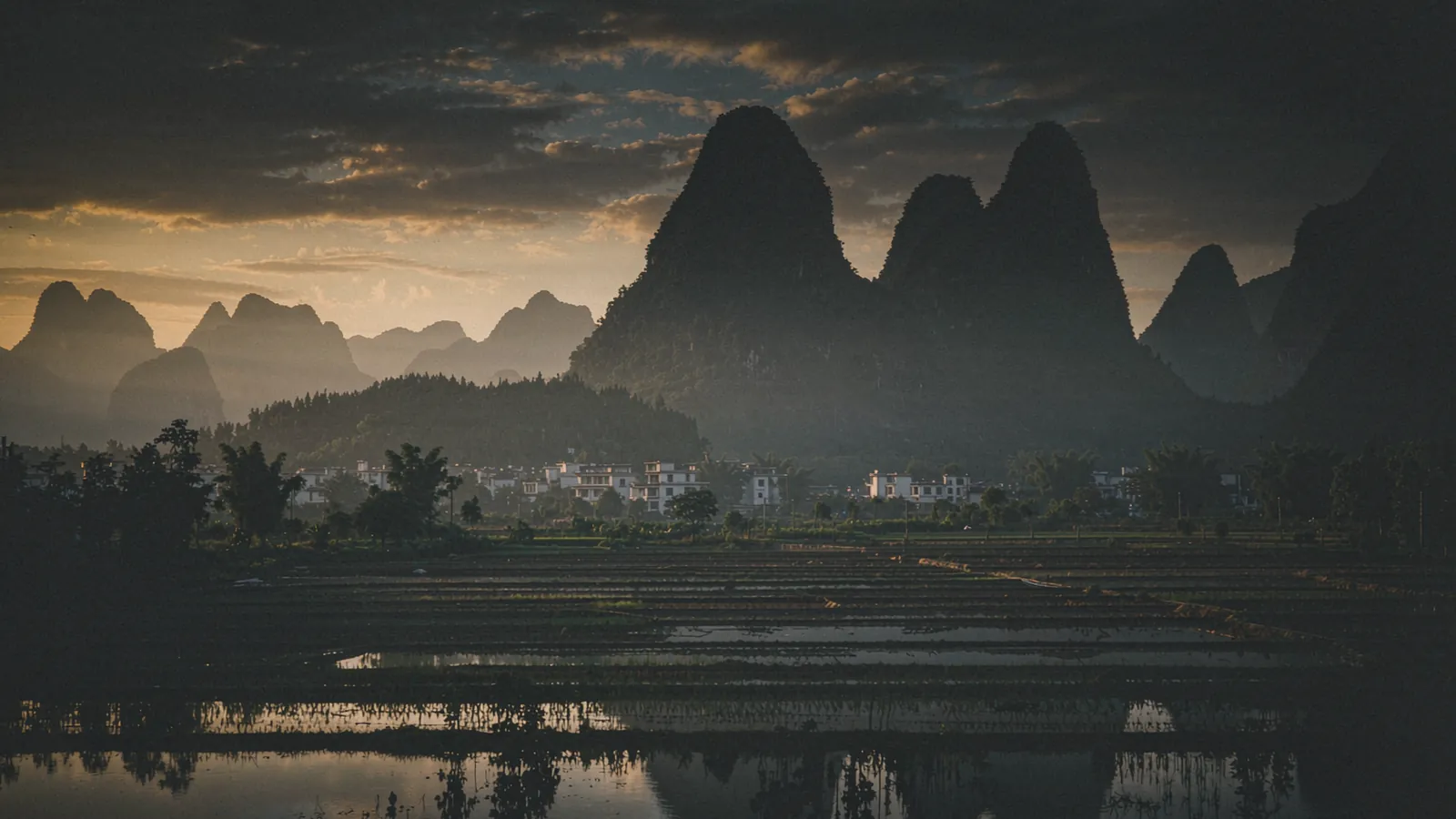
The Li river and the rice terraces
Xingping, upstream of Yangshuo, is where the photograph of the fisherman and his cormorant gets made at dusk. The fishermen who pose are professionals and charge 150 to 200 yuan for a one-hour session — it is an established practice, and there is nothing wrong with it. Arrange it a day ahead and confirm the time of sunset.
For the morning mist over the river, the window is between April and October, and the hour is between 5:30am and 7:30am. In July and August the summer rains can ruin two days in a row.
Yuanyang, in Yunnan, holds the most photographed rice terraces in the country. The fields only hold water — and therefore only reflect light — between December and April, when they are flooded ahead of planting. Outside that window they are green in summer and golden in autumn, and beautiful in a different way.
The best viewpoint is Duoyishu, for sunrise; Tiger Mouth is the less-visited alternative. And allow for mountain roads: Dali–Lijiang–Yuanyang always take longer than the distance suggests.
Beijing, early in the morning
The capital has two photographic windows, and both are in the morning:
The hutongs at seven in the morning, when the same residents as always are on their way to work, with their bicycles and their bowls of soup. It is the only moment when those streets are not full of visitors.
The Forbidden City under snow, between December and February. Snow in Beijing is not guaranteed — it falls on eight or ten days a winter —, but when it does fall, the red roofs under snow are the best image of the city.
For both, arrive at 7:30am: the Forbidden City ticket office opens at 8:30am, and the groups arrive at ten.
Harbin, at night
Harbin’s ice sculpture festival is the place where night photography pays off more than daylight: the structures are lit from inside, and the coloured light works between 4:30pm and 9pm.
The problem is the temperature: 20 to 30 degrees below zero. That has practical consequences:
- The phone battery dies in two hours: carry it close to your body.
- The camera body and the lens fog up when you go into heated places: let the equipment cool down inside a closed bag.
- Thick gloves and small buttons do not go together: bring thin liner gloves.
Our Winter China route was designed with this night window in mind.
City: Shanghai and Hong Kong
Shanghai gives you three classic images. The Bund at dusk, when the buildings on the far bank light up — the moment is between 6pm and 7:30pm, depending on the season. Pudong photographed from the Bund, with the Shanghai Tower. And the old French concessions in the morning, with the trees.
Hong Kong is still the best city in Asia for urban night photography. The view from Victoria Peak at dusk and the streets of Mong Kok at night are the two classics. And, unlike on the mainland, drones there are handled differently.
The drones
Short answer: bring the drone only if you are going to open rural areas.
China requires drone registration and bans their use in practice at every relevant tourist site: the Great Wall in its entirety, the Forbidden City, national parks such as Zhangjiajie and Jiuzhaigou, and the historic centres of cities.
In rural areas — the terraces of Yuanyang, the fields of Yunnan, parts of Tibet — the situation is different, but it is worth asking in the village first.
The equipment
- Wide angle 16–35 mm: the lens you use most in China, in the palaces and in the landscapes.
- Telephoto 70–200 mm: to compress the terraces, and for portraits from a distance.
- Small travel tripod: the large ones are banned in several parks, at weekends above all.
- ND and graduated filters: for long exposures of water, and for sunrises with a very bright sky.
- Two memory cards and two batteries, at a minimum.
- A microfibre cloth and a small towel: with the humidity and the rain, the front element is wet constantly.
Three pieces of advice that make the difference
Keep a spare morning. In Zhangjiajie, in Yuanyang and on the Li river, the light decides. A photographic itinerary with no free morning is an itinerary that will miss at least one image.
Arrive before opening. At 7am the Great Wall at Mutianyu is empty. At 11am it is a corridor of people. The difference is not only photographic: it is the whole trip.
Talk to the guide about the light plan. A guide who understands the subject knows that today will come to nothing and tomorrow will deliver — and reorganises the day. It is the most useful part of a photographic itinerary and the hardest thing to achieve alone.
The plan
For anyone who wants to photograph seriously, a private tour in China has one decisive advantage over any other way of travelling: the possibility of switching the day when the light changes. On a trip to China organised independently, that is rarely possible.
For anyone who wants to photograph seriously and has twelve to fourteen days, the sequence we recommend is: Zhangjiajie three nights, Guilin and Yangshuo three nights, and Beijing three nights. It covers pillars, river and city, and each has a light of its own.
Our Photographic China itinerary does exactly this, with the mornings fixed at the right places and the nights spent in the accommodation closest to the viewpoints.
Frequently asked questions
What is the best place to photograph in China?
It depends on what you are after, but for landscape it is Zhangjiajie and the Li river at Yangshuo. For city, the hutongs of Beijing at dawn and the Bund in Shanghai at dusk. For winter, the Harbin ice festival at night. Each has its window of months and of hours.
Can I bring a drone?
You can, with two conditions: it has to be registered in China, and it is banned in practice at almost every site that matters — the whole of the Great Wall area, the Forbidden City, the national parks and the historic centres of cities. Bring it only if your itinerary includes open rural areas.
Do I need a tripod?
For sunrises and for long exposures of water, yes. But be aware that tripods are banned in several national parks and monuments, at weekends above all. A small travel tripod gets through more often than a large one, and a mini tripod braced against a wall solves half the cases.
In which months do you get the mist on the Li river?
Between April and October, early in the morning. The mist forms before sunrise and lifts between 7 and 8am. In July and August the summer rains can blot out the view two days running, so it is worth keeping a spare morning.
Keep reading
Talk to the people who run it
Want to know how this applies to your trip?
Message us on WhatsApp. We reply in English within one business hour (UTC+8).
Chat on WhatsAppReplies in English · no obligation