Journal
Honeymoon in China: where to start
Twelve to fourteen days, one highlight a day and free afternoons. Why China works better than people imagine as a trip for newlyweds.
October 18, 2026 · ChinaTravel.pt Team · honeymoon · itineraries · couples
A honeymoon in China works better than most people imagine, and the reason is not exotic: it is practical. The country has the three things a newlywed trip needs — poster landscape, rooms with a view, and a table culture in which everything is shared and you sit talking for hours.
The condition is the rhythm. A honeymoon in China is not a ten-city itinerary: it is twelve to fourteen days, one highlight a day, and free afternoons. It is the opposite of what you do on a first trip, and it is why the generic itineraries do not serve.
The three places that make the trip
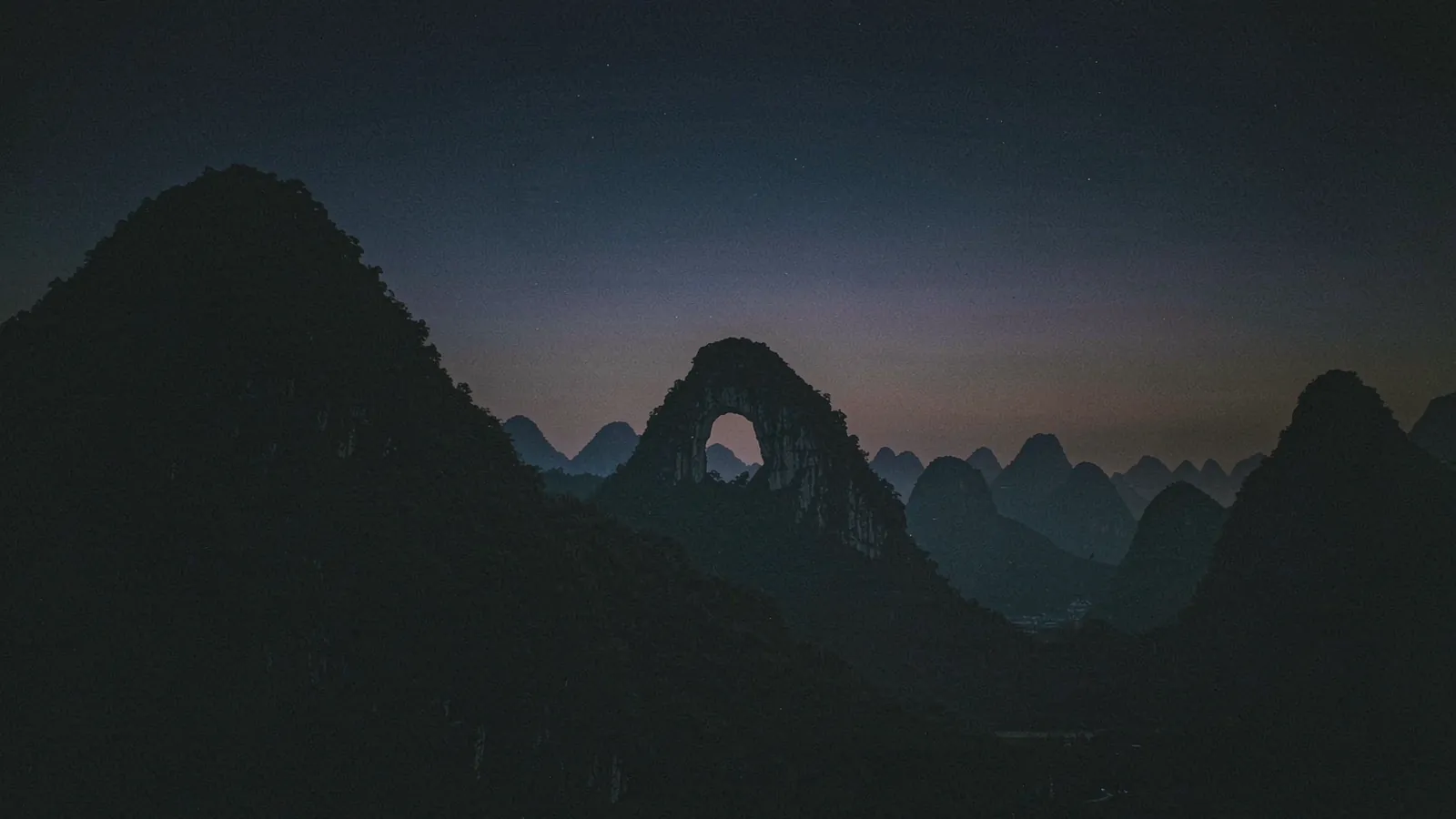
Yangshuo, at the start or at the end. It is the most beautiful landscape in the country and the only place where you can spend two days without setting foot in a monument. What you do: a bamboo raft on the Li river at dawn, bicycles through the rice fields, climbing for the more adventurous, dinner on the bank.
The choice of accommodation decides the experience: there are rooms with balconies over the river at 150 to 300 dollars a night, and it is one of the few expenses on this list we recommend making without hesitation.
Hangzhou and Suzhou, for the calm side. Hangzhou’s West Lake at dawn, before the groups, and the classical gardens of Suzhou — which are, in origin, private gardens made for walking in as a couple. Neither requires physical effort.
Shanghai, for the contrast. The Bund at dusk, the Pudong terraces, and the old concessions for walking. It is the city that closes the trip off — and it is also where the international flights leave from.
The rhythm, day by day
A honeymoon day in China, done the way it should be:
- A late breakfast, with no hour fixed.
- One visit in the morning — a single place, never two monuments back to back.
- A long lunch, which in China is always the most drawn-out meal.
- A free afternoon: a nap, the hotel, the pool, or simply doing nothing.
- One thing in the late afternoon: a boat ride, a market, a tea.
It is a short day on paper, and it is what stops the trip turning into the thing people fear most: an itinerary with a set time for everything.
What is worth paying for
On a trip like this there are three expenses we recommend not skimping on:
The room with a view. In Yangshuo, in Hangzhou and on the Bund — the view is what you will remember, and the difference between a room at 80 dollars and one at 180 is the difference between sleeping in a room and waking up in a place.
One special meal per trip. A dinner booked somewhere worth it, with the reservation made. Beijing, Shanghai and Chengdu have excellent houses.
The private car. It is not a luxury: it is what turns a drawn-out visit into a walk. And it is what makes it possible to go back to the hotel in the middle of the afternoon.
What is not worth it
The extra cities. Every city you add cuts a free afternoon, and it is in the free afternoons that the trip lives.
The shop stops. A great deal of group tourism in China sells cheap because it makes the money back on visits to tea, jade and silk factories. We never do it, and on a honeymoon two hours in a jade factory is half a day lost.
The wrong month. The first week of October is the worst week of the year. In April or November, you get the same country with half the people.
What it costs
For two people, fourteen days, on a private tour with a guide in your own language, a car, four- and five-star hotels, the entrances, breakfast and half the meals: between US$ 3,500 and US$ 6,900 per person, in a double room, depending on season and hotel category.
The international flights from Portugal add 700 to 1,300 euros per person in shoulder season, and up to 1,800 at peak.
The extras — meals not included, drinks, shopping, tips for the guide and driver — run to between 500 and 900 euros for the two of you over the two weeks.
The budget question is dealt with in detail in another article, with the sums done for ten days.
Practical details that make a difference
Ask for the right room. Hotels in China have rooms with a view and rooms without windows at the same price. We always ask for the former, and it is worth confirming that it has a seated toilet — rooms with squat toilets exist, and they are an unpleasant surprise.
Arrange the honeymoon touches in advance. Chinese hotels do not put out flowers and champagne on their own initiative. You ask, and you ask days ahead.
Avoid the altitude. If there is anywhere you do not want to feel unwell on a honeymoon, it is at 3,650 metres. Leave Lhasa for another trip.
One last detail, and one of the most often forgotten: tell the hotels it is a honeymoon. Not in order to get flowers, although you will have them if you ask ahead — but so they give you the best room in the category you booked. In hotels where the same room costs the same with a view as without one, saying so at the time of booking achieves more than any paid upgrade.
Book the good meals. The places worth going to have queues. Booking through WeChat in advance saves an hour at the door.
How to put it together
The sequence we build most often for fourteen days: Beijing, three nights — Shanghai and Suzhou, four nights — Guilin and Yangshuo, four nights — Hong Kong, three nights to close and catch the flight.
That is the structure of our Honeymoon itinerary, and the shorter alternative, for anyone with only twelve days, is the same with one night fewer at each end.
If you want something more classic and less focused on landscape, Essential China with two free afternoons forced into it also works — but the truth is that, on a honeymoon, landscape always beats city.
Our final note
China is not the obvious honeymoon destination, and that is precisely why it works: there are no queues of newlyweds, no formatted packages, and none of the sense of following a script.
Tell us how many days you have and what kind of trip you want — a lot of landscape or more city — and we give you back an itinerary with the mornings fixed and the afternoons blank. The blank afternoons are the hardest part to get into an itinerary and the easiest to cut. They are the part we defend.
And if you want to see the country before deciding, our Guilin page explains why that is almost always where we start.
Frequently asked questions
Is China a good honeymoon destination?
It is, and better than people imagine: there is landscape that looks like the poster, hotels with rooms that have a view, and a table culture that suits couples. The condition is the rhythm: one highlight a day, free afternoons, and no morning starting before half past seven.
How many days should a honeymoon in China have?
Twelve to fourteen days. Ten days give you the three classic cities in a hurry; twelve let you add Yangshuo; fourteen let you add Yangshuo and a third region, with time to do nothing. Under ten does not repay a twelve-hour flight.
How much does a honeymoon in China cost?
A private fourteen-day tour, with a guide in your own language, a car, four- and five-star hotels, a room with a view in the right places, the entrances and half the meals, comes to between US$ 3,500 and US$ 6,900 per person in a double room. International flights are added on top.
Which time of year should you choose?
April, May and November. Those are the months with mild temperatures, good light and fewer people. Avoid the first week of October, the week of Lunar New Year and — if you can — July and August, when the big cities pass 35 degrees in high humidity.
Keep reading
Talk to the people who run it
Want to know how this applies to your trip?
Message us on WhatsApp. We reply in English within one business hour (UTC+8).
Chat on WhatsAppReplies in English · no obligation