Best time to visit · Guilin and Yangshuo
best time to visit Guilin
Month by month: the April mist over the Li river, the June floods that cloud the water, the golden rice fields of September and the weeks when the karst peaks read clean.
At a glance
- Best time to visit
- Apr–Jun · Sep–Oct
- Suggested nights
- 2 to 3 nights
- Region
- Sul
- Booking required
- No booking required
The best time to visit Guilin and Yangshuo depends on what you are going for, and here that is not a figure of speech: the most famous image of the region — the karst peaks rising out of the mist over the Li river — only exists with humidity, and the clean water you see on the posters only exists outside the rainy season. The two do not happen in the same month. The region has a humid subtropical climate, with a rainy spring, a hot summer of floods, a dry autumn and a grey but mild winter. This page answers “when to go to Guilin” and complements the Guilin and Yangshuo page.
The climate of Guilin and Yangshuo, month by month
Winter, December to February. Mild, without snow and without extremes of cold, but grey and damp, with frequent fine rain and days when the landscape has no contrast. The advantage is emptiness: Yangshuo out of season is a quiet town, hotels run low rates and bike rides between villages are done without crossing anyone. It is also the season when the river carries least water, which leaves the sandbanks exposed and can shorten the raft trips.
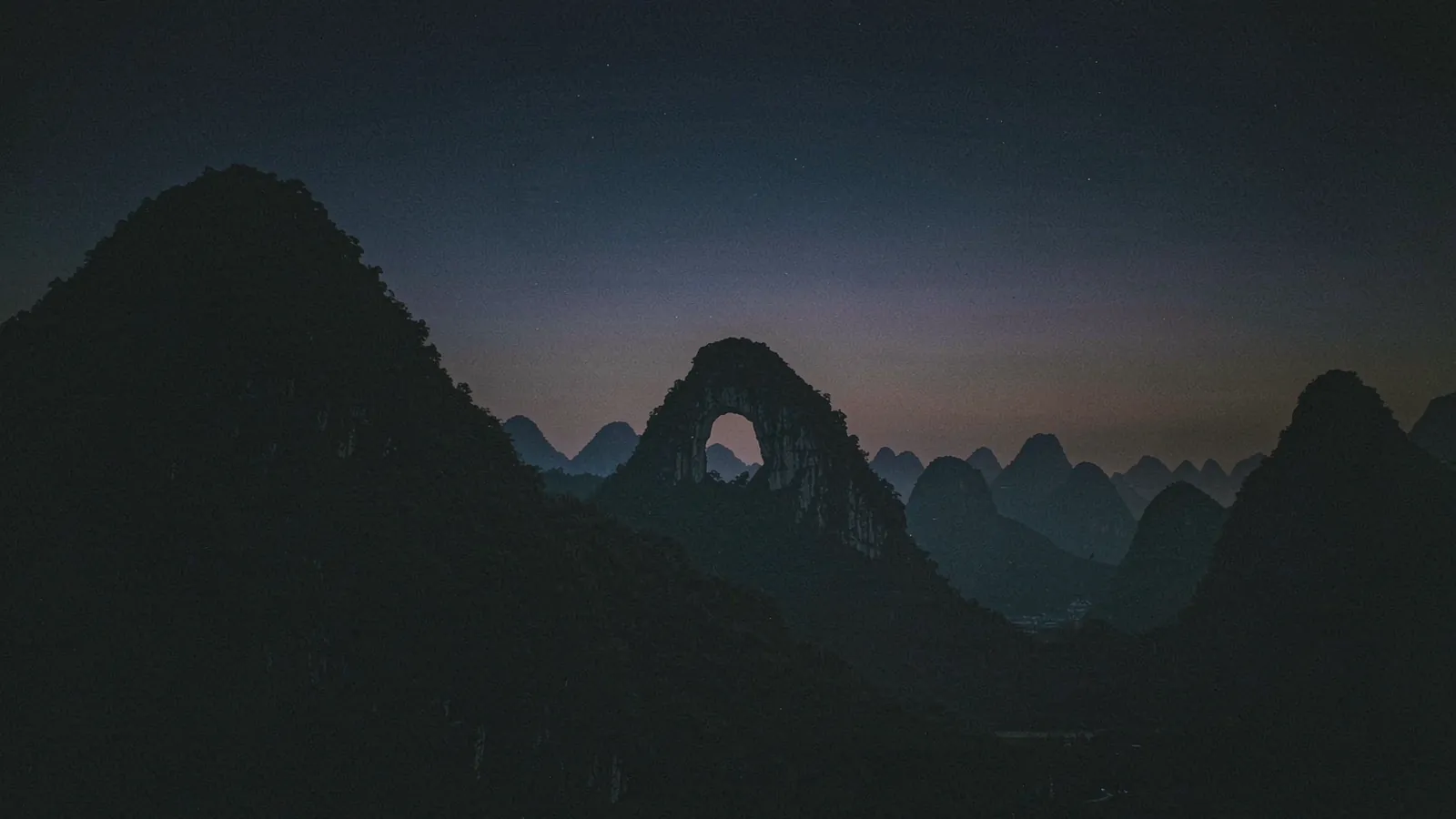
Spring, March to May. The season of mist and flowers, and the favourite of anyone with a camera. Dawn frequently breaks clouded over, and when the sun breaks above the peaks the image is the region’s. March is still cool; April and May climb in temperature and bring rain, sometimes on consecutive days. This is when the Longji terraces are flooded and mirror the sky, which is the other reason to come at this time. The price is uncertainty: we never leave Yangshuo with only one free morning for the viewpoint, because the first can come out clouded.
Summer, June to August. Hot, very humid and unstable. June and July are the months of heavy rain, and it is in them that the Li can rise and turn muddy, with cruises and rafts suspended for safety reasons. August brings sticky heat and the school holidays, which fill West Street and the viewpoints. It is not a season to cross off on principle, but it is the one most likely to force a change in the daily plan.
Autumn, September to November. The best window. September and October bring drier air, low, transparent water and clear days, with the Longji terraces gold in the week before the harvest. November cools, but keeps the light. It is also the season of highest demand, so dawns at the viewpoints already have tripods set up from 06:00. Anyone coming now books ahead and counts on the afternoons, when the light is side-on and most groups have already packed up.
The best moment for each experience
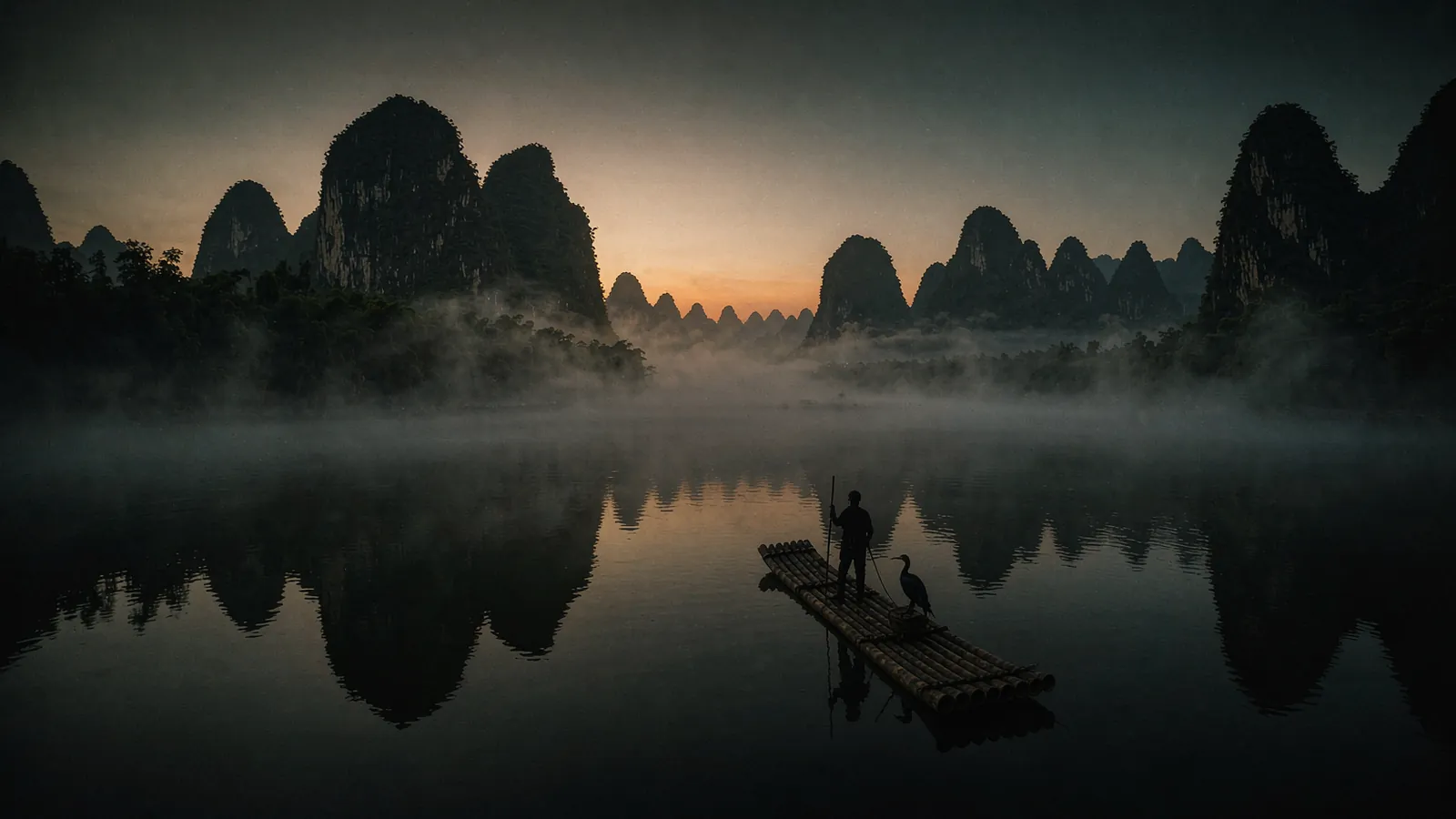
The Guilin to Yangshuo cruise and the raft trips depend on the level and colour of the water: they work well from September to November and reasonably in spring, and they are the first thing suspended in flood. The classic view from the Yangshuo viewpoint gains from mist, which is why April and May produce the image, as long as you have two or three mornings of margin. The Longji terraces have two good dates: mirrors from April to mid-June, gold in September. Cycling between villages, the late-afternoon walk and the fishing villages are best in dry weather, which points to autumn. The Reed Flute cave and the other karst cavities are indoors and serve as the plan for any rainy day, in any month.
Holidays and peak periods
The national holiday week from 1 October falls on the best month of the year, which makes this the least desirable combination of weather and people: the viewpoints and the cruises are full from 07:00. The first week of May and Lunar New Year follow the same logic. Outside these windows, July and August fill with the school holidays. The answer is the usual one: villages and inland valleys during the day, viewpoints at dawn and late afternoon, and bookings made early.
When not to go to Guilin
The national holiday weeks are the only ones we advise against without reservation. Then come the July and August weekends, and after that the weeks of heavy rain in June, for anyone who has the boat as a priority. Winter is not a season to avoid: it is a choice between grey sky and empty town, and for anyone travelling off-season the trade is favourable. What we never recommend is booking June counting on the cruise: it is the month with the highest risk of suspension.
What to pack, season by season
In spring and autumn, light layered clothing, a thin coat and a folding rain shell. In summer, cool clothing, sandals and a hat; the humidity does not lift at night, so extra changes of clothes are worth packing. In winter, a waterproof coat and a warm layer for mornings at the viewpoints, where the wind catches you. In any season: shoes with a sole that grips wet stone, because the jetties and river banks are slippery, and clothes that do not mind drying slowly. For the rice terraces, the only preparation that counts is knowing which week you are going in.
How the season changes the daily plan
In spring the day is organised around dawn: up before 06:00 for the viewpoint, use the low light, and spend the rest of the morning in villages and valleys, with the afternoon free for a second attempt from another vantage point. In autumn the day gives more and the margin is wider: the cruise in the morning, Longji in the middle of the day and cycling in the late afternoon, when the light is side-on and the groups have gone home. In summer the plan depends on the level of the river: with high water the boat comes off the list and the caves, villages and inland valleys come in, emptier than at any other time of year. In winter, cycling between villages is the best thing in the region, done in a coat, unhurried, with nobody on the road.
What to do when it rains
Rain is the most likely scenario between April and July, so it is worth knowing what stays standing. The karst caves are the obvious refuge: they are indoors, lit and do not spoil in water. The fishing villages and the covered markets work in fine rain, and some people prefer to see them wet. Teahouses and guesthouses with a balcony over the river are the plan for long afternoons, especially in Yangshuo. What drops out is cycling, because the surface of the rural roads turns slippery, and the viewpoint, where there is no shelter at all. What you do not lose is the will to come back the next day: the dawns change from one day to the next, and that uncertainty is what makes the region.
The calendar in four lines
The best moment is September and October: clean water, dry air, golden rice fields and clear light. The second choice is April and May, the season of mirrors on the terraces and of mist over the river, at the cost of frequent rain and uncertain dawns. The weeks that ask for thought are those from June to August, with heat, humidity, flooding and school holidays. The dates to avoid are the national holiday week, which joins the best season of the year to the worst volume of people. Winter comes into the second line for anyone who prefers an empty town to guaranteed light.
Fitting the right season into a trip
Guilin and Yangshuo come into our routes as the rural counterpoint to the China of cities, and they are among the stops where the date shows most. On the Honeymoon route the region is the quiet chapter of the trip, and September is the month when the terraces and the river are at their best. On Photographic China we look for April and May, precisely for the mist that elsewhere would be a defect. For the full destination listing, go back to the Guilin and Yangshuo page.
Frequently asked questions
What is the best time to visit Guilin and Yangshuo?
September and October. The air turns dry, the Li river drops and becomes transparent again, the karst peaks stand out without stubborn mist, and the Longji rice terraces turn gold in the week before the harvest. It is the combination of best light with least rain, and therefore also the one with most people at the viewpoints at dawn.
Is it worth going in April and May, with the mist?
It is, if the idea is to photograph. Spring is the season of clouded dawns, and it is precisely that mist over the peaks that produces the classic image of the Li. The trade-off is that rain is frequent and unpredictable: it can rain for three days running. Two mornings are always held for the viewpoint, never one.
Do the summer floods really spoil the trip?
They can. In June and July, with heavy rain, the Li rises and the water goes muddy, and on those days the rafts and the cruises between Guilin and Yangshuo are suspended for safety. It does not happen every year in the same week, but anyone booking those months should count on the possibility of losing the boat trip and make use of the valleys, the caves and the villages.
When is the best time to see the Longji rice terraces?
It depends on the image you are after. Between April and mid-June the terraces are flooded and work as mirrors of the sky, which gives the best-known photograph of the region. In September, in the week before the harvest, they turn gold. In October they are already cut and in November they flood again. Outside these windows they are terraces of water or of stubble, and they change little.
Should winter in Guilin be avoided?
Not avoided, chosen with eyes open. Temperatures are mild, there is no snow and the cold is not extreme; the problem is the grey sky and the days of fine rain, which drain contrast from the landscape. In compensation, Yangshuo goes quiet, hotel rates drop and you can cycle between villages without meeting anyone.