Things to do · Guilin and Yangshuo
what to do in Guilin and Yangshuo
The city, the Li river, the rice fields of Yangshuo and the villages: the region's zones, how long each needs and what hours to go.
At a glance
- Best time to visit
- Apr–Jun · Sep–Oct
- Suggested nights
- 2 to 3 nights
- Region
- Sul
- Booking required
- No booking required
What to do in Guilin and Yangshuo depends on one decision taken before booking the hotel: sleep in Yangshuo, not in Guilin. The region splits into four distinct zones — the city, the river, the rice fields and the villages — and three of them are on the same side. This page is the practical version of our Guilin page: it says what to do in each zone, how long it takes and what hours it pays to be there.
The zones of the region and what to do in each
Guilin, the city. It is a point of arrival and of passage, with thirty years of concrete and a riverside walk along the Li that you cover on foot. It is worth it for what surrounds it: Elephant Trunk Hill, the symbol of the city; the Reed Flute and Seven Star cave park, with stalactites lit in colour; and the night walk of the two rivers and four lakes, with the canals and bridges illuminated. Half a day is enough, and that is what we spend here before heading south. Anyone arriving by train in the late afternoon can sleep the first night in Guilin and move on the next morning.
The Li river stretch, between Xingping and Yangdi. This is where the landscape printed on the twenty-yuan note is. It is done by motorised bamboo raft, for four people, passing under the peaks. Unlike the big cruise between Guilin and Yangshuo, the raft goes at the group’s pace and can stop. Do it in the morning or the late afternoon: at midday the light is vertical and photographs come out washed. One to two hours.
Yangshuo and the rice fields of the Yulong river. The centre of the region and where you sleep. The flat road between villages along the Yulong passes stone bridges eight hundred years old, tangerine farms and threshing floors, and it is the best bike ride in China for anyone who does not want to climb mountains. Count on fifteen to twenty kilometres of flat ground, three to four hours with stops. Add to this the climbing on the karst rock — one of the best natural schools in the world — with a half afternoon of initiation and an instructor for adults and children from eight years old.
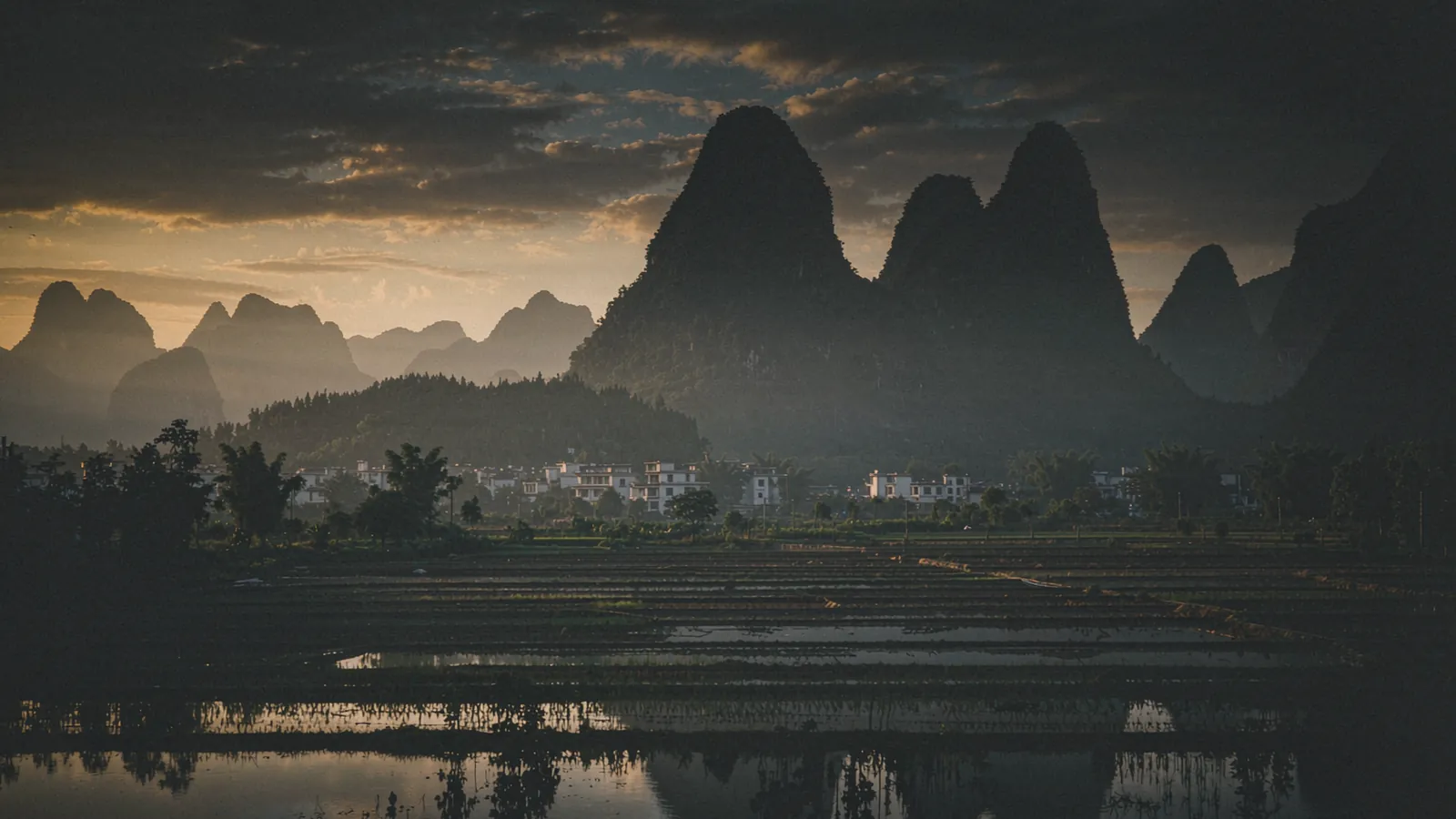
The villages of Xingping and Fuli. Xingping has grey brick houses and a jetty on the river bank; Fuli has the market where you buy tangerines and bamboo basketry. Neither has an entry ticket. They are half an hour each and fit into the bike loop or the return from the raft. This is where the region still looks like an inhabited region, and not like a set.
The Xianggong viewpoint. Across the river, it is the classic lookout for sunrise over the bend of the Li. The climb takes about twenty minutes up a stone stair, in the dark: we leave the hotel at 04:30 in the morning. It is the most photographed point in southern China and it earns its keep from the hour, not from the equipment. We always hold a second dawn in reserve, because in fog you see nothing.
How to split the day
In the morning. Sunrise at the Xianggong viewpoint, if the group wants to do it, or the raft on the river before the heat. This is when the light is side-on and when there are fewer boats on the water.
In the afternoon. Cycling through the rice fields, stopping at the stone bridges and the farms. On very hot days, set off after 15:00, when the shadow of the peaks already covers the road.
Late afternoon and evening. The raft, for anyone who did not do it in the morning, and the walk along Yangshuo’s old street at dinner. The town has its own nightlife and is one of the few places in China where you can have a drink outdoors with the peaks in front of you.
What lies further out
The Longji rice terraces. Around two hours north of Guilin, carved into the slope over centuries by the Zhuang and Yao minorities. They are one of the most impressive agricultural landscapes in China and ask for a full day or a night in the village. We recommend them above all to anyone arriving via Guilin with an extra night before dropping down to Yangshuo.
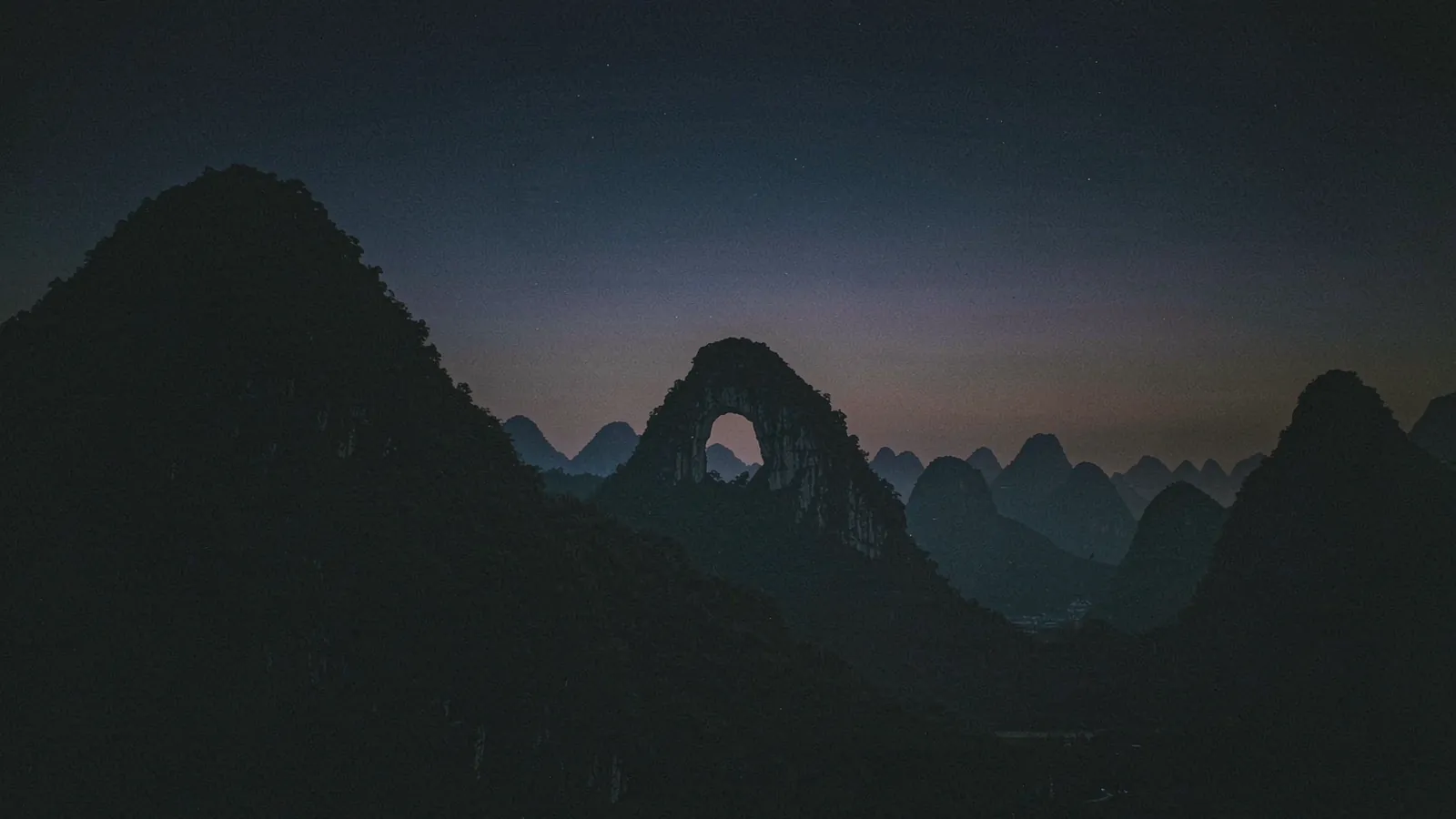
The Silver Flute cave and the villages to the west. Less visited, they are a good alternative for anyone who has done the essentials and wants to see the region without people.
How long to give each place
- Guilin, the city — half a day, on arrival.
- Li river raft — one to two hours, morning or late afternoon.
- Bike loop along the Yulong — three to four hours with stops.
- Xingping and Fuli villages — half an hour each.
- Xianggong viewpoint — two and a half hours between leaving the hotel, the climb and the return.
- Climbing in Yangshuo — half an afternoon.
- Longji terraces — a full day or a night.
How to move between zones
Between Guilin and Yangshuo there is a road and there is a river: the road takes about an hour, the tourist cruise longer. Inside the region, the bike handles the rice fields and the villages; for the raft and for the viewpoint at dawn you need transport, which on our trips is always a car with a driver, because the timings are not compatible with anything that runs to a fixed schedule.
What order to follow
First day: arrival and half a day in Guilin, then on to Yangshuo in the late afternoon. Second day: dawn at the viewpoint, cycling in the afternoon, raft at the end of the day. Third day: villages, climbing or Longji, depending on the group. This order has a practical advantage: it puts the viewpoint dawn on the second day, which leaves room to repeat it on the third if the first morning comes out foggy.
If you have less time, if it rains, or if you have children
With two days. Raft and cycling, the pair that defines the region. You lose the viewpoint at dawn, which is a shame, but it is the most common sacrifice.
With rain. Caves, a cooking class on the farms and the covered climbing gym in Yangshuo. In heavy rain the raft does not go out.
With children. Cycling on flat roads, the raft, a climbing session on the rock with an instructor and cooking classes on the farms. That is why the region comes into our Panda Route for Families.
Mistakes that cost half a day
- Sleeping in Guilin to save on the hotel. It forces an hour of road in each direction, every day, and takes away exactly the best of the region: the morning and the late afternoon among the rice fields.
- Doing the raft at midday. The vertical light washes out the photographs and the heat does not forgive. Morning or late afternoon, always.
- Renting a cheap bike in Yangshuo. The gears fail on the dirt turns and you spend the afternoon pushing. We rent good bikes.
- Counting on the Xianggong viewpoint on a single morning. In fog you see nothing. We always hold a second dawn in reserve.
- Taking the big cruise because it is “the classic”. It carries three hundred people and runs to a fixed schedule; the raft passes the same peaks at the group’s pace.
How we organise this on the ground
A car with a local driver is what puts you at the viewpoint before sunrise and on the raft at the right hour of light; it is not a luxury, it is what makes the region work. For the cycling, we bring the bikes and follow by car, which gives shade and water to anyone who wants to stop earlier and lets you shorten the route without logistics. For the raft, we set the hour against the tide and the previous day’s light, not against a timetable. And when the group wants to photograph, we invert the first two days: the dawn goes to the first morning, in case the second comes out foggy.
How this fits into a trip
Guilin and Yangshuo are the landscape chapter of almost every first trip and the most photographed late-afternoon destination in southern China. On our photography tours they come with two nights and a guaranteed viewpoint dawn; on the honeymoon tours they are the quiet part of the route. For the full destination listing — where to stay, what to eat — go back to the Guilin page.
Frequently asked questions
Should you stay in Guilin or in Yangshuo?
In Yangshuo. Guilin is a transit city with thirty years of concrete; Yangshuo is the village among the peaks. Sleeping in Guilin forces an hour of road in each direction, every day, and you lose exactly the best of the region, which is the morning and the late afternoon among the rice fields.
How many days do you need for what there is to do between Guilin and Yangshuo?
Two nights in Yangshuo cover the raft, the cycling and the viewpoint. Three allow you to climb Xianggong viewpoint at dawn, do the bike route through the rice fields and still take the Yulong river by raft without rushing. That is what we recommend.
The Li river cruise or the raft?
The private raft at Yangshuo. The big cruise between Guilin and Yangshuo carries three hundred people and runs to a fixed schedule; the motorised bamboo raft goes at the traveller's pace and passes the same peaks, including the stretch printed on the twenty-yuan note.
What is there to do in Yangshuo on a rainy day?
The Reed Flute and Seven Star caves, lit and half an hour from the town, are the classic alternative. It is also a good day for a cooking class on the farms, or for climbing at the Yangshuo rock gym, which has covered routes.
Can everything be done by bike?
The flat part can, and it is the best part: the road along the Yulong river between villages, with stone bridges eight hundred years old. We rent good bikes, with gears, because the cheap rentals in Yangshuo fail on the dirt turns. The normal route is fifteen to twenty kilometres on flat ground.