Best time to visit · Lhasa
best time to visit Lhasa
Month by month: the summer monsoon that hides Everest, the dry and empty winter, the Tibet entry permits and the two windows of the year when the plateau shows clear.
At a glance
- Best time to visit
- May–Sep
- Suggested nights
- 3 nights
- Region
- Tibete
- Booking required
- Potala Palace · Jokhang Monastery
The best time to visit Lhasa is a decision that has to pass through three filters, and only one of them is meteorological. The first is altitude: the city is above three thousand metres, and the body needs time. The second is the climate of the plateau, split between a dry season and a well-defined rainy season. The third, and the least predictable, is administrative: entry into Tibet depends on a specific permit, handled through an agency, which in certain periods suffers suspensions. This page answers “when to go to Lhasa” and complements the Lhasa page.
Lhasa’s climate, month by month
Winter, November to March. Dry, sunny and cold. The Tibetan plateau has a strong sun that makes the days pleasant even when the temperature is low, and the temperature range between day and night is wide: you leave in a coat in the morning, are in short sleeves at midday, and the cold returns in the late afternoon. It snows little in the city, but snow on the mountain passes can close accesses to the higher areas. The advantage of this season is enormous: empty monasteries, pilgrims arriving from the villages as they always have, hotels at low prices and the Potala in the cleanest light of the year.
Spring, April and May. The start of spring is short and very good. Temperatures rise, the valleys turn green and the sky stays clear before the monsoon. It is one of the two windows of the year. The caveat is administrative rather than meteorological: in certain years, entry permits for Tibet suffer temporary suspensions at the start of spring, so the period should be confirmed before booking.
Summer, June to August. The monsoon. The rain falls mainly at night and before dawn, which leaves the dawns clouded and the mountains covered: anyone coming for Everest has the highest probability here of seeing nothing. It is also the peak of domestic tourism, which puts pressure on permits, accommodation and roads, the latter subject to water and landslides. It is not a dangerous season, it is a season that gives less for the same money.
Autumn, September to October. The best window for most trips. The monsoon withdraws, the air turns dry, the sky clears and the mountains reappear sharply. September and the beginning of October are the months when the peaks are seen and when the monasteries recover their usual rhythm. The caveat is the same as across the country: the week that starts on 1 October is the busiest of the year.
The best moment for each experience
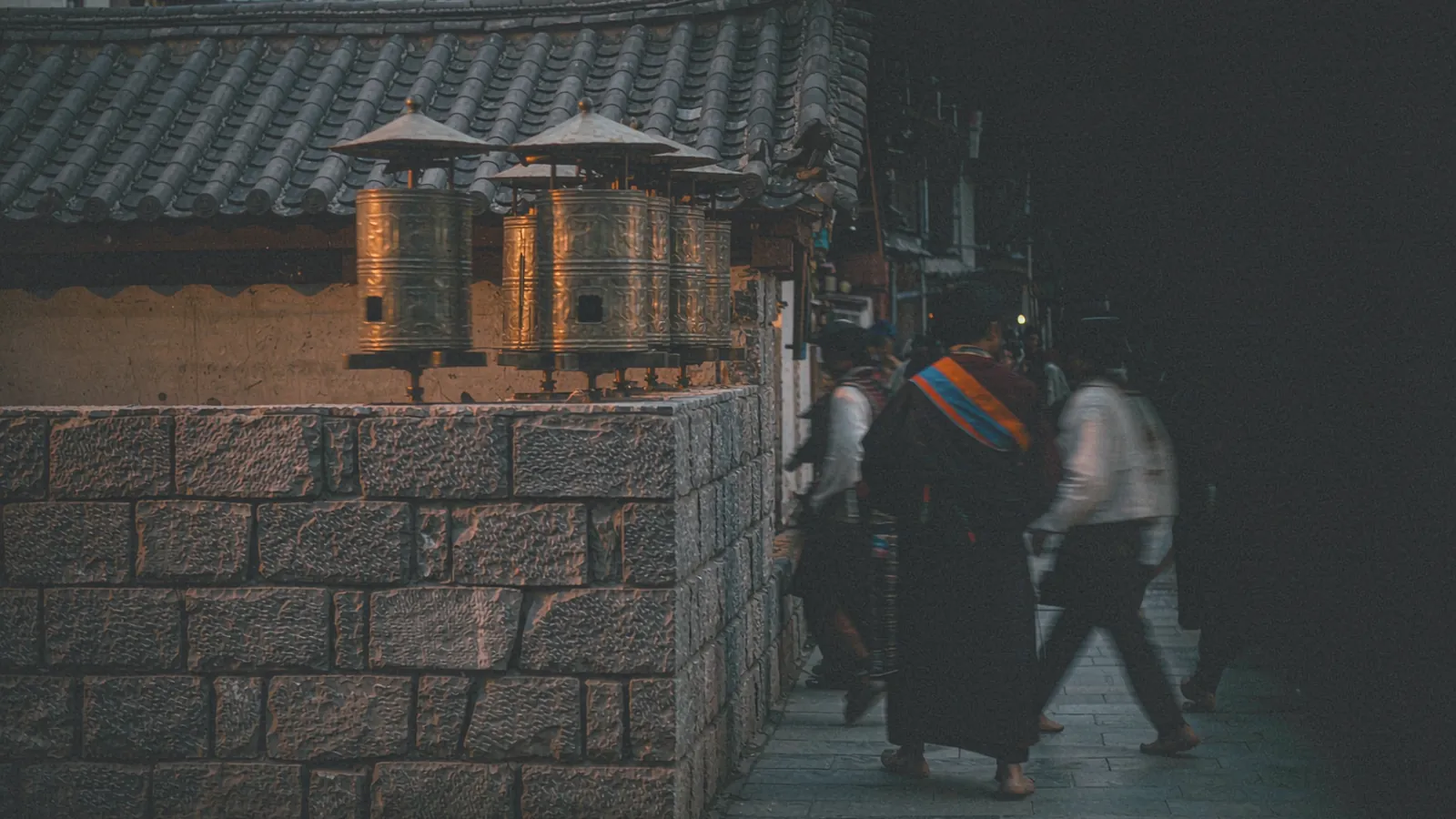
The Potala and the Jokhang are visited in any month and gain from clear sky, which points to autumn and winter; in summer the rain does not prevent the visit but takes the light away. The Barkhor circuit is done in the morning, when the pilgrims arrive from the villages, and that procession happens all year; in winter it is more intense. The Sera monk debates take place in an open courtyard mid-afternoon, with no fixed days, and are always confirmed the day before. Yamdrok and the plateau lakes gain from clear sky and high water, and Everest from dry air: September and October are the months when it is sighted. The train to Lhasa runs in any season and is, in itself, an experience that depends little on the weather.
Holidays and peak periods
Tibet has two peaks, and the second is the less obvious. The first is the national holiday week from 1 October, which coincides with the best time of year and brings visitors from the whole country: the monasteries fill, hotels sell out and permits come under pressure. The second is summer, July to August, because of the school holidays and domestic tourism. Outside these windows, winter is the calm season par excellence. And there is one period that is not managed by booking early, it is managed by information: the temporary suspensions of the permit process, which in certain years affect the start of spring.
When not to go to Lhasa
The national holiday week and the July and August weeks are the ones we advise against most clearly: they join the worst weather or the worst volume of people to a destination that requires paperwork and costs a lot per day. The winter months are not on this list: they are a different bet, with mountain accesses conditioned, but with the city at its best silence. What we never recommend is booking the start of spring without first confirming the state of the permits, and that is why we always handle that point before asking for any payment.
What to pack, season by season
For winter, layered clothing, a warm coat, hat and gloves for the mornings and nights, and closed shoes. For spring and autumn, light layers, a coat and a windbreaker, because the daily temperature range is wide in any month. For summer, a folding rain shell and shoes with a sole that grips wet stone. In every season of the year, three things the plateau demands: sunscreen and sunglasses, because the radiation is strong and there is no shade on the roads; lip balm and water, because the air is dry; and time, because altitude does not negotiate. Also bring an extra layer for mornings at the mountain passes, even in August.
The light of the plateau and the hours of the day
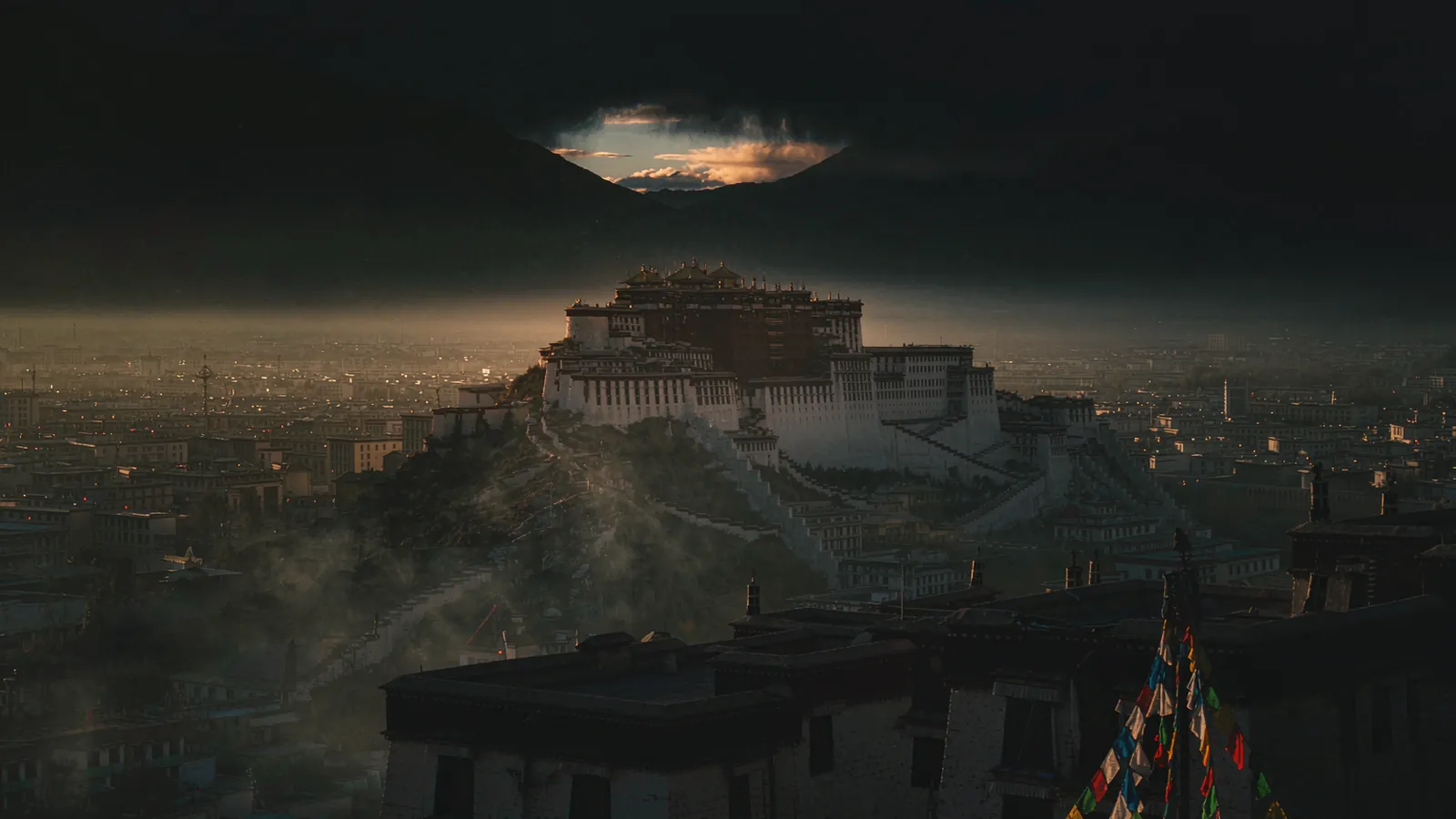
On the plateau, light works differently. Solar radiation is strong, the sky has less filter and the colours come out saturated, which explains why the dawns and late afternoons are worth so much: from 07:30 to 09:00 and in the last hour before dusk, the light is raking and the monasteries and slopes gain relief. In the middle of the day, with the sun overhead, photography goes flat and contrast is lost, which is why the central hours are used for indoor visits, for the roads and for rest. In winter the day is shorter and the low light appears earlier; in summer the sun takes longer to set, but the monsoon brings cloud. In any month, bring sunscreen and sunglasses: in Tibet, the radiation does not warn you.
How the season changes the daily plan
In autumn and spring, the two best seasons, the day gives a lot: the Potala early, the Barkhor circuit right after, the Jokhang and the monasteries in the afternoon, and the debates in the Sera courtyard mid-afternoon, when they happen. In winter the cold of the mornings delays everything by half an hour and night arrives early, so fewer transfers are planned and use is made of the monastery interiors, which are warm and full of side light. In summer, with night rain, the dawns come out clouded and the roads deserve margin: delays are counted in and the state of the accesses confirmed the day before. In both seasons, the first night in Lhasa has no programme, and that is not up for discussion with the season.
The calendar in four lines
The best moment is May and June, and then September: clear sky, open roads, mountains visible and permits processing normally. October starts well and is spoiled by the national holiday in its very first week, so it is best used in the first half, outside the holiday dates. The second choice is winter, from November to March: empty city, monasteries in silence, low prices and strong sun, at the cost of cold and of conditioned mountain accesses. The weeks that ask for thought are those of July and August, with night rain, clouded dawns and maximum attendance. The ones to avoid are the national holiday week and any period in which the permits are suspended.
Fitting the right season into a trip
Lhasa is the destination most sensitive to the date of all the ones we work with, because the paperwork and the climate have to coincide. On the Grand Crossing Tibet is the high point of the route, and September is the month when the whole trip pays off: dry air, peaks visible and roads open. On Photographic China the choice falls on winter and autumn, when the light of the plateau and the Barkhor at dawn give the best images. For the full destination listing, go back to the Lhasa page.
Frequently asked questions
What is the best time to visit Lhasa?
May and June, and then September. In those two windows the monsoon has not yet arrived or has already passed, the sky is clear, the roads over the mountain passes are open and the travel permits are processed normally. To see Everest with no cloud in front of it, September and October are the safest months.
Is it worth going to Tibet in winter?
For Lhasa and the monastery axis, yes. Between November and March the city has fewer visitors, hotels run low rates and the sun of the plateau keeps the days clear, with the Potala and the Jokhang working under normal conditions. The trade-offs are the cold of the mornings and nights and the possibility of snow closing the mountain passes that give access to the higher areas.
Is summer the worst time to go to Lhasa?
It is the monsoon season. Between July and August the rain falls mainly at night and before dawn, dawn often breaks clouded over and the clouds hide the mountains you came to see. It is also the peak of domestic tourism and the period when permits and accommodation are under most pressure. The roads suffer more from water and landslides.
Are there times when a Tibet permit cannot be obtained?
There can be. The entry of foreign travellers into Tibet depends on a specific permit, handled through an agency, and in certain years the process suffers temporary suspensions, particularly at the start of spring. Those dates cannot be fixed a year in advance: we always confirm the state of the process before closing any booking.
Does the altitude change with the season?
The altitude is the same, but the effort the body makes is not. Above three thousand metres, the cold of winter mornings and the dry heat of spring increase the strain, and the monsoon rain does not help. What never changes is the rule: arrive, sleep one night with no programme, and take the first twenty-four hours calmly, in any month.