Best time to visit · Xi'an
best time to visit Xi'an
Month by month: summer heat on the Loess plateau, the grey days of winter and the two autumn weeks when you can cycle the wall without sweating.
At a glance
- Best time to visit
- Mar–May · Sep–Nov
- Suggested nights
- 2 nights
- Region
- Centro
- Booking required
- Terracotta Army · Shaanxi History Museum
The best time to visit Xi’an is autumn, and the reason is simple: the city is an outdoor plan. You walk along the top of a six-hundred-year-old wall, cover the Muslim Quarter circuit on foot and spend hours in excavated pits that heat up quickly. All of this changes character according to the month. Xi’an has an inland continental climate, drier than Shanghai’s and more abrasive than Beijing’s: hot summers, winters of still air and two short, excellent seasons in between. This page answers “when to go to Xi’an” and complements the Xi’an page, where what to do and how long to give each thing lives.
Xi’an’s climate, month by month
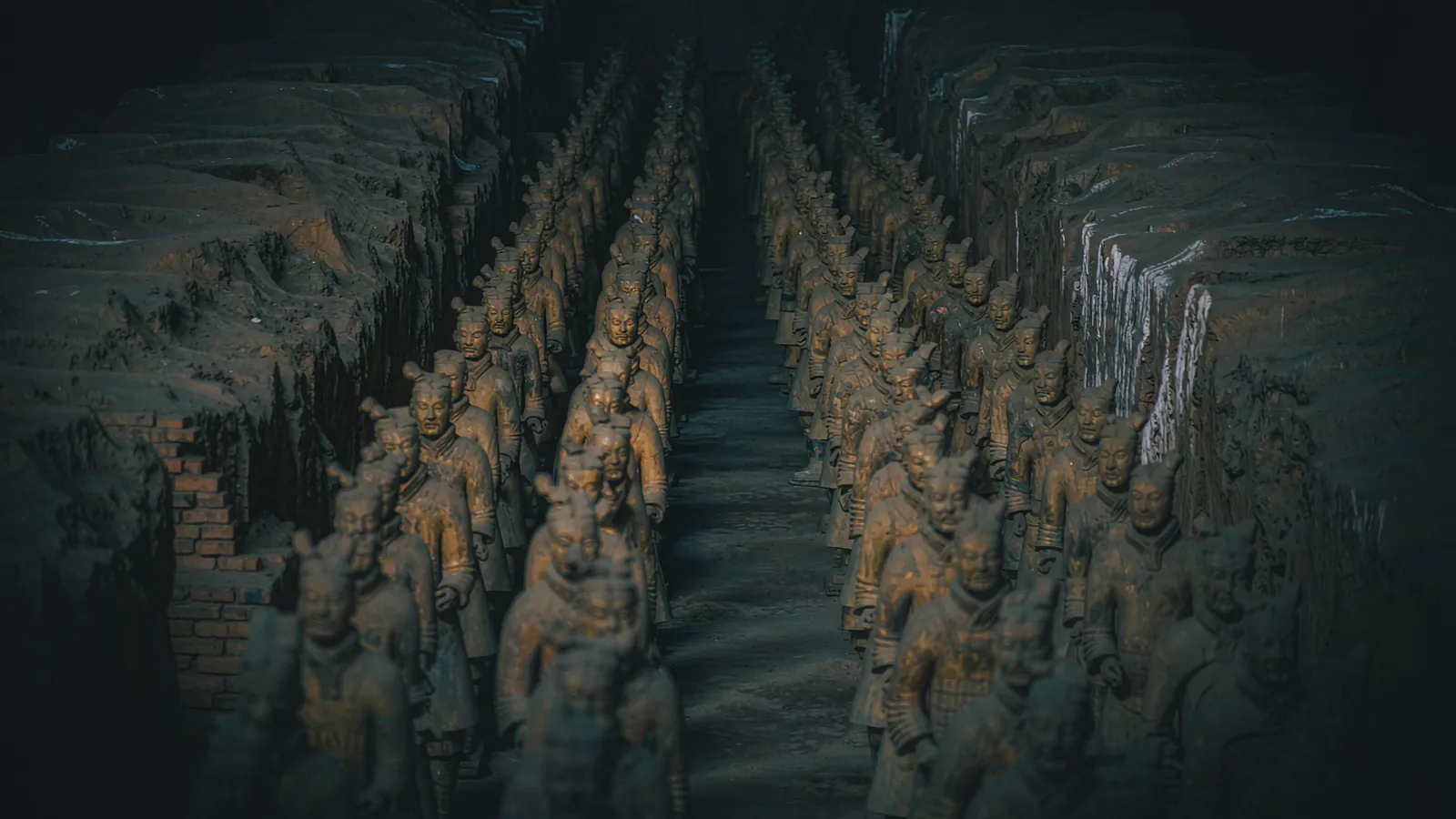
Winter, December to February. Dry cold, with nights below zero and short days. The city sits inside the Guanzhong basin, a depression ringed by mountains where the air collects: in December and January there are days of thick haze and low sky, made worse by urban heating. It is not a winter of heavy snow; when it snows, the wall takes on a remarkable look for the following two hours and the city stops. The advantage of this season is the volume of visitors: the Terracotta pits are almost empty and you can stand in front of a rank for ten minutes with nobody pushing.
Spring, March to May. March is still cold and windy, with the brownish tone of the Loess plateau in view. April and May are the right season: mild temperatures, gardens in flower, the wall asking for a bike and the Muslim Quarter walks pleasant until late. It is also the time when the wind can bring dust from the northwest, with days of reduced visibility; as in Beijing, these are short episodes. For anyone photographing, the April light on the battlements is among the best of the year.
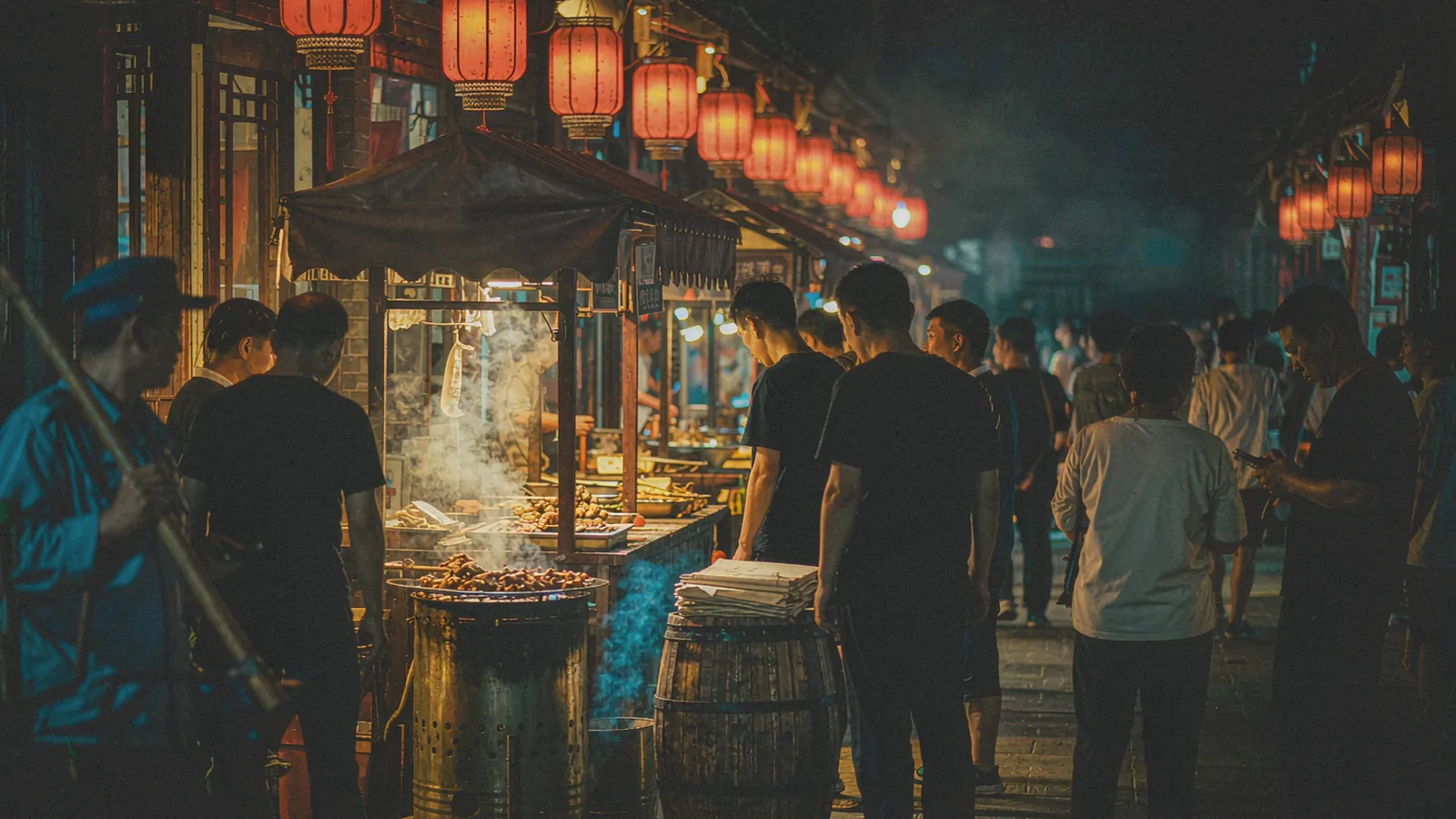
Summer, June to August. Hot and dry in the June weeks, humid and heavy in July and August, with late-afternoon thunderstorms. The sun beats hard onto the wall, which has no shade at all for the first few metres: do it in the late afternoon, when the stone has cooled, not at midday. It is also the school holiday season, which means queues in the hangars even on weekdays. On the other hand, summer nights in the Muslim Quarter are the best thing in the city: stalls lit up, grills smoking, people walking until late.
Autumn, September to November. The best window. September and October bring dry air, clear sky and the golden light you see in photographs of the battlements. November shortens the days and genuinely cools, but keeps the streets empty and the visibility good. It is also the time when the contrast between the heat of the day and the cold of the night forces layers: you leave in a coat in the morning and are in short sleeves by the afternoon. The caveat is always the calendar: the week that starts on 1 October is the peak of the year.
The best moment for each experience
The Terracotta Warriors are an indoor visit, but the hangars heat up and have no real air conditioning: in July and August you go in at opening and leave before 11:00; for the rest of the year the hour matters less than the date, and what you avoid are the holidays. The city wall is walked or cycled along the top of the parapet, with no shade: April, May, September and October are the right months, and the late afternoon is the right hour in all of them. The Muslim Quarter is a late-afternoon and evening visit, and gains from heat: from July to September all the stalls are set up and the street stays full until late. Huashan, two hours away, asks for clear sky and dry ground: autumn and spring, never winter with ice or a summer weekend.
Holidays and peak periods
Xi’an is one of the Chinese cities most visited by domestic tourism, and it shows. The national holiday week from 1 October is the worst moment of the year: the Terracotta hangars fill from opening time, the wall has a queue to rent bikes and the Huashan access roads jam up. Then comes Lunar New Year, between late January and mid-February, and after that the first week of May. Outside these windows, the July and August flow comes from the school holidays and concentrates on weekends. The practical answer is always the same: enter at opening, do the wall in the late afternoon and use the middle of the day for museums, pagodas and shade.
When not to go to Xi’an
With freedom over dates, avoid the two weeks of the national holiday and the week of Lunar New Year, and think carefully about July and August weekends if the idea is to see the warriors at leisure. December and January have the defect of haze and the virtue of emptiness: for anyone photographing architecture, the grey days of the Guanzhong basin are bad news, and two or three consecutive hazy days are not improbable. Deep summer we do not advise against for anyone travelling with children who accepts swapped hours; for anyone who wants to walk all day, July is the wrong choice.
What to pack, season by season
In winter, a warm coat, hat, gloves and shoes with a sole that grips stone: the wall steps freeze in the morning. A scarf or neck cloth helps on dust and dry-air days. In spring, layers, sunglasses and a coat for the mornings; the daily temperature swing is wide. In summer, light cool clothing, a hat, sunscreen and a bottle of water for the top of the wall, where there is nowhere to shelter. In autumn, layers again and a windbreaker for late afternoons on the parapet. In every season, walking shoes: the paving of the old city is uneven flagstone and Huashan’s is stone stair.
How the season changes the daily plan
In winter the short days rule: the light goes around 17:30, mornings are cold and visits start at 09:00. The warrior pits are done in mid-morning, when the inside of the hangars is no longer freezing, and the rest of the day passes between the museum, the pagoda and the Muslim Quarter, none of which depend on light. In spring and autumn the day gives much more: you start at 08:00, do the wall in mid-morning and there is still sun for the late-afternoon walk on the parapet. In summer the order inverts out of necessity: into the pits at opening, the central hours in museums and shade, and the wall after 17:00, when the stone cools. In any season, the rule that does not change is entering the pits at the first hour, and the one added to it is confirming the day before the state of the upper access to Huashan, which in any month can close for strong wind or slippery ground.
The calendar in four lines
The best moment is the second half of September and the month of October, up to the start of the holiday: dry air, clear sky, the wall pleasant at any hour of the day. The second choice is April and May, with mild temperatures and the city in flower, at the cost of wind and some dust. The weeks that ask for thought are those of July and August, with heat, humidity and school holidays: they are solved with inverted hours. The dates to avoid are the week of the national holiday and the week of Lunar New Year. Winter sits apart: grey, but with the best pit visits of the year.
Fitting the right season into a trip
Xi’an fits the classic axis of China and is one of the cities where the choice of month shows most, because almost everything there is to see is outdoors. On the Essential Tours it comes after Beijing, and September and October are the months in which that pair works best. On the Grand Crossing the city is a waypoint on a long route, and in April or October the light on the wall justifies the stop. For the full destination plan, go back to the Xi’an page.
Frequently asked questions
What is the best time to visit Xi'an?
The second half of September and the month of October, up to the start of the national holiday. In that window the summer heat has broken, the days are still long and the light on the walls is the best of the year. April and May come next, with mild temperatures and the city full of flowers, at the cost of some wind and dust carried in from inland.
Does Xi'an have a harsh winter?
It has a dry, grey winter, not a harsh one. Temperatures drop below zero at night, but rarely extremely; the main nuisance is the combination of still air in the Guanzhong basin with urban heating, which in December and January produces days of thick haze and short visibility. Anyone coming then should count on low sky and plan more indoor visits.
Is it worth going to Xi'an in July or August?
Only with adjusted hours. The city's summers are hot and dry, with afternoons that ask for shade, and they coincide with the school holidays, which fills the Terracotta hangars from opening time. The solution is to enter the pits at the first hour, do the wall in the late afternoon when the stone has cooled, and leave the middle hours for museums and shade.
When should you avoid visiting the Terracotta Warriors?
In the week of the October national holiday, in the Lunar New Year week and on July and August weekends. Those are the times when the first tour coach arrives before 08:30 and when the railing of pit one has queues three deep. Outside those dates, entering at opening solves the problem almost all year.
Can you climb Huashan in any month?
You can, but not in the same conditions. In spring and autumn the cable car and the walkways run normally and the view is clear. In winter there are icy stretches, access is shorter and the wooden walkways get slippery; at the height of summer the queues for the cable car are long and the heat on the stone stairs weighs on you. We always confirm the state of the access the day before.