Things to do · Xi'an
what to do in Xi'an in 2 days
Inside the wall, to the south and to the east: the city's zones, how long each one needs and the order that avoids queues.
At a glance
- Best time to visit
- Mar–May · Sep–Nov
- Suggested nights
- 2 nights
- Region
- Centro
- Booking required
- Terracotta Army · Shaanxi History Museum
What to do in Xi’an in 2 days is settled by one prior decision: the Terracotta Army is outside the city and eats a whole morning, so everything inside the wall has to fit into the time that is left. The split is geographical and it is what orders the itinerary. This page is the practical version of our Xi’an page: it splits the destination by zone, says how long each one needs and in what order the worst hours are avoided.
The zones of Xi’an and what to do in each
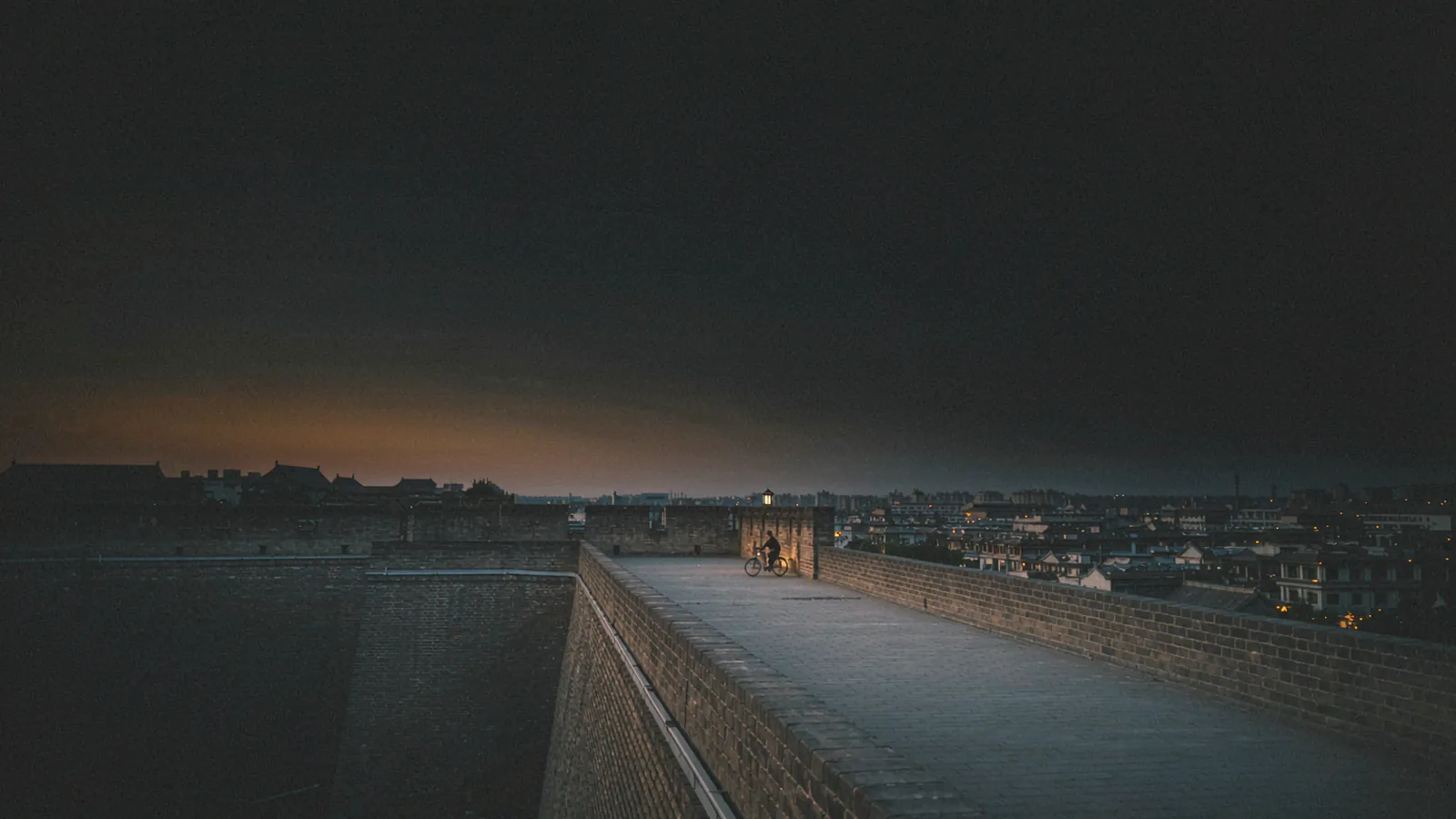
Inside the wall, the centre. It is a perfect rectangle of around fourteen kilometres in perimeter, twelve metres high and wide enough to cycle along the top. We enter through the South Gate, Yongningmen, the most restored one and the one that sits against the Muslim Quarter. The walk or bike ride takes about an hour on the southern stretch, stopping at the watchtowers; on hot days we recommend the last hour of the afternoon, when the stone cools and the light goes low. Coming off, the Bell Tower and the Drum Tower mark the central crossroads and work as a reference point for everything else.
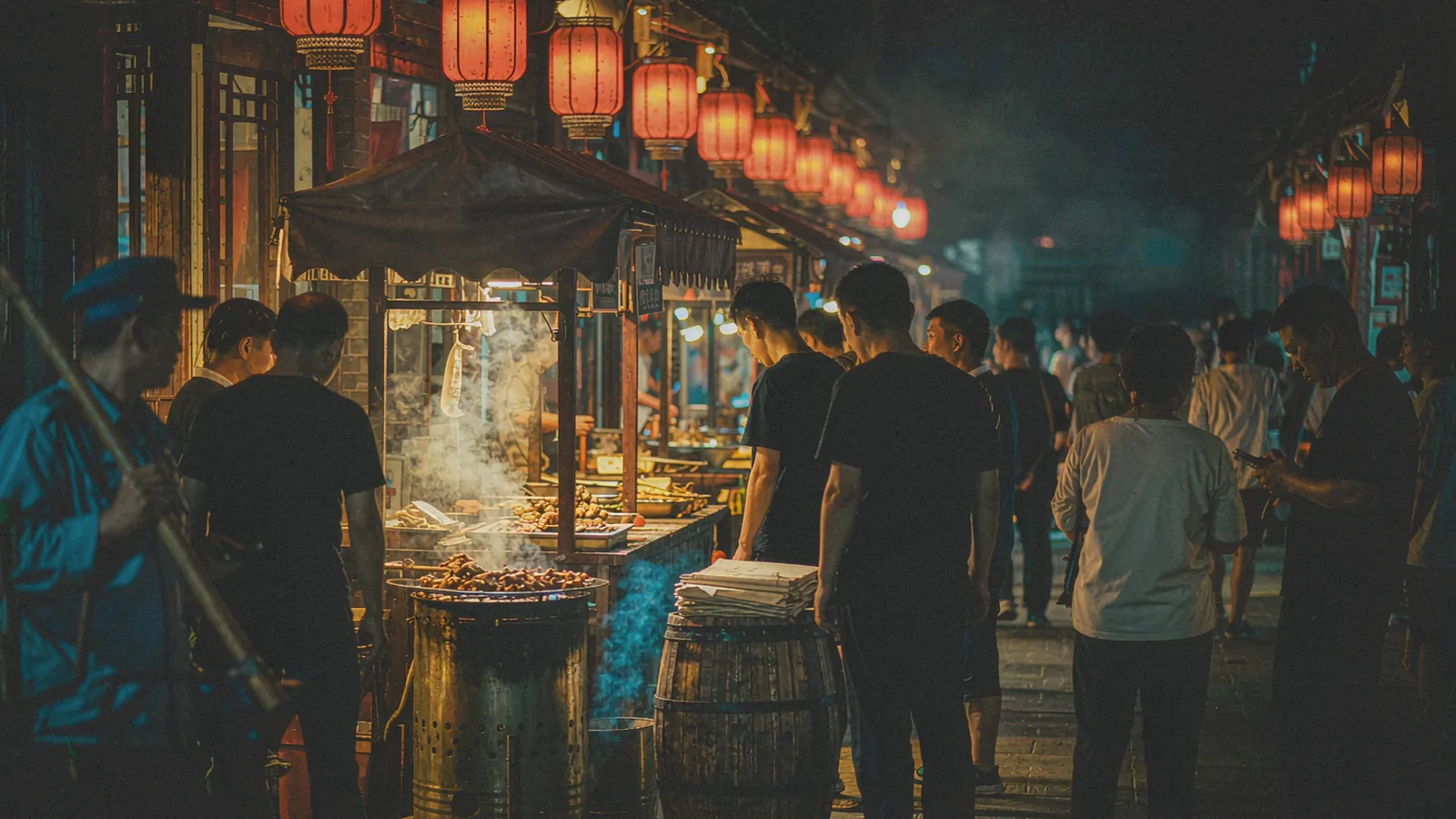
The Muslim Quarter, northwest of the centre. Bei Yuanmen street is the tourist face and you walk through it without ceremony; what matters are the Xiyangshi and Dapiyuan lanes, where Hui families live and eat. Next door is the Great Mosque, with Chinese architecture, garden courtyards and still in use — you enter with respect and outside prayer times. Allow two hours, more if dinner gets in the way. It is the only place in China where you eat bread torn by hand into mutton broth in front of an eighth-century mosque.
The southern zone, with the pagoda and the museums. The Giant Wild Goose Pagoda, built in 652 to keep the scriptures brought from India by the monk Xuanzang, can be climbed inside and stands in a garden enclosure. Just to the north is the fountain square, which has a water and light show at the start of the evening in summer. A short step away, the Shaanxi History Museum is free but has a limited named booking — we handle it days ahead — and closes on Mondays. It is the best provincial museum in the country for understanding the dynastic sequence without reading a book. For anyone who likes calligraphy, the Forest of Steles keeps centuries of carved stones and sits inside the wall, in the southeast.
The eastern zone, outside the city. Lintong, with the Terracotta Army and the Huaqing Hot Springs, and further out Mount Hua. This is the zone that defines the two days and is handled separately, below.
How to split the day
In the morning. The Terracotta Army, always. It opens early and at 08:15 you are at the gate; from 10:00 the queues inside the hangars make it impossible to get near the railing, which is where you see the hairstyles, the moustaches and the armour that differ from figure to figure. Then the Huaqing Hot Springs on the way back, on the slope of Mount Li, with the imperial baths of the Tang dynasty: half an hour is enough and justifies the stop.
In the afternoon. The wall, the Bell Tower and the Muslim Quarter, which comes to life as the afternoon falls. On very hot days we swap the wall for the Shaanxi museum during the sunny hours and leave the stone for the end of the day.
Late afternoon and evening. The pagoda and the fountain square to the south, and back to the Muslim Quarter for dinner. The Qujiang area, rebuilt around the pagoda in Tang dynasty architecture, fills with people after 20:00 and is the most pleasant evening walk in the city.
What lies outside the city
The Terracotta Army, at Lintong. Around an hour by car to the east. There are four pits covered by hangars, visited in order: Pit 1, the largest, with the main troop; Pit 3, the command post; Pit 2, deliberately left half excavated, so you can see how it looked before excavation; and finally the site museum, with the two bronze chariots at half scale. Three hours minimum. You go by car with a driver, because public transport logistics at opening time are unreliable and because Huaqing is still on the way back.
Mount Hua. Around an hour and a half further east, it is one of the five sacred mountains of Taoism and has wooden walkways pinned to the sheer rock. It asks for a full day and a third night in the city. You go up by cable car and the most exposed stretches are done in a harness. We recommend it to anyone with the legs for it; it is not a family outing.
How long to give each place
- Terracotta Army — three hours, in the morning, at opening. With less than that you lose the site museum, where the bronze chariots are.
- Huaqing Hot Springs — thirty to forty-five minutes, fitted into the return from Lintong.
- City wall, southern stretch — one hour on foot, an hour and a half by bike with stops at the towers. Late afternoon.
- Muslim Quarter and Great Mosque — two hours, late afternoon or after dinner.
- Wild Goose Pagoda and fountain square — an hour and a half, between late afternoon and night.
- Shaanxi History Museum — two hours, preferably on a weekday morning.
- Forest of Steles — one hour, for anyone who likes calligraphy and carved stone.
- Bell Tower and Drum Tower — half an hour passing through, seen from outside or from the top.
- Mount Hua — a full day, with an extra night in the city.
Added up, two days are enough with room to spare for the essentials and without room for everything. That is why we repeat the same recommendation: if you can, stay three nights.
How to move between zones
The walled centre is crossed on foot without difficulty: from the Bell Tower to the South Gate is fifteen minutes. For the southern zone and the museum, the metro handles it, and for Lintong and Mount Hua a car with a driver is the only option that puts you at the gate at opening time. That is how it is done on our trips, and the difference is not comfort: it is the hour you arrive.
What order to follow
First day: Terracotta Army in the morning, Huaqing after, late lunch and free afternoon on the wall at the end of the day, with dinner in the Muslim Quarter. Second day: Shaanxi museum in the morning, pagoda and Qujiang area in the afternoon, fountains at night. This order has two advantages: it puts the place that closes earliest in the first morning, and leaves the Muslim Quarter for the time when it is genuinely alive.
Anyone arriving in Xi’an on a Monday should invert it: the museum closes that day, so the pagoda and the centre go to Monday and the museum to Tuesday.
If you have less time, if it rains, or if you have children
With a day and a half. Terracotta in the morning, wall in the late afternoon and Muslim Quarter at night. You lose the museum, and it is the most acceptable sacrifice.
With rain. Shaanxi museum, Forest of Steles and the Qujiang pavilions. The wall waits for another time.
With children. The wall by bike with stops at the towers, the fountains of the pagoda square at night, and the bread oven of the Muslim Quarter, where you watch the loaves come out. The Terracotta works too, as long as you go at opening and leave before the heat of the crowd.
How this fits into a trip
Xi’an is the natural second chapter of a first trip, three or four hours from Beijing by high-speed train. On our Essential Tours it comes with two nights and the Terracotta on the first morning; on the Grand Crossing it is the gateway inland. For the full destination listing — where to stay, what to eat — go back to the Xi’an page.
Frequently asked questions
Are two days enough for what there is to do in Xi'an?
They are enough for the essentials: one day for the Terracotta Army and the Huaqing Hot Springs, another for the wall, the walled centre and the pagoda. What drops out is the Shaanxi History Museum with time to read the cases, and Mount Hua, which asks for a third night.
Is it worth cycling on the wall?
It is, and it is the best way to grasp the scale of the rectangle. You rent at the top, return at any of the four main gates, and the southern stretch takes about an hour with stops. The best hour is the last one of the afternoon, when the stone turns gold and the heat gives way.
Should the Muslim Quarter be visited by day or at night?
In the late afternoon, to catch the market working, and again after 20:00, when the side lanes fill with local people having dinner. At midday it is a street of tourists holding skewers and little more.
What is there to do in Xi'an in rain?
The Shaanxi History Museum, the Forest of Steles and the covered pavilions of the Qujiang area. The wall is not worth it in heavy rain: the parapet is smooth stone, there is no shelter on top and the bikes stop being rented out.
Is the Terracotta Army far from the city?
It is in Lintong district, around an hour by car from the centre. It is not a quick metro hop or a half-hour stop: allow three hours inside the archaeological site, plus the transfers. That is why it takes a whole morning.