Things to do · Yunnan
what to do in Yunnan
Kunming, Dali, Lijiang, Tiger Leaping Gorge and Shangri-La: the province's zones, how long each one needs and in what order to do them.
At a glance
- Best time to visit
- Mar–May · Oct–Dec
- Suggested nights
- 5 to 7 nights
- Region
- Sudoeste
- Booking required
- No booking required
What to do in Yunnan is resolved along one axis: Kunming, Dali, Lijiang and Shangri-La, from south to north, with the altitude climbing gradually. The province has twenty-five recognised ethnic minorities and is too large to be seen at once; what you do is travel that axis and stop where it is worth stopping. This page is the practical version of our Yunnan page: it says what to do in each zone, how long it takes and in what order the altitude is best tolerated.
The zones of Yunnan and what to do in each
Kunming and surroundings. The capital is the “city of eternal spring”, with an annual average temperature in the region of fifteen degrees, and serves as the entry point. It is worth it for the Flower Market, for the mushroom cooking and for Dian lake to the south. Two hours away is the Stone Forest, a field of limestone towers formed 270 million years ago, in which people get lost — we book a local guide and it is done in three hours, and without the buggy circuit. A full day for the capital and the Stone Forest.
Dali and Erhai lake. A walled old town of the Bai people, with a water channel running alongside the streets, and the third largest freshwater lake in China, with a 4,000-metre range in front of it. The loop around the lake is done by bike in a day, stopping at the fishing villages, the silver workshops and the Shazhou market, which opens at dawn and closes around 11:00. Two nights is the right rhythm: one day for the town and the villages, another for the lake loop.
Lijiang and the Snow Dragon Mountain. A Naxi town listed by UNESCO, where the channels served as a fire warning system and where Naxi pictographic writing is still alive in the workshops. We go up by cable car to 4,500 metres on the Snow Dragon Mountain and come down on foot through the Blue Moon Valley, of turquoise water. The cable car booking has to be made at least two days ahead: the tickets sell out. Two to three nights, which is also our acclimatisation stage before the plateau.

Tiger Leaping Gorge. One of the deepest gorges in the world: the Yangtze runs squeezed between two walls of 3,000 metres. The high path is walked in two days with accommodation in a village, or in eight hours of a full day for anyone who only wants the Two Bridges viewpoint. It is the most beautiful walk in China at this level of difficulty and one of the few done without mountain equipment.
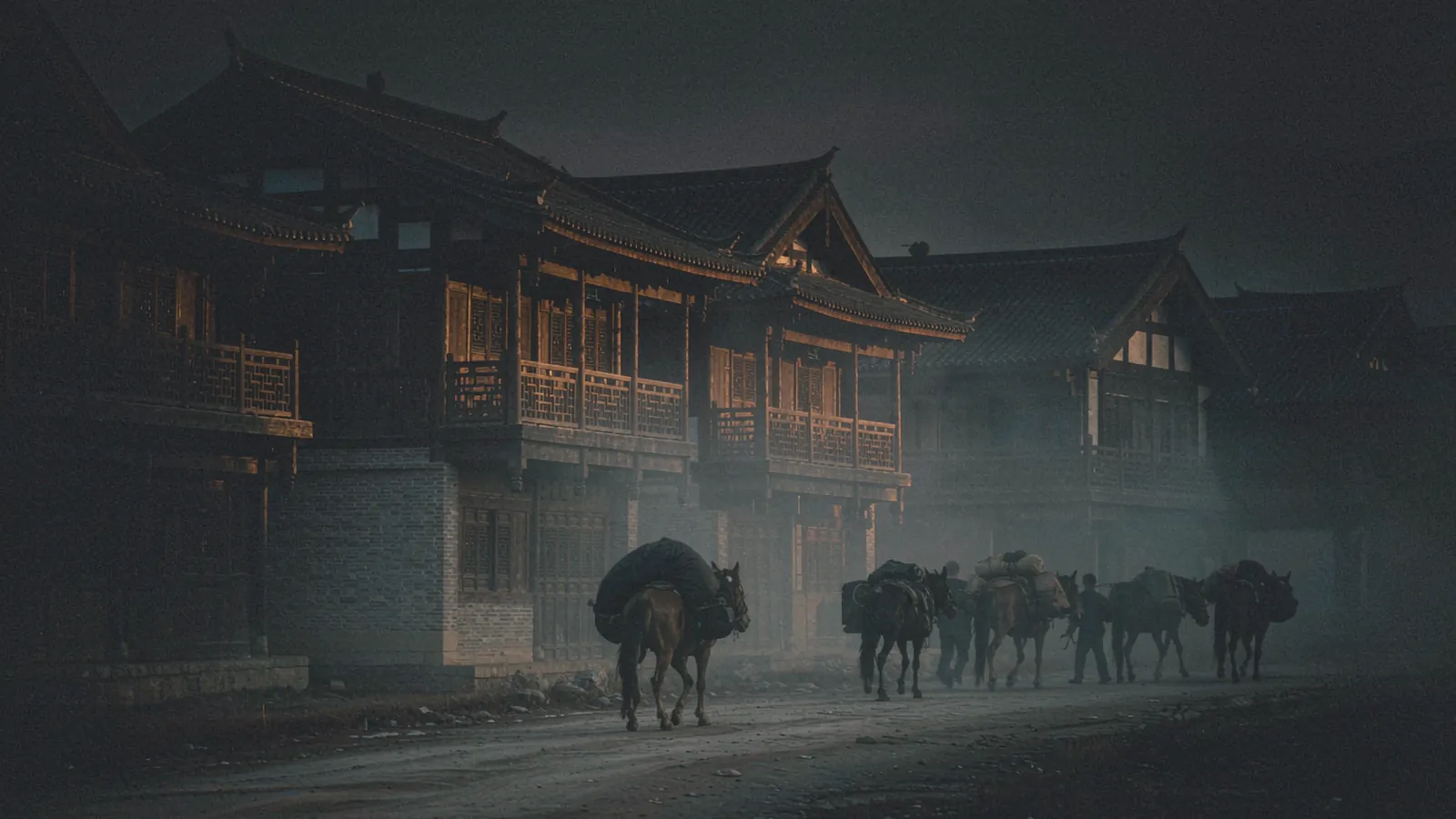
Shangri-La and the plateau. Tibetan villages, monasteries with prayer flags and meadows at 3,200 metres, where you see real yaks and eat tsampa. From here you go on to Songzanlin monastery, the largest in Yunnan. It is the highest point of the axis and the one that demands most care with altitude: you arrive rested and do not exert yourself on the first day.
How to split the day
In the morning. The markets, which close early; the cable car ascents, which have queues from 10:00; and the treks, which start early because of the light and the weather.
In the afternoon. The old towns, the craft workshops, the villages and the transfers between stages. The late-afternoon light on the plateau is the best of the day and is when the monasteries are photographed.
Late afternoon and evening. The old towns of Dali and Lijiang fill with people and music after 20:00. In Shangri-La there is Tibetan dancing in the square, open to anyone who wants to join the circle.
What lies off the axis
Lugu lake and the Mosuo country. North of Lijiang, around six hours by mountain road, with a matrilinear society that still lives in wooden houses around the lake. It asks for two nights and is one of the most unusual experiences in China.
The tea plantations of Pu’er and Xishuangbanna. To the south, already in tropical climate, with century-old tea gardens and subtropical forest. They fall outside the classic axis and require more days; we recommend them to anyone repeating the province.
How long to give each place
- Kunming and the Flower Market — half a day.
- Stone Forest — three hours, with a local guide.
- Dali, old town and villages — one day.
- Bike loop around Erhai lake — one day.
- Lijiang and the Naxi workshops — half a day to a day.
- Snow Dragon Mountain — one day, with a cable car booking.
- Tiger Leaping Gorge — one or two days, depending on the route.
- Shangri-La and Songzanlin — two days.
- Lugu lake — two nights.
How to move between zones
Between Kunming, Dali and Lijiang there is a high-speed train, and it is the best option: fast, punctual and without mountain road. For Shangri-La there is also a direct line from Lijiang in a little over an hour, which saved several hours of road. For Tiger Leaping Gorge and for the villages, a car with a local driver is compulsory on our routes: the mountain roads demand practice and public transport is not risked on them.
What order to follow
From south to north, always: Kunming, Dali, Lijiang, Tiger Leaping Gorge and Shangri-La. There are two reasons for this direction. The first is altitude, which rises from 1,900 metres in Kunming to 3,200 in Shangri-La in steps the body absorbs. The second is logistics: you reach Kunming by air from almost anywhere in China and you leave from Shangri-La, or return to Lijiang for the flight home.
If you have less time, if it rains, or if you have children
With five days. Kunming in passing, two nights in Dali and two nights in Lijiang. Shangri-La and Tiger Leaping Gorge drop out.
With rain. Kunming museums, the silver and Naxi writing workshops, and the arcades of the old towns. The Tiger Leaping Gorge trek is postponed: the high path has exposed stretches that are not done with wet earth.
With children. Dali is the best place: cycling on flat ground around the lake, the market at dawn and workshops where you try making things. Shangri-La, at 3,200 metres, demands the same care with altitude as any plateau destination, and for that reason we weigh it case by case with families.
Mistakes that cost half a day
- Doing the axis from north to south. The altitude rises abruptly and acclimatisation stops happening. It is always done from Kunming towards Shangri-La.
- Arriving in Shangri-La straight from sea level. We sleep two nights in Lijiang, at 2,400 metres, before going up to the plateau, and nobody exerts themselves on the arrival day.
- Leaving the Snow Dragon Mountain cable car to the day itself. The tickets sell out; we book at least two days ahead.
- Going to the Shazhou market after 11:00. It closes around that hour and it is the best market in the region.
- Rushing Tiger Leaping Gorge into one day. The high path asks for two days with accommodation in a village; in a single day you see the viewpoint and lose the walk.
How we organise this on the ground
Every route in Yunnan is done with a local driver and a private car, never on public mountain transport: the roads are the real risk of the province, not the people. Between Kunming, Dali and Lijiang we use the high-speed train, which is fast and punctual, and we book seats in advance. For the Snow Dragon Mountain we handle the cable car with two days of margin. On the plateau we measure oxygen saturation and do not play with symptoms: if there is a persistent headache, the plan changes and we come down. It is a region where logistics decide the trip more than at any other destination in China.
How this fits into a trip
Yunnan is the province that best shows the China outside the Beijing–Shanghai axis, and it is also the most sensitive to how it is organised. On our Grand Crossing it is the mountain chapter of the route; on the photography tours it comes in for the dawn light on Erhai lake and on the meadows of the plateau. For the full destination listing — where to stay, what to eat — go back to the Yunnan page.
Frequently asked questions
How many days do you need for what there is to do in Yunnan?
Fewer than five is not worth it: it only allows Dali and Lijiang. Seven days cover Kunming, the Stone Forest, Dali, Lijiang, Shangri-La and Tiger Leaping Gorge, with time to stop in the villages. That is our recommended programme.
What is the best route in Yunnan?
Kunming, Dali, Lijiang and Shangri-La, linked by high-speed train and by road. The direction matters: it is done from south to north, because that is how the altitude rises gradually and how acclimatisation happens at no cost.
Do you need to acclimatise to the altitude in Yunnan?
Shangri-La sits at 3,200 metres and is not harmless, especially for anyone arriving straight from sea level. We always sleep two nights in Lijiang, at 2,400, before going up, and nobody exerts themselves on the day of arrival on the plateau.
What is there to do in Yunnan on a rainy day?
The Kunming museums, the arcaded old towns of Dali and Lijiang, and the craft workshops — Bai silver in Dali and Naxi pictographic writing in Lijiang. The Tiger Leaping Gorge trek is not done in rain: the high path has stretches of earth that turn slippery.
Is it safe to travel in Yunnan?
It is one of the safest provinces in China. The mountain roads are the real risk, not the people. That is why every one of our Yunnan routes is done with a local driver and a private car, never on public mountain transport.