Best time to visit · Hong Kong and Macau
best time to visit Hong Kong and Macau
Month by month: the typhoon season, the humid weeks of April, the mild winter and why October and November are the two months when the Pearl river delta shows clear.
At a glance
- Best time to visit
- Oct–Dec · Mar–Apr
- Suggested nights
- 3 nights
- Region
- Sul
- Booking required
- No booking required
The best time to visit Hong Kong and Macau is autumn, and the reason is practical: neither territory closes in bad weather, but the humidity and the typhoon risk decide whether you see anything from above. Hong Kong is a vertical city appreciated from above, from Victoria Peak, from tower terraces and from the bay ferries; Macau is a compact historic centre covered on foot. With clear sky, in November, both work perfectly; with low cloud and rain, in June, you spend the day without seeing the skyline once. This page answers “when to go to Hong Kong” and complements the Hong Kong and Macau page.
The climate of Hong Kong and Macau, month by month
Winter, December to February. Mild, frequently sunny and with lower humidity than the rest of the year. It is a perfectly recommendable season, especially in December and January, and it is the best one for the trails of the islands and the foothills. The only caveat is the calendar: Lunar New Year, between late January and mid-February depending on the year, makes flights and hotels more expensive, closes part of the neighbourhood retail and fills the temples and markets.
Spring, March to May. Pleasant temperatures and high humidity. March and April are months of mist and low cloud, in which the island viewpoints and the bay ferries stop guaranteeing a view, and May already enters the typhoon season. It is the season for coming for the sea level: markets, temples, old neighbourhoods, the islands and the ruins of Macau all work well in moderate heat.
Summer, June to August. Hot, very humid and unstable, with intense late-afternoon thunderstorms and most of the typhoon risk concentrated in these months and in September. The city has air conditioning everywhere and keeps working, but walks and climbs become uncomfortable. When signal eight is hoisted, the territory stops entirely: transport, retail and viewpoints close, the ferries between Hong Kong and Macau are suspended and flight delays pile up.
Autumn, September to November. The best window. September can still catch a typhoon, especially in the first half; from the second half of the month, humidity drops, rain becomes scarce and the sky opens. October and November are the months when the classic view of the bay is seen clean and when walking becomes possible again in the middle of the day. December extends the window with cooler days.
The best moment for each experience
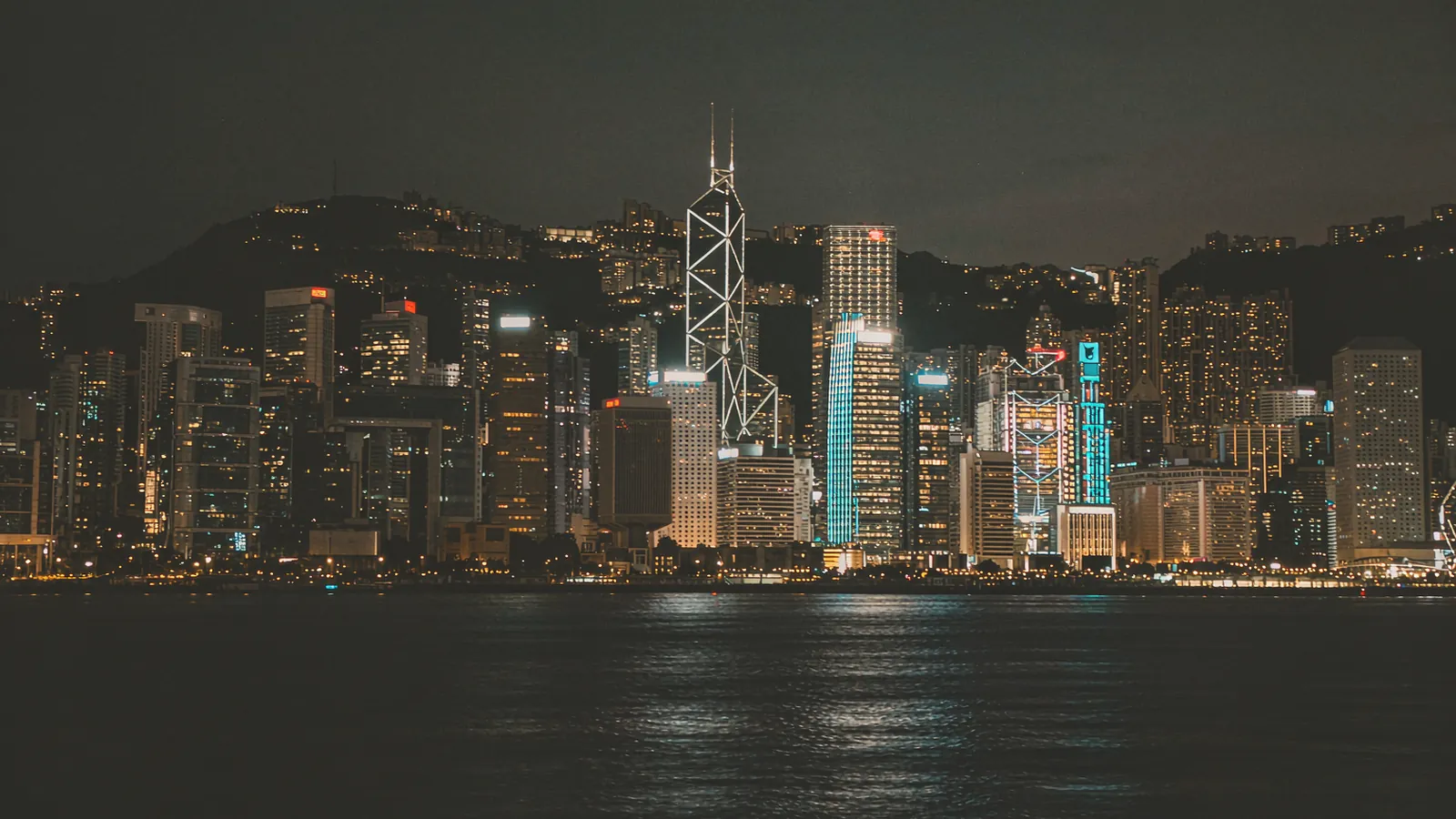
Victoria Peak, the tower terraces and the bay crossing all depend on visibility: October, November and December are the right months, and January and February usually go well. The ferry between Hong Kong and Macau is the link that suffers most from wind, and is suspended on typhoon warnings. The historic centre of Macau, from the Largo do Senado to the Ruins of St Paul’s, is walked and gains from dry days. The island trails and the Lantau peak ask for moderate temperatures, which points to winter and autumn. The night markets, the temples and the street neighbourhoods work in any month, and are the plan for days of rain and humidity.
Holidays and peak periods
Hong Kong and Macau have their own calendar of peaks, and they are weekend destinations for residents of the region, which means Friday nights and Saturday mornings are always busy. The national holiday week from 1 October fills the hotels and the viewpoints, and coincides with the best month of the year. Lunar New Year makes everything more expensive and closes part of the retail. In Macau, the Grand Prix, in November, sells out the hotels and closes the streets of the centre for several days: it is an event with real interest, but anyone not coming for it should confirm the dates before booking.
When not to go to Hong Kong and Macau
The weeks from July to September are the ones we most advise against, for the sum of heat, humidity and typhoon risk; anyone booking August should count on the possibility of losing a whole day because of a warning and should not schedule anything that depends on a connecting flight that day. The weeks of the national holiday and of Lunar New Year are the other two to avoid, for prices and for crowds. So are the Grand Prix weeks in Macau, for anyone not coming for the event. March and April we do not advise against: they only ask you to give up the view from above.
What to pack, season by season
In autumn and winter, light layered clothing, with a thin coat for evenings on the bay and on the terraces; air-conditioned interiors are cold, so one extra layer always solves it. In spring and summer, cool clothing, sandals that can take rain, a folding rain shell and shoes with a gripping sole: the streets of Hong Kong are steep and slippery when wet. Hat and sunscreen in summer. In any season, an extra battery or portable charger, because the phone spends the day between maps, transport and payments. And it is worth checking the wind forecast on the day itself, especially between May and November.
What happens when signal eight is hoisted
Hong Kong’s typhoon signal system is taken very seriously, and with reason. When signal eight is hoisted, the territory stops: buses, trains and the metro suspend, shops and restaurants close, viewpoints shut, the ferries between Hong Kong and Macau stop operating and flights pile up delays and cancellations for a day or two. Signal ten, rarer, means the eye of the typhoon is passing overhead. What you should do on those days is simple: stay in the hotel, have food and water for a whole day and count on no transport at all. What you should avoid is booking the ferry to Macau on that date, or a connecting flight on the same day as the international one. Outside the typhoon season, especially between November and April, the risk does not exist and the city is one of the easiest in the region to plan.
How the season changes the daily plan
In any season, the rule in Hong Kong is to start early. In autumn and winter, with moderate heat, the whole day is available: trails and islands in the morning, city and neighbourhoods in the afternoon, and the bay waterfront at dusk. In spring and summer the central hours are spent indoors, in covered markets, temples, museums and galleries, with walks kept for early morning and late afternoon. When it rains, the city has its own answer, which is the shopping centres and the art galleries. In Macau, the historic centre is compact and covered in two hours, so you can wait for the rain to pass before going out.
The calendar in four lines
The best moment is October, November and December: low humidity, scarce rain, clear sky and no typhoon risk. The second choice is January and February, mild and sunny, as long as they fall outside the Lunar New Year weeks, and March and April, with good temperatures but humidity and mist. The weeks that ask for thought are those of May and June, with rain and the start of the typhoon season. The ones to avoid are July, August and September, and the whole national holiday week.
Fitting the right season into a trip
The two territories come into our routes through the south and work well on any autumn itinerary. On From the Tagus to the Delta they are precisely the destination in the name, and November is the month when the parallel with Lisbon is felt most clearly, in the light and in the humidity. On the Honeymoon route the region comes in as the comfort chapter, with the islands and the historic centre of Macau asking for dry weather. For the full destination listing, go back to the Hong Kong and Macau page.
Frequently asked questions
What is the best time to visit Hong Kong and Macau?
October, November and December. The humidity drops, rain becomes scarce, the typhoon risk disappears and the sky over the Pearl river delta stays clear for weeks. This is when you go up Victoria Peak and see the whole bay, and when the ferry trips between Hong Kong and Macau run without incident.
When is the typhoon season?
It starts in May and runs to November, concentrated between July and September. There is not a typhoon every week and most pass by, but when signal eight is hoisted the territory stops: transport, shops, restaurants and viewpoints close, ferries are suspended and flights pile up delays and cancellations.
Is it worth going to Hong Kong in July and August?
It is the worst time of year for anyone who does not tolerate humidity. The heat is strong and sticky, the perceived temperature rises with the humidity of the South China Sea and there is a real typhoon risk. The city keeps working, with air conditioning everywhere and shopping centres as refuge, but walks and the ascent of the Peak become a grind.
Is winter a good season in Hong Kong?
It is mild and pleasant, and for that reason quite recommendable: sunny days, soft temperatures and lower humidity than in summer. The caveat is Lunar New Year, which falls between late January and mid-February: on those days hotels and flights go up in price, much of the small retail closes and the temples and markets fill up.
And in March and April?
They are acceptable and very humid months. Temperatures are already good, but the humidity of the delta forms mist and low cloud that takes the view away from the viewpoints and the ferries. Come prepared not to see the skyline from the Peak, and make use of the markets, temples, neighbourhoods and islands at sea level.