Things to do · Beijing
what to do in Beijing in 3 days
Beijing in four zones, what to do in each one and how long it takes. An itinerary split into mornings, afternoons and evenings.
At a glance
- Best time to visit
- Apr–May · Sep–Oct
- Suggested nights
- 2 to 3 nights
- Region
- Norte
- Booking required
- Forbidden City · National Museum of China · Great Wall at Mutianyu
What to do in Beijing in 3 days is better solved by zone than by a list of monuments. The city has twenty-two million inhabitants and a historic centre that is slow to cross; anyone who jumps from one end to the other three times a day spends the trip in transit. This page is the practical version of our Beijing page: it splits the destination into four zones, says what to do in each, how long it takes and what time of day it is worth being there.
The four zones and what to do in each
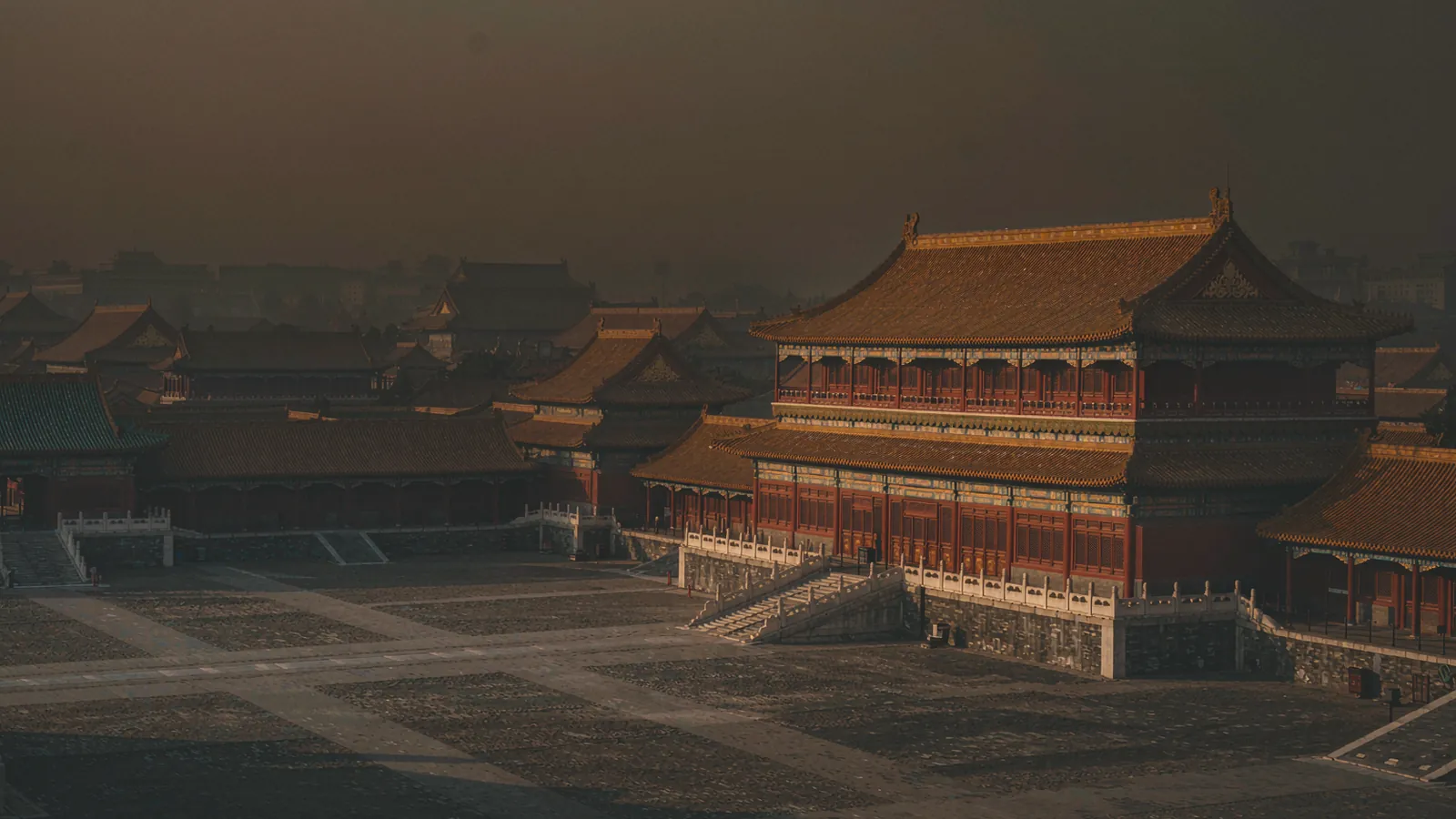
The imperial axis, in the centre. This is the strip that runs from Tiananmen Square to Jingshan Park, with the Forbidden City in the middle. Allow a whole morning and do not leave the zone for anything else in that period: enter through the Meridian Gate at 08:30, follow the central axis to the northern gardens and leave through the opposite gate. It is around nine hundred metres in a straight line, but with detours east and west — that is where the empty courtyards are, and where the groups do not go — the visit stretches to three hours. Immediately after, five hundred metres north, climb Jingshan: ten minutes on foot, an artificial hill and the classic view over the yellow roofs. In practice, the axis and the hill are done in the same breath and save a metro ride.
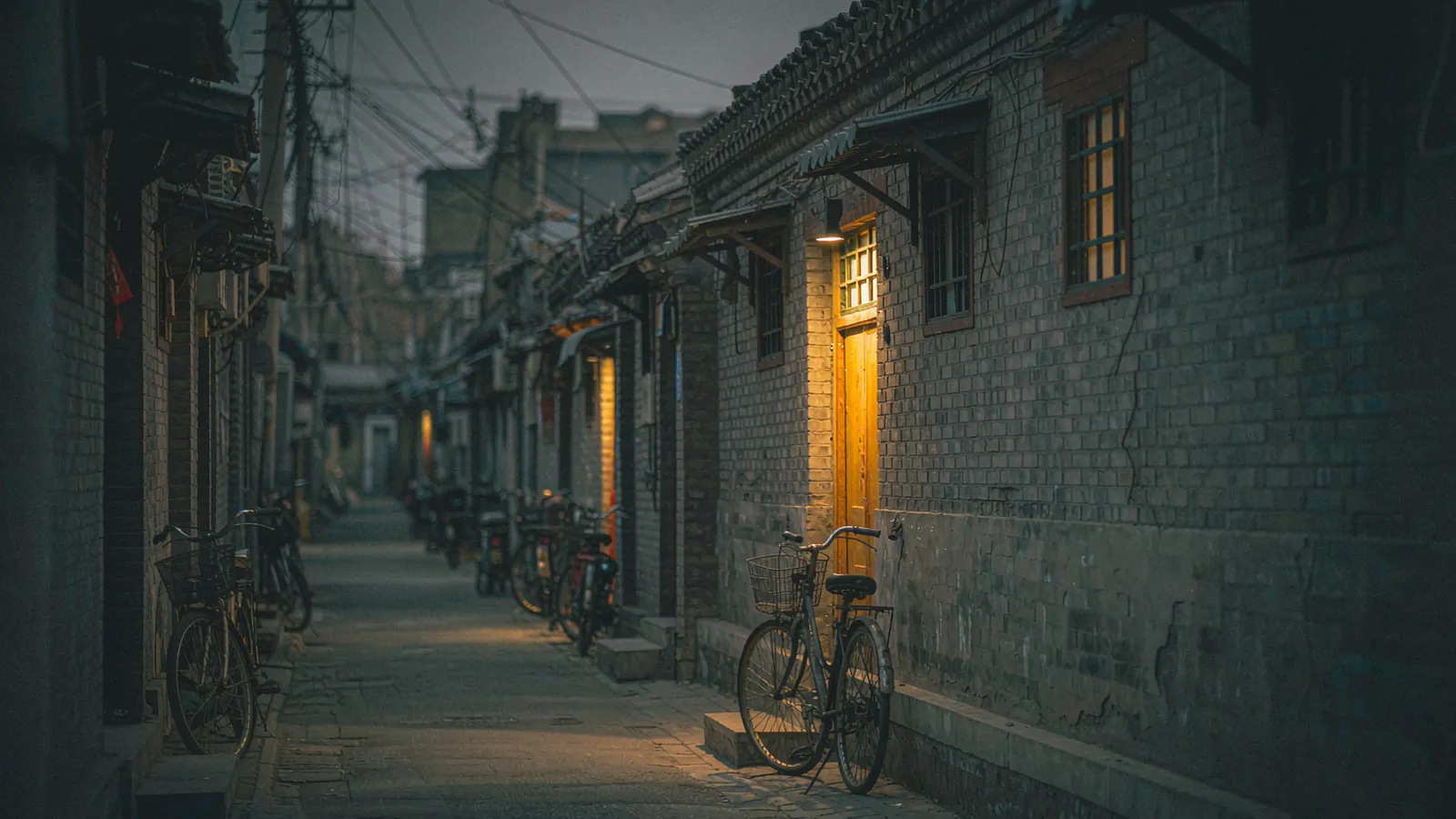
The hutongs and the lakes, north of the axis. The Shichahai area and the streets around it — Baochao, Wudaoying, the shores of Qianhai and Houhai lakes — is where you walk with no destination. There is no ticket and no opening hours: it is a late-afternoon walk, with teahouses, courtyards converted into cafés and pedal boats on the water in summer. One to two hours is enough. We avoid Nanluoguxiang street, which is pure retail, and prefer the lanes to the east. For anyone who wants to see the inside of a traditional courtyard with a family still living there, we say which ones accept visits and at what times; it is not something you do by walking through a random door.
The northwest, with the Summer Palace. It sits outside the second ring road and asks for a whole afternoon: Kunming Lake, the painted Long Corridor, the Marble Boat and the climb up Longevity Hill. You arrive by metro at the northern part of the grounds and the visit works best walking west, following the shore, which keeps the sun behind you. Count on three to four hours. Next door is the Old Summer Palace, today a park of ruins with the European stonework still in place: half an hour for anyone who has already seen the main one, and a good spot to explain to younger travellers what the Second Opium War was.
The south and east, with the Temple of Heaven and 798. The Temple of Heaven is worth it at 06:30 in the morning: the park opens early and fills with people practising tai chi, singing in chorus and playing cards under the cypresses, and that is the visit. The central monuments open later — usually around 08:00 — but buying just the park ticket is enough for the experience and for the photograph of the Circular Mound Altar. An hour and a half. The 798 art district, further northeast, is the opposite: galleries in former Bauhaus-style factories, half an afternoon, and a good choice for anyone who has seen old China and wants to see the China that produces art today.
How to move between zones
Inside the second ring road the metro solves almost everything: it is bilingual, cheap, and the stations are a few minutes on foot from the monuments, so a three-stop ride changes zone without you having to think about it. Taxis are the alternative at peak hours, but between 07:30 and 09:30 and from 17:00 to 19:00 the city stops and the meter moves at the same pace; in those windows the metro always wins.
For the Wall and for any stretch outside the urban perimeter, a car with a driver is not a luxury, it is logistics: tourist coaches stop at Badaling, which is the busiest section, and they do not serve Mutianyu at the hour we want to be there. On our private trips the car stays at your disposal for the whole day, which also means coats, water and shopping can be left on the back seat instead of carried.
A practical note on addresses: in Beijing the useful address is not the street name, it is the landmark — “by the north exit of station X”, “opposite gate Y”. That is how local drivers work and that is how we pass directions to the team.
How to split the day
In the morning. The enclosed monuments that require named booking — the Forbidden City, the National Museum, the Wall at Mutianyu — are all done in the morning, because that is when the daily quotas have not run out yet and when the light is side-on. We leave the hotel between 06:30 and 07:00 on Wall days.
In the afternoon. The Summer Palace, the Lama Temple, the museums and 798. This is also the slot for the longest transfers and the one that best absorbs a delay without ruining the day.
Late afternoon and evening. The hutongs, Shichahai lake, the Wangfujing night market for anyone who likes street food, and Peking duck, which is dinner and not lunch. Beijing eats early: by 21:00 neighbourhood kitchens start closing, even with the dining room still open.
What lies outside the city
The Great Wall at Mutianyu. To the northeast, around an hour and a half by car depending on traffic. Allow a full half day between departure, the cable car up, the walk to the higher towers and the return. We enter when the ticket office opens and walk east, where the towers are empty after the first five hundred metres. Anyone who wants the wild Jiankou section next door goes with a mountain guide and without the cable car: it is two hours more and the ground is loose stone.
The Ming tombs and the sacred way. They are on the road to Mutianyu and can be added at no real cost in time: an avenue of stone statues six hundred years old and one excavated tomb. Half an hour to forty-five minutes.
What order to follow
The wrong order is the one that puts both places requiring timed, named booking on the same day. The Forbidden City and the National Museum release places by day and by hour; if a traffic delay pushes the visit to the afternoon, you land in the window where the system no longer accepts that hour’s ticket, and the next morning is compromised.
What works: first day in the city, imperial axis in the morning and hutongs in the late afternoon; second day, the Wall in the morning and back in time for a normal dinner; third day, Temple of Heaven at dawn, Summer Palace after that, evening free. With this sequence everything that depends on a booking sits in the first half of the trip, which leaves room to swap one day for another if the weather turns.
There is one exception worth knowing: the Forbidden City closes on Mondays. Anyone arriving in Beijing on a Sunday evening should start with the hutongs and the Temple of Heaven, and leave the imperial axis for Tuesday.
If you have less time, if it rains, or if you have children
With two days. One full day for the imperial axis and the hutongs, another for the Wall. The Summer Palace drops out, and that is fine: it is the least painful sacrifice on the list.
With rain. Museums and covered corridors. The Forbidden City copes with light rain and empties of people, which almost makes up for it; in heavy rain the packed-earth courtyards turn slippery and the visit loses half its interest.
With children. The cable car and toboggan at Mutianyu, the pedal boats on Shichahai lake, and the Temple of Heaven park at dawn, when dozens of adults are out practising and there is no queue at all. What you avoid is the central axis of the Forbidden City at 11:00, with the sun straight overhead and no shade.
How this fits into a trip
Beijing is almost always the entry point and rarely gets more than three nights. On our Essential Tours the city opens the trip over three days, with the Wall on the second; on the Grand Crossing it comes in as the first chapter of a route that continues inland. For the full destination listing — where to stay, what to eat — go back to the Beijing page.
Frequently asked questions
How many days do you need for what there is to do in Beijing?
Three full days cover the imperial axis, the hutongs, one temple and the Wall. With two days you have to choose: either the Wall or the Summer Palace. With four days you can add a morning at the Lama Temple and an afternoon of shopping or contemporary art at 798.
Can you get around Beijing by metro?
For almost everything inside the second ring road, yes. The network is bilingual, cheap and fast, and stations sit a few minutes from the main monuments. Where the metro does not reach is the Wall and the wild Jiankou section: those need a car with a driver, because tourist coaches stop at Badaling.
What is there to do in Beijing on a rainy day?
The National Museum of China, the Capital Museum and the Summer Palace with its covered corridors. The Forbidden City also works in light rain, and has the advantage of emptying out; in heavy rain the courtyards turn to mud and the walkways get slippery.
Is it worth staying inside the second ring road?
It is, especially for a three-night stay. The difference is not the comfort of the hotel, it is the half hour saved on every transfer, twice a day, for three days. That is what makes it possible to go back to the hotel mid-afternoon and go out again in the evening.
Should the hutongs be visited by day or at night?
From late afternoon into the evening. By day they are shopping streets with people passing through; after 18:00 families come out onto the street, the lanterns come on and Shichahai lake fills with people walking around the water. That is when the neighbourhood looks like what it still is.