Journal
What it costs to eat in China
From a street breakfast to Peking duck: what you actually pay per person per day, and the three places where the food is better and cheaper.
October 18, 2026 · ChinaTravel.pt Team · food · budget · tips
Eating in China costs, for anyone eating well and in the places where Chinese people eat, between 80 and 150 yuan per person per day — somewhere between 11 and 20 euros. It is less than most people expect before they land, and more than you spend on two meals, because in China you eat well three times a day and each one of them is worth it.
Over ten days of travelling, that comes to 1,000 to 1,800 yuan per person on meals alone, roughly 140 to 250 euros. If you are going to put meals into the budget, that is the number. If you prefer not to think about it during the trip, our itineraries include the hotel breakfast and two or three booked meals, and we leave the rest to your judgement.
Breakfast: 8 to 15 yuan
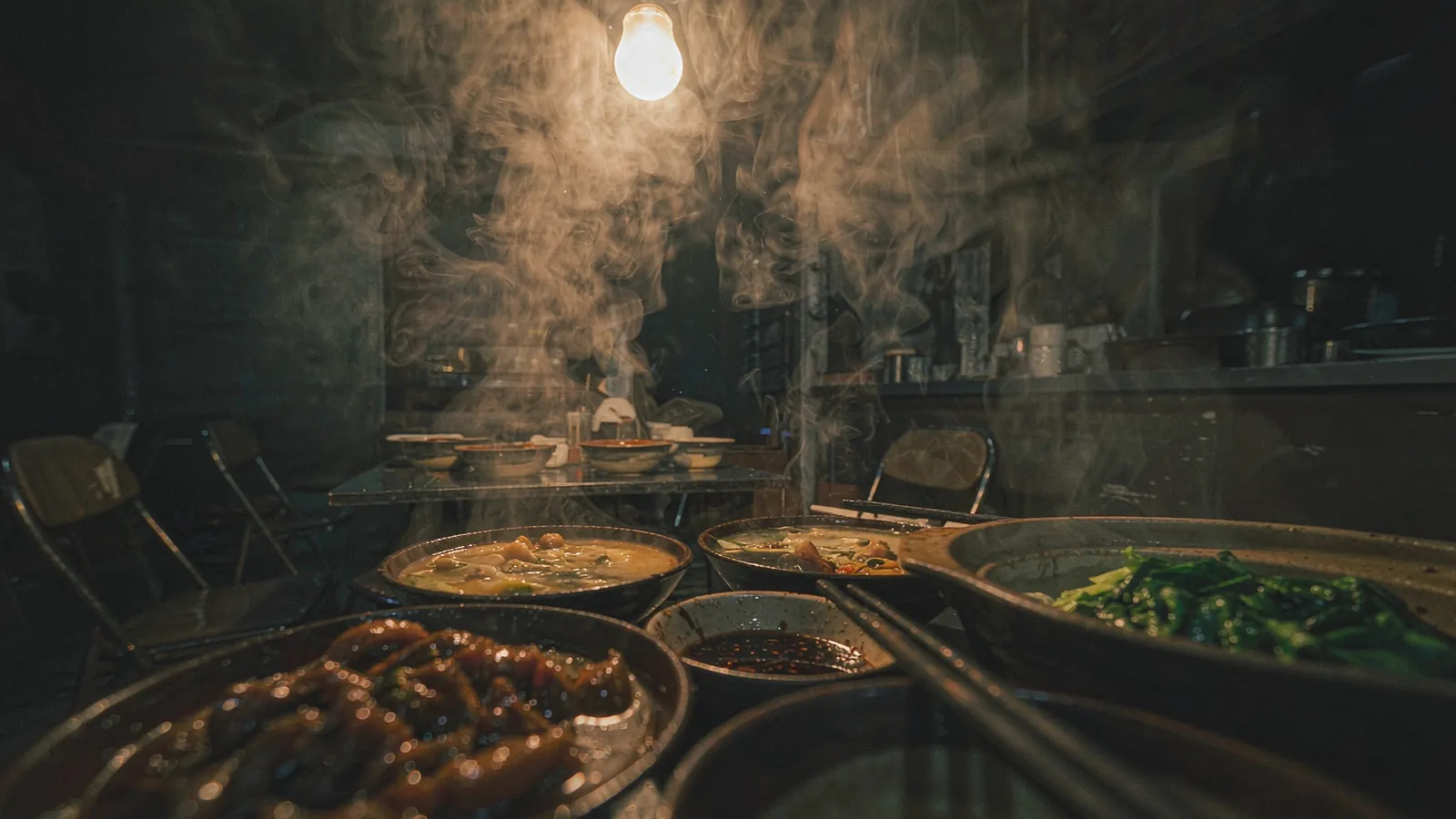
It is the cheapest meal and the hardest to order without knowing what you are looking at. In the northern cities it is noodle soup, filled baozi and soy milk; in the south, rice congee, wonton and flaky pastries.
A bowl of noodles in Chengdu costs 8 to 12 yuan. Two baozi with a glass of soy milk come to 6 to 10 yuan. A jianbing — the savoury pancake made on the street in under two minutes — costs 5 to 9 yuan and is the best street breakfast in the country.
The hotel breakfast, when it is a buffet, costs between 60 and 150 yuan per person in four-star hotels. That is expensive for what it is. We almost always recommend going out into the street: it is not only a question of price, it is where the city is already awake at seven in the morning.
Lunch: 25 to 45 yuan
The midday meal is best settled in the working districts: noodle houses, neighbourhood canteens, and the restaurant floors of shopping centres, which in China are of a quality well above the European average.
A bowl of hand-pulled lamian with meat runs between 20 and 35 yuan. A plate of rice with two accompaniments, 25 to 40. In the Sichuan restaurants of the big cities, a lunch of two dishes to share between two comes to 70 to 120 yuan in total.
This is where you genuinely save: lunch in China is a quick, cheap meal, even for anyone who eats very well.
Dinner: 50 to 120 yuan, or much more
Dinner is where the price spread is wide, and where the budget gets decided.
Neighbourhood restaurant, with three dishes to share and beer: 60 to 100 yuan per person. It is the dinner we recommend on most nights, and it is the best one.
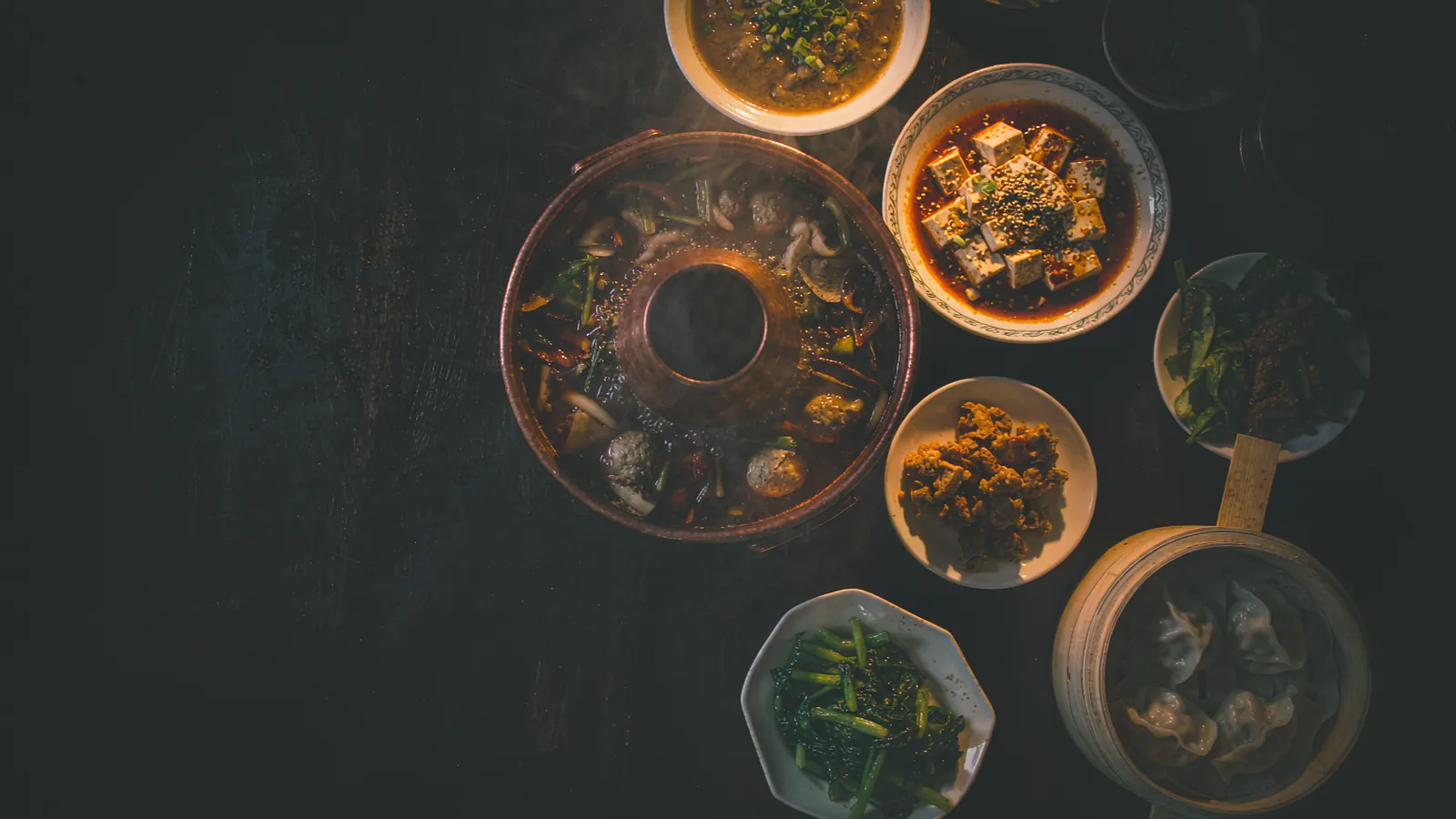
Hotpot, in Chengdu or Chongqing: 70 to 120 yuan per person, including meat, vegetables and sauce. Worth every cent, and the meal our clients repeat most often.
Peking duck, the dish everyone wants to try: between 180 and 300 yuan for the whole bird in the neighbourhood houses, and between 260 and 400 in the best-known ones. It serves three to four people, so per head that is between 60 and 130 yuan. Book: the big houses have an hour’s queue from 6pm.
Fine dining and hotel restaurants: 300 to 500 yuan per person, easily. They are not better than the 90 yuan hotpot; they are simply more formal.
Street food at dinner, in Xi’an or Chengdu: 40 to 80 yuan per person, and it is among the best meals available. The stalls open after 5pm and close late.
Drinks, and the extras that add up
- Local beer, 500 ml: 8 to 15 yuan in a restaurant, 4 to 6 in the supermarket.
- Bottled water: 2 to 4 yuan. Buy it in the supermarket, not in the hotel lobby.
- Chain coffee: 20 to 35 yuan. Speciality coffee in the big cities now costs 30 to 45.
- Tea in a teahouse in Chengdu: 20 to 50 yuan per person, and that includes sitting there for hours. It is the best deal in the whole of China.
- Fruit on the street: 5 to 12 yuan for a portion peeled on the spot.
What pushes the bill up without you noticing
Three things make food more expensive without the person realising it:
Eating inside the attractions. A restaurant inside the Summer Palace park or in the Terracotta Army area charges double and cooks worse. Step outside the perimeter and eat five minutes away.
Ordering individual dishes. The Chinese table is round and the dishes are shared. Anyone who orders one dish per head pays 40% more and eats worse. The rule is one dish per person plus one, with rice or noodles to finish.
Not booking. The restaurants with a queue have one for a reason. Booking through WeChat — or asking us to book — turns a sixty-minute wait into a table on arrival.
Eating well on little: where it pays
Food in China is not uniform, and there are places where the quality-to-price ratio is exceptional.
The Muslim quarter in Xi’an, at dusk, is the best concentration of street food in the country: lamb on skewers, flat bread, hand-pulled noodles. Join the right queues and you will eat very well for 50 yuan.
Chengdu is the city of hotpot and of chilli, and it is where you eat best for least money in the whole country. Our Panda Route itineraries go through there and always have one hotpot night booked in.
Guangzhou and the south are the kingdom of dim sum, eaten at breakfast and at lunch, at 30 to 60 yuan per person with everything included.
For anyone who wants a trip built around the table, there is an itinerary of its own. It is the simplest way of not missing the good meals for want of a booking.
How to pay at the table
The question “do you take card?” has a short answer in China: in most places, no. Outside the high-category hotels and the large chains, payment is by QR code, and it runs through Alipay or WeChat Pay.
For that reason, before talking about food, it is worth sorting out payments: having Alipay installed and linked to a card from home changes the experience from “difficult” to “trivial”, and it is a fifteen-minute job at home.
Always carry 300 to 500 yuan in cash as a reserve. It is not the main method, but there are street stalls and markets where it is still the only one.
The final bill
For two people, ten days, eating in the right places and booking two or three more special meals: 2,500 to 3,500 yuan in total, about 350 to 500 euros. That is less than a week of restaurants in Lisbon, and it includes dinners you will remember for the rest of your life.
It is also the chapter that varies most with how the trip to China is organised: on a private tour the booked meals are included, and this figure drops by half.
If you want to know how this translates into the complete travel budget, we have the closed number in our budget guide, and the same reasoning applied to Xi’an in our city itinerary.
Frequently asked questions
How much do you spend on food per day in China?
Between 80 and 150 yuan per person per day for anyone eating well and in local places, which is 11 to 20 euros. In hotel restaurants or at the fine-dining end, the bill rises to 300 to 500 yuan per person per day. For ten days, count 1,000 to 1,800 yuan per person on meals.
Is eating on the street safe?
It is, with three rules: choose where there is a queue of locals, eat what is cooked to order in front of you, and avoid what has been sitting out for hours. Chinese street food is cooked at very high heat, which is exactly what makes it safe.
How much does a classic dish like Peking duck cost?
The whole bird comes to between 180 and 300 yuan in neighbourhood restaurants and between 260 and 400 in the well-known Beijing houses, and it serves three to four people. Per person, that is between 60 and 130 yuan. Book a table: the best-known houses have an hour's queue from 6pm onwards.
Do I need cash to eat?
Carry some, but what matters is having Alipay or WeChat Pay working, because most restaurants and almost all street food no longer take cash from foreigners as a matter of course. The details are in our payments guide.
Keep reading
Talk to the people who run it
Want to know how this applies to your trip?
Message us on WhatsApp. We reply in English within one business hour (UTC+8).
Chat on WhatsAppReplies in English · no obligation