Journal
First time in China: what to know before you go
Payments, toilets, water, plugs, queues and the language barrier. The ten things nobody tells you, and that you sort out before you fly.
October 18, 2026 · ChinaTravel.pt Team · tips · first trip · planning
Your first trip to China is sorted out at home, not in Beijing. Three things get dealt with before the flight — the visa or confirmation of visa-free entry, payment by phone, and internet — and with those done, almost everything else resolves on the ground in five minutes.
What follows is the list of the things people do not know, and which matter more than any itinerary. None of these points is serious on its own; together, they are the difference between a smooth trip and a run of small problems.
1. In China you do not pay by card
This is what catches people out most. Outside four- and five-star hotels and the big chains, payment is by QR code: you open Alipay or WeChat Pay, scan, and pay.
With a card from home, “we don’t take that” is the most likely answer in most places. The fix takes fifteen minutes at home and is set out in our payments guide: install Alipay, register the card, run a test.
Carry 500 to 1,000 yuan in cash as a backup. There are ticket offices and markets where it is still the only method.
2. Carry toilet paper and tissues
Public toilets in China usually have two weak points: no paper and no soap. The ones in stations, airports and hotels are a different story and are fine; those in older metro stations and motorway service areas are not.
Carry a pack of tissues in your bag every day, and a small bottle of hand gel. It is the most prosaic piece of advice on this list and the one people thank you for most often.
As for the toilets themselves, expect squat toilets outside hotels and modern shopping centres. There is almost always one or two cubicles with a seated toilet; look for them at the back.
3. Water gets boiled
Tap water in China is treated at source, but the plumbing in each building is another matter. Chinese people do not drink tap water: they boil it, and that is what you should do.
Every hotel has an electric kettle in the room. In museums, on trains and in stations there are free hot water dispensers. And out on the street you drink bottled water, which costs 2 to 4 yuan.
Avoid ice in drinks from small places. In the larger ones it is made with treated water and there is no problem.
4. Plugs and voltage
China runs on 220V, as in Europe, so chargers work. The sockets, however, are a mix: type A (two flat pins, as in the United States), type I (the Australian one) and, in many newer hotels, universal sockets.
The simplest solution is to bring a good universal adapter. It costs 15 euros and sorts out everything.
On high-speed trains every seat has a socket. On long-distance coaches, not always.
5. You do not tip
China has no tipping culture in restaurants, taxis or hotels — and in many places trying to leave one causes confusion. Leaving coins on the table will have the member of staff running after you to hand them back.
The exceptions are the services built around foreign visitors: the guide and the driver on a private tour. There, we suggest between US$ 10 and US$ 14 per person per day, split between the two.
6. Your phone is your wallet
Expect to use WeChat for almost everything: messaging the hotel, reading the restaurant menu, paying, calling a car and, in many cases, opening your room door.
It is not optional. Set aside twenty minutes before the flight to install WeChat and Alipay and complete the verification. Doing it on hotel wifi on the first night is a recipe for an hour lost and a call to support.
7. Language closes doors
Outside the big cities English is rare and Mandarin is the only way through. In the three largest cities you get by with a translator app, but getting by is not the same as having a conversation.
The practical way round it: always have addresses written in Chinese characters to show. Machine translation fails on street names far more often than people imagine, and a printed sheet always works.
The details, including the phrases that actually help, are in our language guide.
8. The metro has security screening, and there are queues
Getting into the Beijing or Shanghai metro means putting your bag through an X-ray. It does not take long, but at rush hour there is a queue. The same applies to trains and to many museums.
The general rule: add 15 minutes to every journey that involves a checkpoint. Over ten days, that is hours.
9. Monuments use named tickets
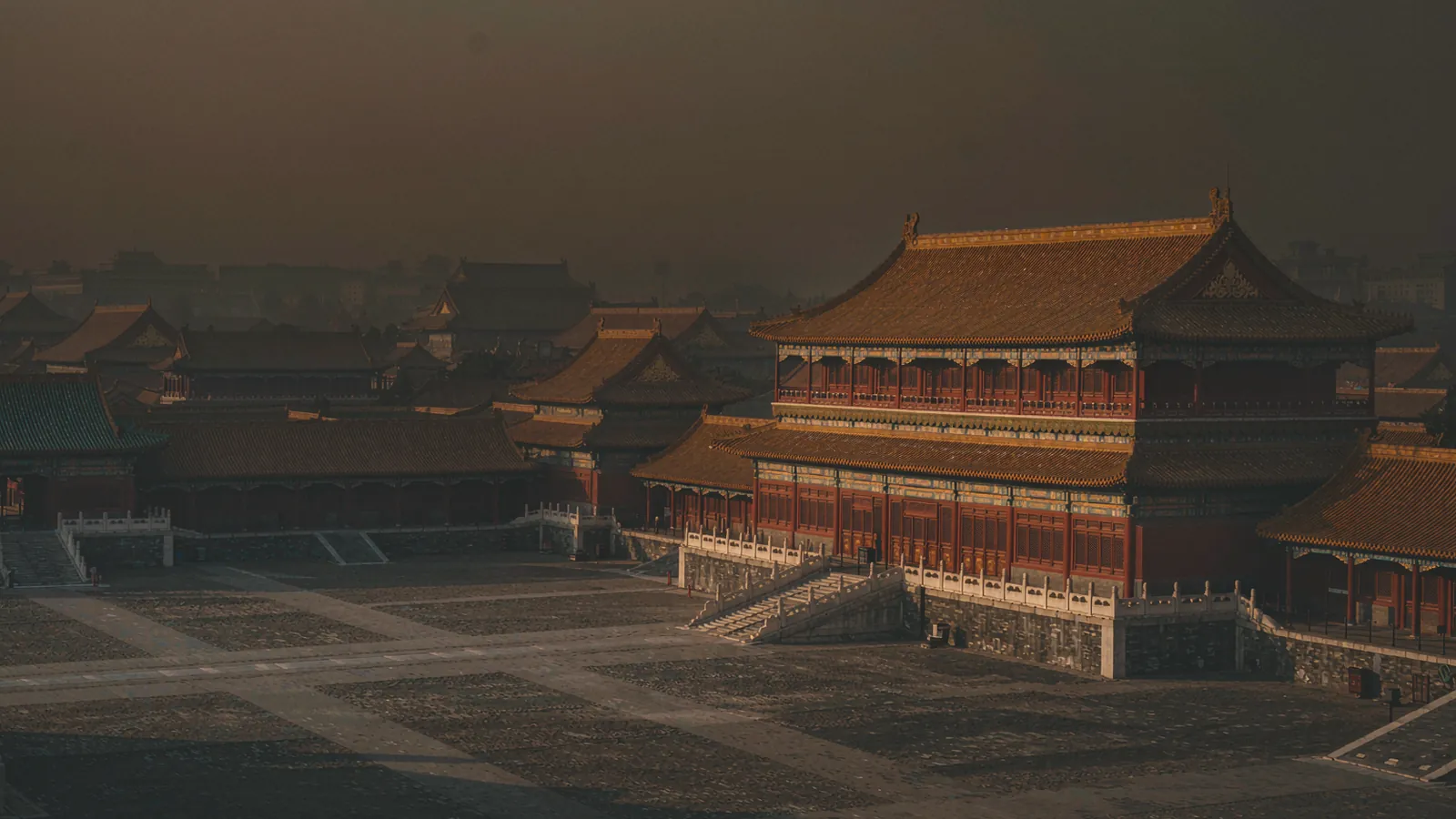
China has adopted named tickets at almost all its first-tier sites: the ticket asks for your passport number, capacity is capped, and it sells out. The Forbidden City releases places seven days ahead and sells out the same day in April, May, September and October.
Book on the first day they become available, and bring your passport to the entrance. In most cases there is no paper ticket.
10. Jet lag costs you a day
The time difference from Portugal to China is seven to eight hours. The first day in China is not a day of sightseeing: it is the day you arrive, check in and sleep badly.
You do not book the Forbidden City on arrival day. You book a light walk and a good meal.
The practical way to handle the shift: get sunlight in the morning, walk, and do not sleep after 4pm. The first two nights will include being awake at three in the morning, and that is perfectly normal. What you should not do is book an 8am visit on the second day: you will do it half asleep, and it will spoil the memory of a good place.
What is not on this list
There are two things that are not problems and that people expect to be: safety and food.
China is one of the safest countries in the world to travel in. Walking at night in a large Chinese city has nothing in common with doing it in a large European city — crimes against tourists are rare, and so is petty theft.
And the food, for anyone who eats meat or fish, is among the best in the world; for vegetarians and vegans it takes some work, but there is a solution.
Where to start
If you are planning your first trip to China, start by working out how many days you need, then with the visa, which is the piece with deadlines attached. From there, the itinerary we build most often for a first trip is Beijing, Xi’an and Shanghai — our Essential China.
And if you think ten days will not be enough, you are probably right — but that is a good conclusion to reach, because China is better the second time than it is the first.
Frequently asked questions
What is the most important thing to sort out before travelling to China?
Three things, in this order: the visa or confirmation that you qualify for visa-free entry, payment by phone (Alipay or WeChat Pay linked to a card), and internet — preferably a data eSIM bought at home. Without those three, every corner of the trip turns into friction.
Do cards from home work in China?
In high-end hotels and the large chains, yes. In restaurants, taxis, markets and ticket offices, almost never. Payment runs on QR codes, which is why setting up Alipay before your flight changes the entire trip.
Do you need to speak Chinese?
No, but keep a translator app on your phone and, above all, keep addresses written in Chinese characters. Outside the big cities and the international hotels, English is rare; in the three largest cities you get by. This is why a guide in your own language opens doors that a translator app does not.
Is the tap water safe?
Not to drink. Tap water in China is treated at source, but the plumbing and the boiler in each building do not follow the same standard. Chinese people boil water before drinking it, and that is what you should do: hotels have a kettle in the room, and hot water is free on every street.
Keep reading
Talk to the people who run it
Want to know how this applies to your trip?
Message us on WhatsApp. We reply in English within one business hour (UTC+8).
Chat on WhatsAppReplies in English · no obligation